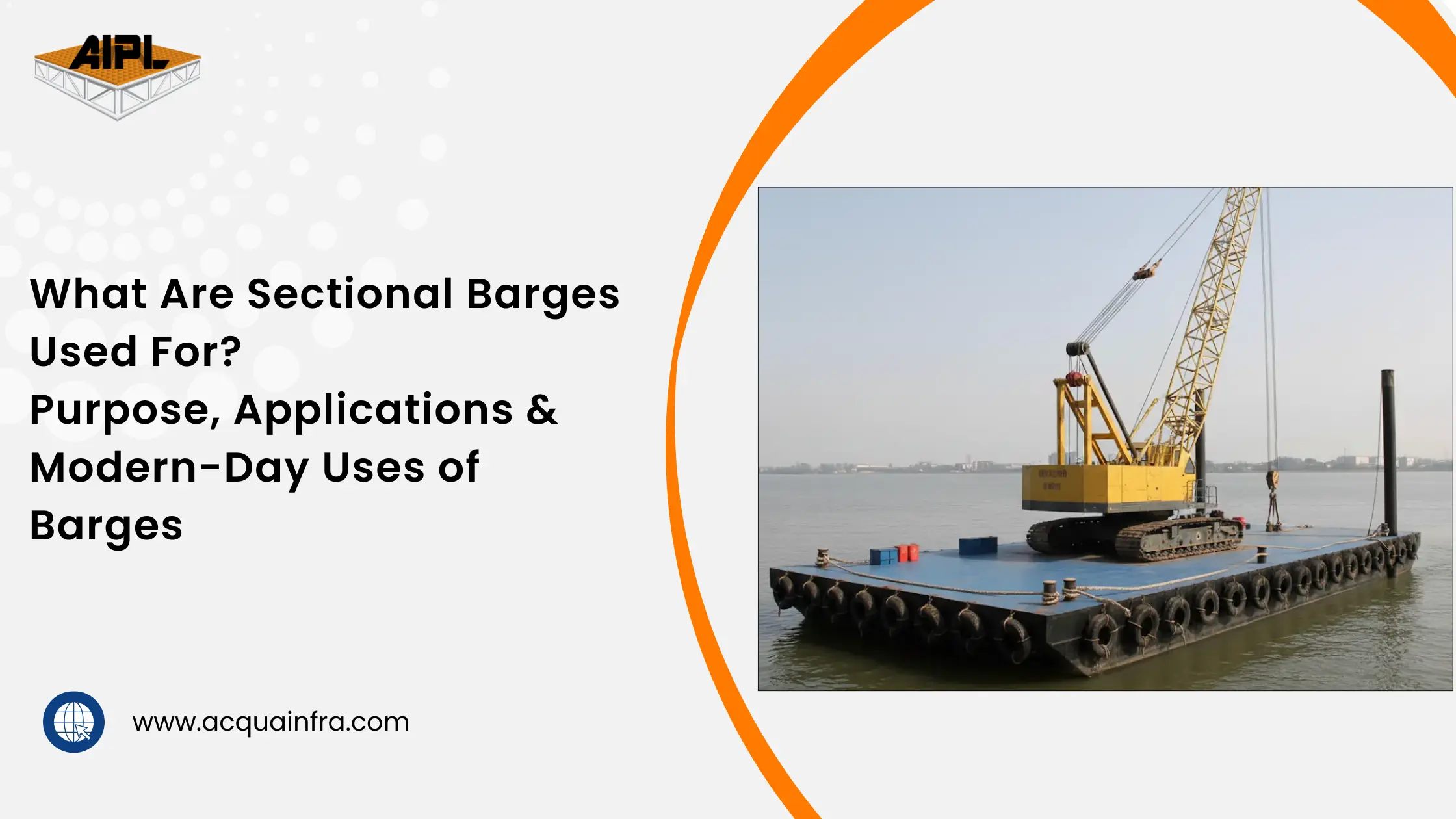
If you are a project consultant, EPC contractor, infrastructure planner, or industrial decision-maker working on inland waterways, mining, water supply, or floating infrastructure, choosing the right floating platform is critical. Sectional Barges used in such projects provide flexible, modular floating solutions that can be easily assembled, transported, and customized to suit diverse operational requirements, making them an essential component for efficient and scalable infrastructure development.
One wrong choice can lead to:
This is where Sectional Barges offer a smart, scalable solution.
Instead of a single welded hull, they are modular floating platforms assembled from multiple interconnected steel units. They reduce deployment time, improve flexibility, and lower lifecycle cost — making them ideal for modern infrastructure projects.
In India, companies like Acquafront Infrastructure Private Limited (AIPL) have executed multiple industrial projects using engineered modular Sectional Barges across mining sites, dams, rivers, and renewable energy installations
Let’s understand their purpose, applications, and modern-day relevance.
They (also known as modular barges) are floating platforms made up of multiple watertight steel modules that can be connected together using locking systems or bolted joints.
Unlike traditional monolithic barges, Sectional Barges:
AIPL’s Modular Barges are designed in compliance with IS codes and certified standards, including IRS, IIT, CIPET, and NABL labs.
The primary purpose of Sectional Barges is to provide:
✔ Heavy-load floating support
✔ Scalable infrastructure platform
✔ Rapid deployment solution
✔ Flexible relocation capability
✔ Cost-efficient inland water operations
They are designed to operate in:
The global barge transportation market is estimated at US$ 136.01 billion in 2024.
— showing how critical floating infrastructure has become worldwide.
Let’s break down how Sectional Barges are used across industries.
One of the most common uses of Sectional Barges in India is pump pontoons for water extraction.
These projects demonstrate how Sectional Barges can scale from 12 sq. m to 324 sq. m installations, depending on industrial needs.
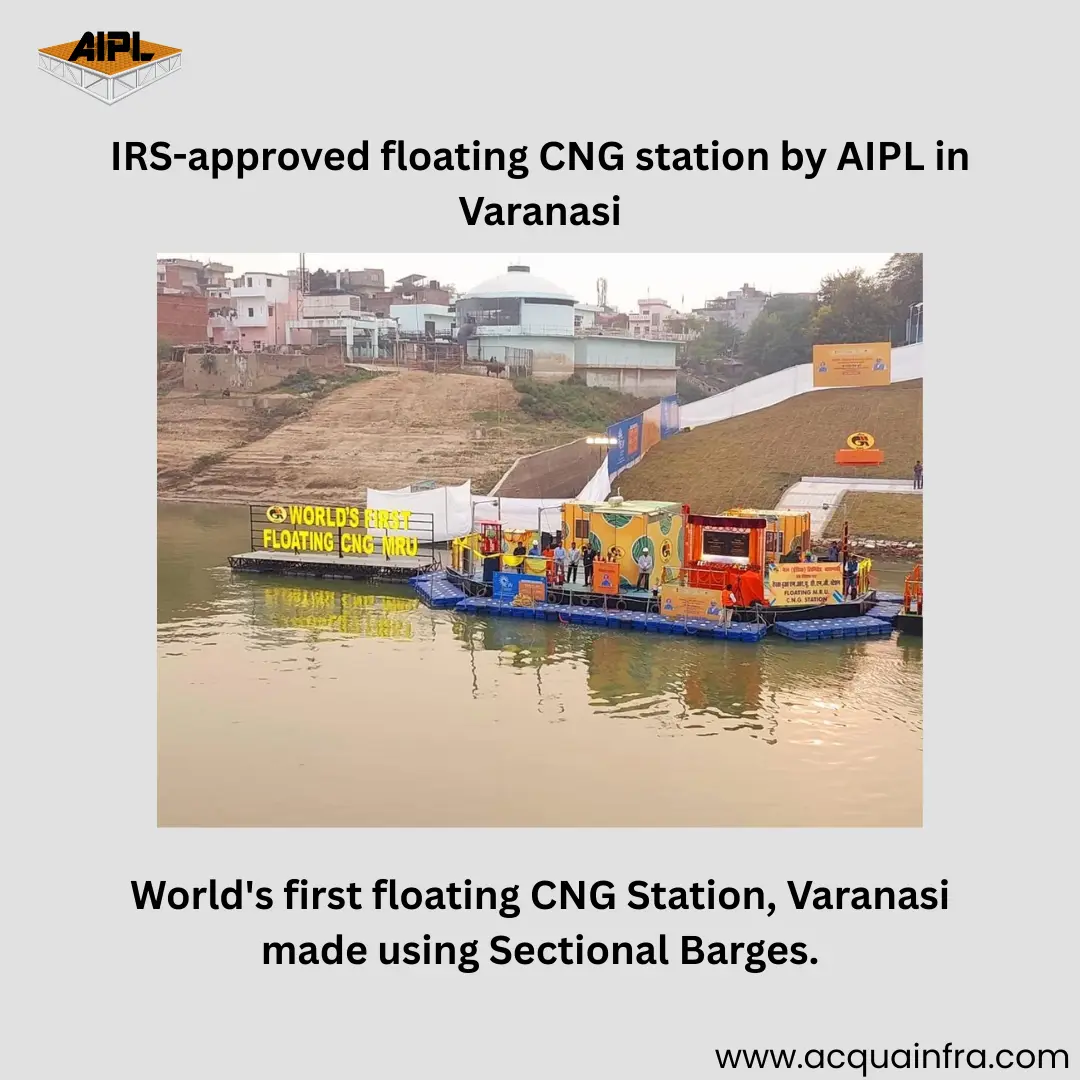
Sectional Barges are increasingly used in energy projects.
AIPL also installed:
These projects show how Sectional Barges can support fuel infrastructure, cascade systems, and heavy storage loads safely.
Sectional Barges support floating solar infrastructure.
AIPL holds a patent for:
“A Floatable Beam and a Modular Floating Platform for Solar Panels” (Granted Feb 2024)
At Kadaghat (I-Ghat Project):
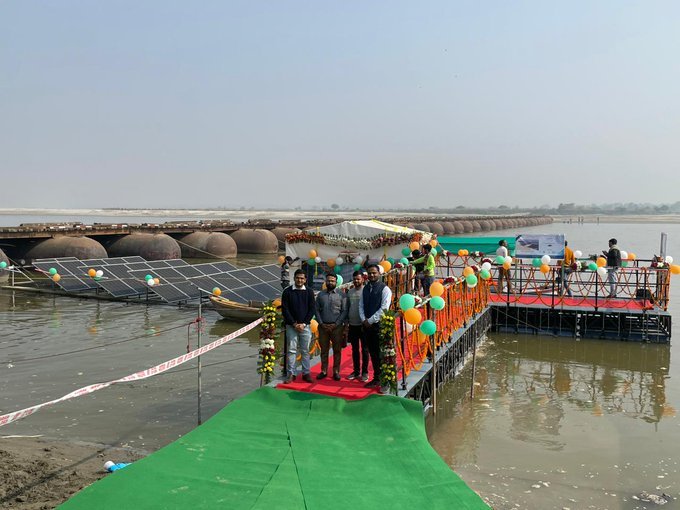
Sectional Barges enable:
Mining sites often require:
AIPL executed multiple Modular Floating Pump Pontoon projects for:
Platforms ranged between:
This proves that Sectional Barges are suitable for heavy-duty industrial and quarry environments.
Sectional Barges are also used for:
Examples:
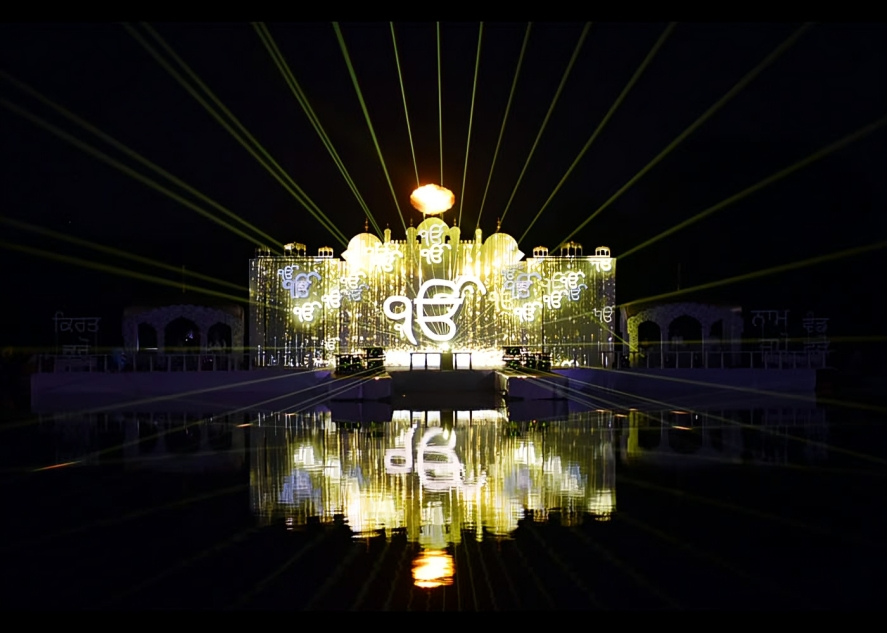
Sectional Barges ensure:
| Parameter | Traditional Barge | Sectional Barges |
| Structure | Single-welded hull | Modular interconnected units |
| Transport | Heavy logistics | Truck transportable modules |
| Installation | Longer mobilization | Rapid on-site assembly |
| Scalability | Fixed size | Expandable & reducible |
| Maintenance | Dry docking required | Replace the individual module |
| Cost Efficiency | Higher logistics cost | 15–30% cost savings |
Modular/Sectional Barges clearly provide better lifecycle value.
India’s inland waterways, renewable energy, and industrial sectors require:
Sectional Barges align perfectly with these demands.
With 25+ executed modular pump pontoon projects, large-scale floating CNG stations, renewable energy platforms, and mining installations, AIPL has demonstrated real-world reliability — not just fabrication capability.
Sectional Barges are used for water pumping, mining dewatering, floating CNG stations, floating solar platforms, passenger jetties, and industrial floating work platforms.
Engineered Sectional Barges can handle 1000–10,000 kg/m², depending on module configuration and structural design.
Yes. Sectional Barges are widely used in mining and quarry sites for dewatering, pump mounting, and water extraction operations.
With proper corrosion protection and maintenance, Sectional Barges can last up to 20 years or more.
Yes. They can be dismantled into modules, transported via trucks, and reassembled at a new location.
No. Individual modules can be repaired or replaced without dismantling the entire structure.
Used Sectional Barges: Lower upfront cost but limited lifespan and compliance assurance.
New Sectional Barges: Custom-engineered, certified, longer lifespan, and safer for industrial projects.
For government and heavy-duty industrial use, new Sectional Barges are generally preferred.
Most heavy-duty Sectional Barges are made from Mild Steel (IS 2062 compliant). Lighter applications may use HDPE modules.
When searching for top-rated Sectional Barge suppliers near you, look for:
✔ Engineering design capability
✔ IRS/IIT compliance
✔ Proven industrial projects
✔ Installation & AMC support
AIPL (Acquafront Infrastructure Pvt. Ltd.) is one of the leading modular barge suppliers in India, with executed projects across Uttar Pradesh, Odisha, Madhya Pradesh, Punjab, Gujarat, and Rajasthan, offering turnkey design, supply, installation, and maintenance services.
The top Sectional Barges manufacturers in India are companies that combine:
AIPL is among India’s leading Sectional Barge manufacturers, having executed 20+ modular pump pontoon projects, floating CNG stations, renewable energy platforms, and mining installations across multiple states.
The cost depends on:
Pricing varies based on project specifications and site conditions.
Yes. Sectional Barges are widely deployed in:
AIPL has executed multiple installations in these regions.
Sectional Barges are growing in demand because they offer:
AIPL offers:
✔ IIT-driven engineering
✔ Patent-backed modular innovation
✔ IRS & IIT compliant structures
✔ Turnkey execution
✔ Annual maintenance contracts
✔ Proven deployment across 20+ industrial sites
Rather than just supplying a barge, AIPL delivers engineered floating infrastructure solutions.
Sectional Barges are no longer an alternative — they are becoming the standard.
From:
Modern infrastructure needs modular thinking — and Sectional Barges deliver exactly that.
Talk to AIPL’s engineering team to design a customised Sectional Barge solution tailored to your load requirements, site conditions, and compliance standards.
📞 +91 7678232371
🌐 www.acquainfra.com
📩 Admin@acquainfra.com
Mr. Achin Agrawal
Director & CTO – Acquafront Infrastructure Private Limited
Expert in floating infrastructure engineering and modular marine systems.
Recipient of the National Meritorious Innovation Award.
Contributor to patented floating platform technologies and renewable water-based infrastructure systems.

