If you are a marine consultant, EPC contractor, shipping operator, mining engineer, or government infrastructure planner, one question always comes first:
What are the exact specifications and load capacity of the Sectional Barges we’re deploying?
Incorrect load estimation can lead to:
Understanding sectional barge specifications and load capacity details is critical before design.
In India, engineered modular systems, such as those executed by AIPL (Acquafront Infrastructure Private Limited), demonstrate how properly designed sectional barges can safely support industrial loads across water pumping, CNG stations, marine docks, and inland infrastructure projects.
This blog provides a detailed technical breakdown.
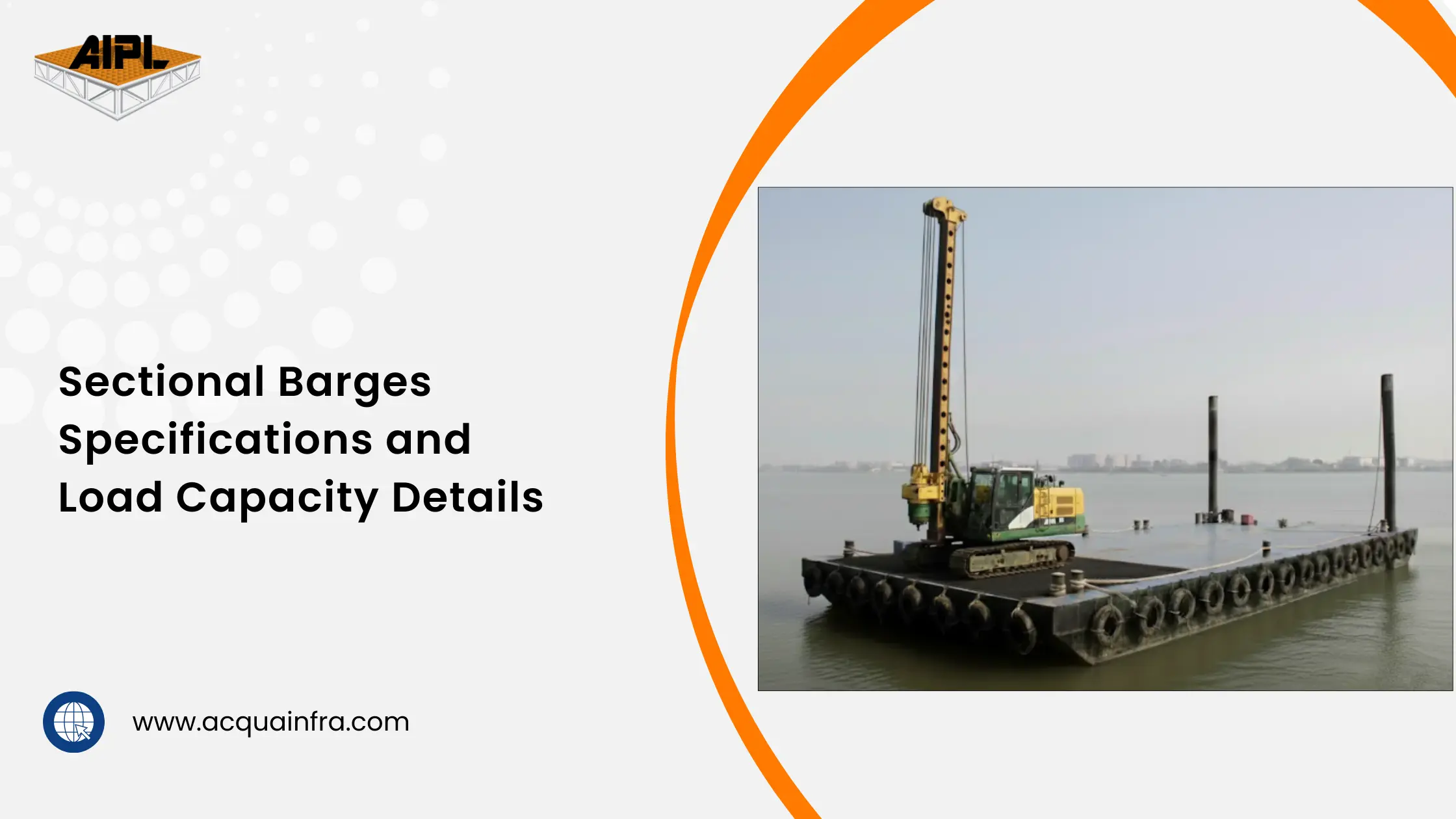
Sectional barges are modular floating platforms made of interconnected watertight steel units. Instead of one large welded hull, multiple modules are assembled on-site.
Typical characteristics:
Their modular nature allows scalability based on load requirements.
Below are common technical specifications observed in engineered modular barge systems:
| Parameter | Typical Specification |
| Module Length | 6m, 9m, 12m (customizable) |
| Module Width | 3m (customizable) |
| Height | 1.2m, 1.5m, 2m, 3m options |
| Material | Mild Steel (IS 2062) |
| Deck Structure | Mild Steel Deck & Truss |
| Coating | Anti-corrosion marine coating |
| Product Life | Up to 20 years |
These specifications vary depending on the industrial application.
Load capacity depends on:
Modular Mild Steel Sectional Barges can handle:
1000–10,000 kg/m², depending on configuration
This makes them suitable for:
In floating pump pontoon applications:
AIPL executed multiple modular floating pump pontoon projects ranging from 24 sq. m to 72 sq. m platforms across Madhya Pradesh and Odisha, demonstrating safe heavy-load deployment.
Engineered sectional barges are designed considering:
Certification bodies often include:
Engineering compliance ensures safety under fluctuating water levels and wind conditions.
Proper anchoring ensures structural stability.
Typical anchoring systems include:
✔ Deck-to-bed anchoring
✔ Deck-to-shore anchoring
✔ Flexible mooring lines
✔ Redundant anchoring points
These systems are customized based on hydrographic surveys and water conditions.
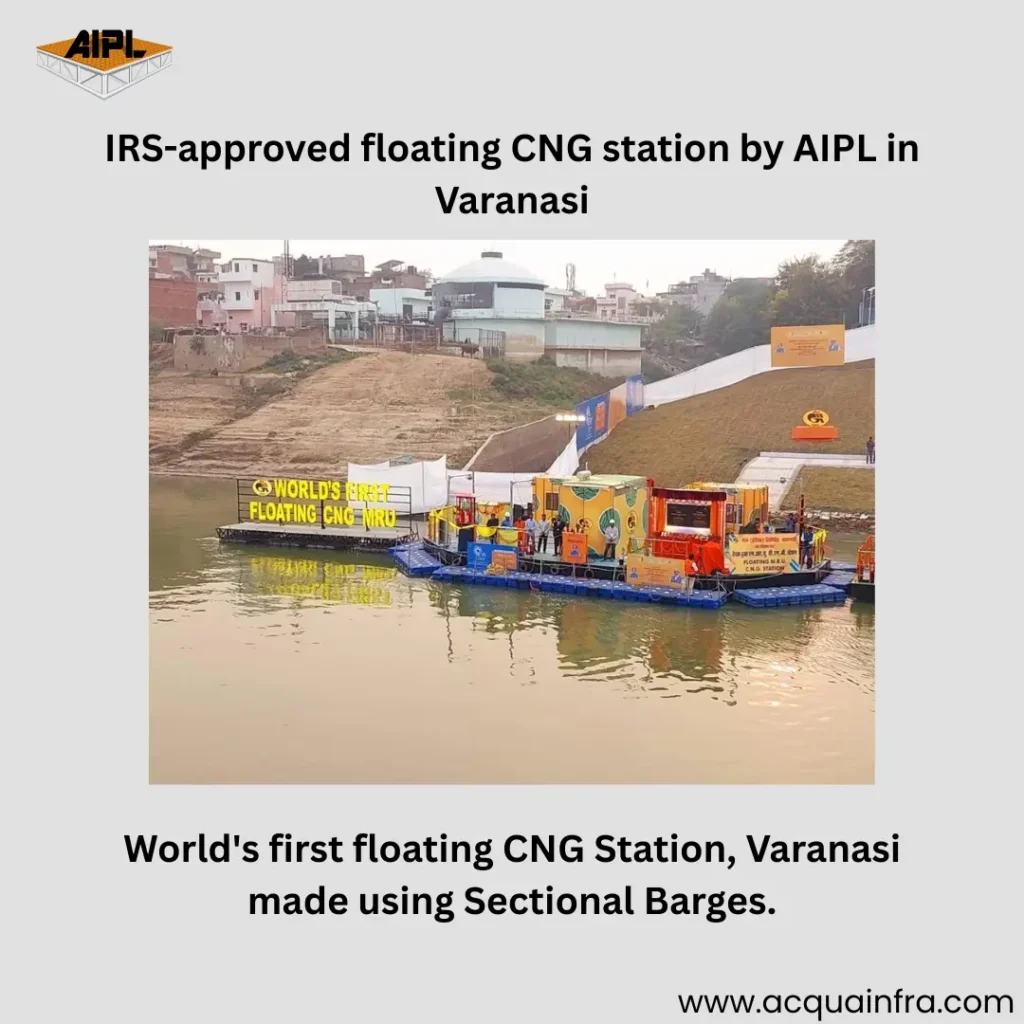
These executed projects demonstrate real-world sectional barges' load capacity performance.
Before finalising specifications, evaluate:
Always incorporate a safety margin above the calculated total load.
Commonly 6m × 3m modules, customizable.
Typically 1000–10,000 kg/m² depending on configuration.
Yes, pumps up to 10 tonnes have been supported in engineered designs.
Yes, within structural load limits.
Mild Steel (IS 2062 compliant).
Up to 20 years with proper maintenance.
IS-875, IS-800, IS-456, IRS standards.
Yes, when engineered and validated by recognized bodies.
Deck-to-bed and deck-to-shore anchoring systems.
Yes, with proper anchoring and mooring design.
Leading manufacturers combine modular fabrication, engineering compliance, and executed infrastructure projects. AIPL is among the engineering-driven manufacturers delivering certified modular barge systems across India.
Choose suppliers with real industrial projects, structural compliance, and turnkey execution capability, such as AIPL.
New barges offer certified structural assurance and a longer lifecycle compared to used units.
Yes, especially floating solar platforms.
By calculating the total equipment load, live load, and adding safety margins.
Sectional barges specifications and load capacity details are not just numbers — they define safety, efficiency, and project success.
From 24 sq. m pump pontoons to 636 sq. m floating infrastructure platforms, modular sectional barges have proven their capability across diverse Indian projects.
Choosing an engineering-driven manufacturer ensures structural compliance and long-term performance.
Need detailed load calculations for your project?
Ready to start your project? Watch this quick guide on how to submit an enquiry with AcquaInfra:
Consult experienced modular floating infrastructure engineers to design sectional barges tailored to your site conditions and load requirements.
📞 +91 7678232371
🌐 www.acquainfra.com
📩 Admin@acquainfra.com
Mr. Achin Agrawal
Director & CTO
Acquafront Infrastructure Private Limited
Expert in modular floating infrastructure engineering and patented floating platform systems.

