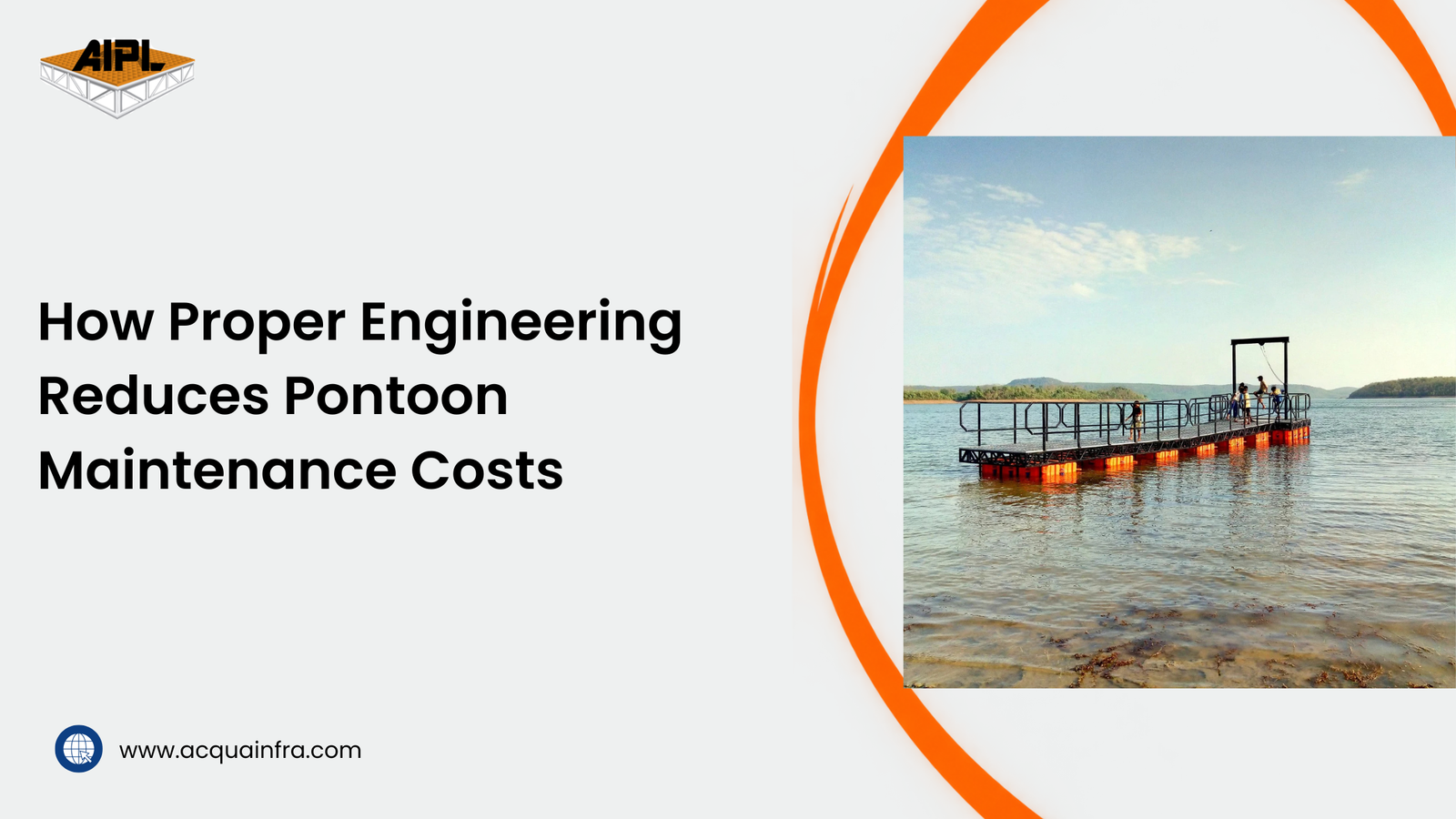
Across industrial and infrastructure sectors, reducing lifecycle costs has become just as important as managing the initial investment. Whether the application involves a Floating Pump Pontoon, Construction Pontoon, Floating Jetty, or Modular Barge, maintenance expenses can significantly impact the total cost of ownership over time.
Many buyers focus on procurement cost while overlooking the engineering decisions that directly influence Pontoon Maintenance Costs. Structural design, material selection, corrosion protection, buoyancy calculations, and fabrication quality all determine how frequently a floating structure requires repairs.
An engineering-driven floating infrastructure is designed not only for operational performance but also for durability. By incorporating project-specific engineering, marine-grade fabrication, and quality assurance from the design stage, organisations can minimise maintenance requirements, reduce downtime, and maximise service life.
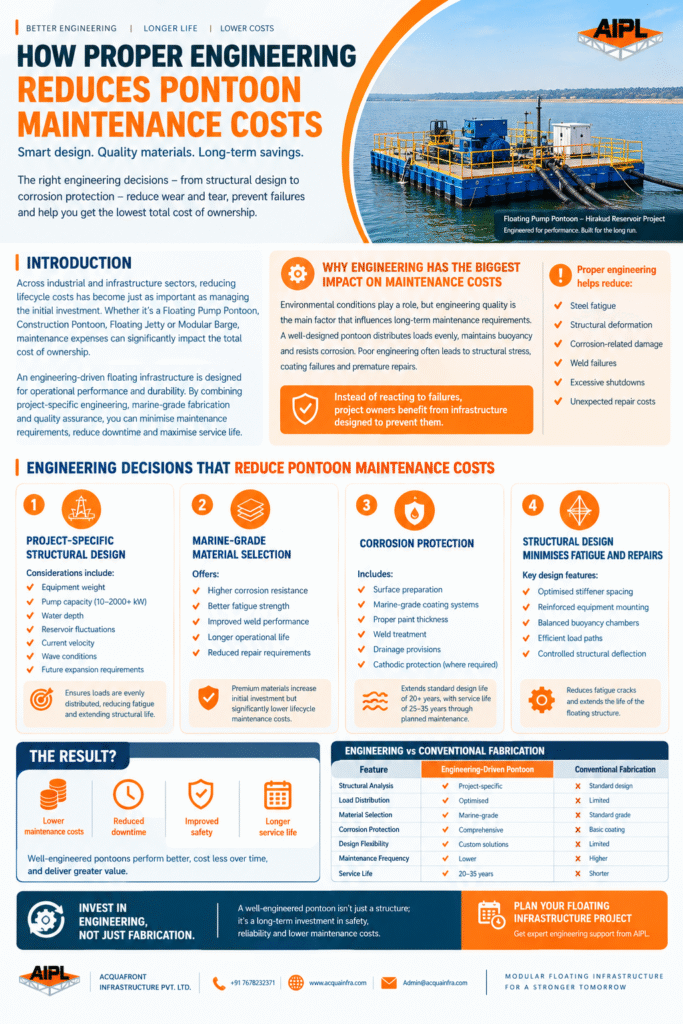
Although environmental conditions affect floating infrastructure, engineering quality remains the biggest factor influencing long-term maintenance requirements.
A well-designed pontoon distributes loads evenly, maintains buoyancy under varying operating conditions, and resists corrosion throughout its service life. Poor engineering, on the other hand, often results in structural stress, excessive deflection, coating failures, and premature repairs.
Proper engineering helps reduce:
Instead of reacting to failures, project owners benefit from infrastructure designed to prevent them.
Every Floating Pump Pontoon operates under different environmental and operational conditions.
An engineering-first approach considers:
Project-specific structural calculations ensure that loads remain evenly distributed, reducing fatigue and extending structural life.
Material quality has a direct impact on maintenance frequency.
Marine-grade structural steel offers:
Although premium materials increase initial investment, they significantly lower maintenance expenditure over the asset's lifecycle.
Corrosion is one of the leading causes of pontoon deterioration.
Engineering teams minimise corrosion through:
Proper corrosion management helps extend the standard design life of 20+ years, with service life often reaching 25–35 years through planned maintenance.
A pontoon's internal structure is far more important than its external appearance. Proper engineering ensures that loads are transferred efficiently throughout the structure instead of concentrating stress in a few locations.
Well-engineered floating infrastructure includes:
These design improvements reduce fatigue cracks and extend the life of the floating structure.
| Feature | Engineering-Driven Pontoon | Conventional Fabrication |
| Structural Analysis | Project-specific | Standard design |
| Load Distribution | Optimised | Limited |
| Steel Fatigue | Lower | Higher |
| Maintenance Frequency | Lower | Higher |
| Operational Reliability | High | Moderate |
| Lifecycle Cost | Lower | Higher |
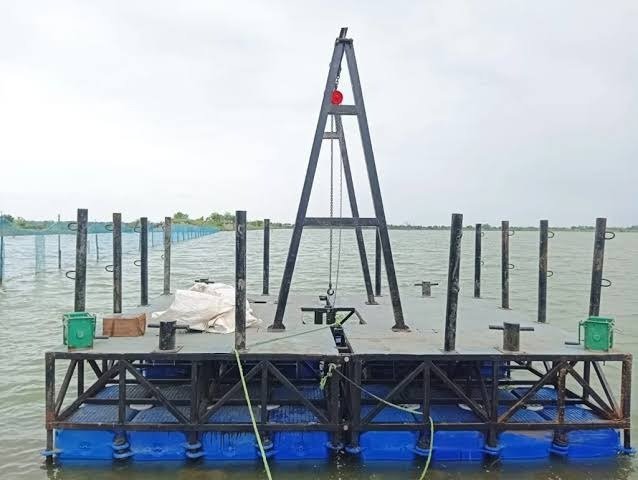
Proper buoyancy design is essential for operational stability and reduced maintenance.
Engineering teams calculate:
Accurate buoyancy calculations minimise uneven settlement, excessive tilting, and structural stress, reducing repair requirements throughout the pontoon's service life.
Many maintenance issues arise from poorly designed mooring arrangements rather than the pontoon itself.
A project-specific anchoring design considers:
A properly engineered mooring arrangement protects the floating structure from excessive movement and impact loading.
The durability of a Floating Pump Pontoon depends heavily on fabrication quality.
Professional fabrication includes:
Superior welding minimises crack formation and improves long-term structural integrity.
Proper engineering integrates every component into a reliable floating infrastructure capable of handling demanding operating conditions.
Every pontoon should be designed according to:
Correct structural calculations prevent overloading and reduce long-term fatigue.
Stable floating infrastructure experiences less structural movement and lower maintenance demands.
Engineering assessments evaluate:
Engineering begins corrosion protection long before fabrication starts.
Key considerations include:
These measures reduce coating failures and increase service life.
Acquafront Infrastructure Private Limited (AIPL) follows an engineering-driven approach to designing floating infrastructure for demanding industrial and marine applications. Every Floating Pump Pontoon, Construction Pontoon, Floating Jetty, Modular Barge, and Marine Work Platform is custom engineered to suit project-specific operational requirements rather than relying on standard configurations.
Supported by IIT-driven engineering, IRS-compliant fabrication, and turnkey SITC execution capability, AIPL has successfully delivered floating infrastructure across India, including the Hirakud Reservoir Project, Bansagar Dam Project, Floating CNG Station Projects, Passenger Jetty Projects, Sabarmati Wet & Dry Dock Project, Ultratech Cement Projects, and Vedanta Projects.
With execution capability for 1000+ tonne heavy-load applications, 10–2000+ kW pumping requirements, and floating structures designed for a 20+ year service life (extendable to 25–35 years with proper maintenance), AIPL focuses on long-term operational reliability and reduced lifecycle costs.
Pontoon Maintenance Costs include expenses related to inspection, corrosion protection, repairs, coating renewal, and component replacement over the structure's operational life.
Proper engineering improves structural strength, corrosion resistance, and stability, reducing repairs and downtime.
Yes. Marine-grade steel offers better corrosion resistance and durability, resulting in fewer maintenance interventions.
Correct buoyancy calculations improve stability, reduce stress on the structure, and minimise maintenance issues.
Yes. Project-specific engineering ensures the pontoon matches site conditions, improving long-term performance and lowering maintenance.
Companies like AIPL design custom-engineered floating infrastructure for industrial and marine applications across India.
Yes. Engineering-driven pontoons can be supplied and installed across Gujarat based on project requirements.
Yes. AIPL executes customised floating infrastructure projects across Uttar Pradesh, Madhya Pradesh, Odisha, and other states.
Typically, 20+ years, extendable to 25–35 years with proper maintenance.
Yes. High-quality welding improves structural integrity and reduces the risk of cracks and repairs.
It prevents steel deterioration, extends service life, and lowers long-term maintenance expenses.
Yes. Properly engineered pontoons can support pump capacities from 10–2000+ kW and heavy operational loads.
Water management, mining, ports, dams, industrial plants, and marine construction projects.
Yes. AIPL offers turnkey SITC execution, including design, fabrication, transportation, installation, and commissioning.
Engineering-driven pontoons offer greater reliability, lower maintenance costs, longer service life, and improved operational safety.
Reducing Pontoon Maintenance Costs begins long before fabrication starts. Engineering decisions related to structural design, material selection, buoyancy, corrosion protection, and fabrication quality determine how reliably a floating structure performs over its lifetime.
Rather than focusing only on the initial purchase price, buyers should evaluate lifecycle performance, maintenance requirements, and engineering quality. These factors have a far greater impact on long-term project economics.
For EPC contractors, government agencies, industrial buyers, and consultants, investing in custom-engineered floating infrastructure ensures greater operational reliability, reduced downtime, and lower ownership costs throughout the asset's service life.
Consult experienced engineers to design customized floating infrastructure tailored to your operational requirements.
📞 +91 7678232371
📩 Admin@acquainfra.com
Mr. Achin Agrawal
Director & CTO
Acquafront Infrastructure Private Limited
Mr. Achin Agrawal leads the engineering and technology initiatives at Acquafront Infrastructure Pvt. Ltd. (AIPL), specialising in modular floating infrastructure, marine engineering, lifting barges, construction pontoons, floating work platforms, and heavy-duty marine systems. With extensive experience in designing and executing complex floating infrastructure projects, he has contributed to solutions deployed across reservoirs, dams, ports, industrial waterfronts, and inland waterways throughout India. Under his technical leadership, AIPL continues to deliver IIT-driven engineering, IRS-compliant fabrication, and turnkey SITC solutions that meet the evolving needs of India's marine infrastructure sector.

