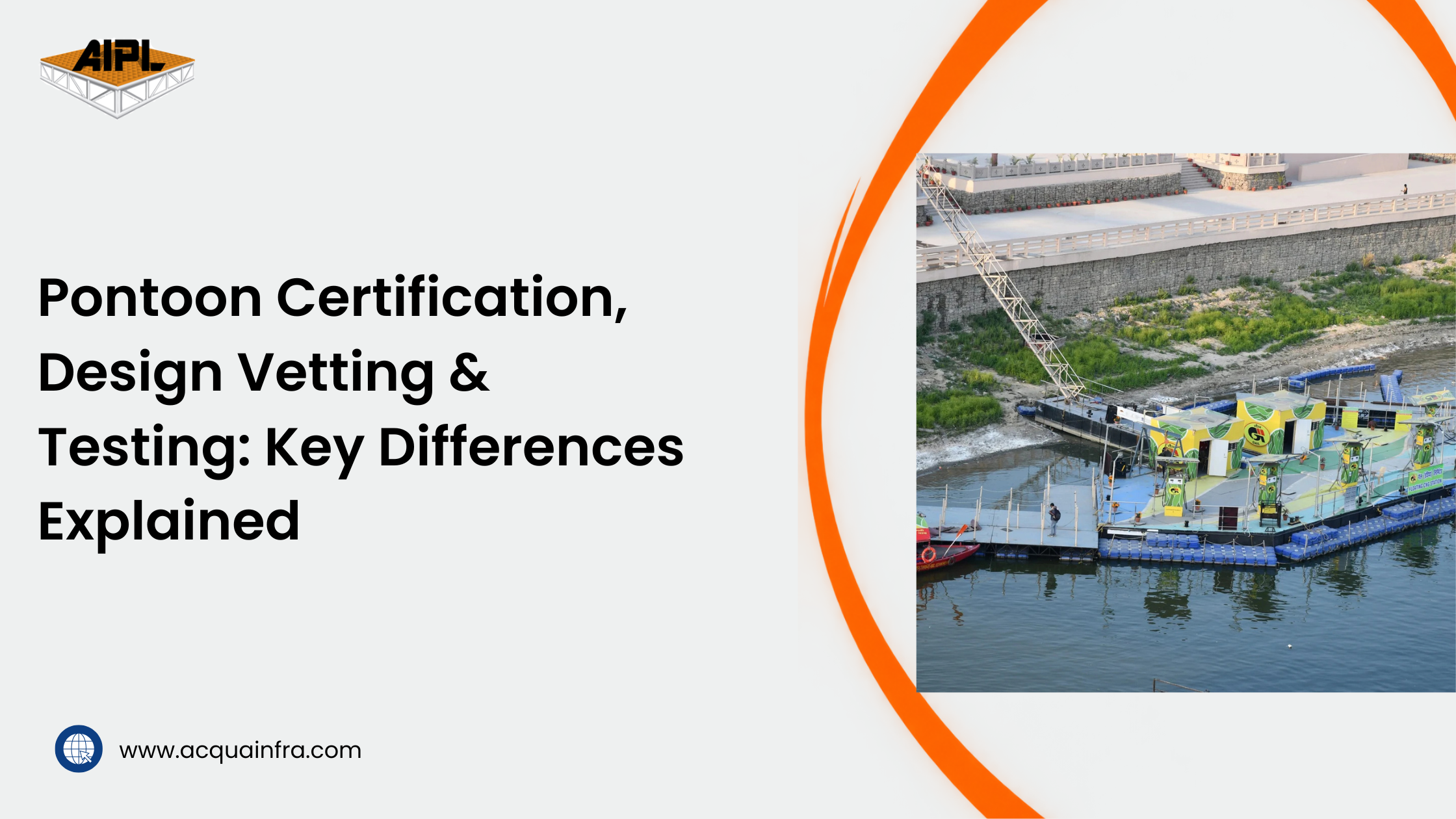
Across India's growing marine and waterfront infrastructure sector, buyers are increasingly demanding higher levels of quality assurance before approving floating infrastructure projects. Whether the requirement is a Floating Pump Pontoon, Construction Pontoon, Floating Jetty, Modular Barge, or Water Intake Pontoon, understanding the engineering validation process is essential.
Many project owners assume that Pontoon Certification, design vetting, and testing refer to the same activity. In reality, each serves a different engineering purpose and contributes to the safety, durability, and long-term reliability of a floating structure.
Selecting a manufacturer that follows structured engineering reviews, independent verification, and comprehensive testing reduces project risks while ensuring the floating infrastructure performs safely throughout its intended service life.
Although these three terms frequently appear together in technical proposals, they represent different stages of engineering verification.
A project may undergo extensive testing without obtaining third-party certification. Likewise, a certified design still requires fabrication quality checks before commissioning.
Understanding these differences helps EPC contractors, consultants, industrial buyers, and government agencies evaluate quotations more effectively.
| Process | Primary Purpose | When It Happens |
| Design Vetting | Reviews engineering calculations and drawings | Before fabrication |
| Testing | Verifies fabrication quality and performance | During and after manufacturing |
| Pontoon Certification | Independent compliance verification | Before delivery or commissioning |
Pontoon Certification is an independent confirmation that a floating structure complies with specified engineering standards, approved drawings, material requirements, and applicable classification or inspection guidelines.
Certification demonstrates that the pontoon has been designed, fabricated, inspected, and documented according to recognised engineering practices.
Depending on project requirements, certification may involve review by recognised inspection agencies or classification societies.
Typical certification activities include:
Certification provides buyers with greater confidence that the floating infrastructure has been manufactured according to the approved engineering scope.
Design vetting is an engineering review conducted before fabrication begins.
Rather than inspecting the finished pontoon, engineers evaluate whether the proposed design is structurally adequate for the intended operating conditions.
For floating infrastructure, design vetting typically examines:
This process identifies potential engineering issues before steel cutting starts, helping reduce redesign costs during fabrication.
Project-specific engineering is rarely identical from one project to another.
A Floating Pump Pontoon designed for a reservoir supporting a 150 kW pump will have different engineering requirements than a heavy-duty Construction Pontoon carrying cranes or excavators.
Design vetting ensures the floating structure is customised according to:
This engineering-first approach significantly improves long-term operational reliability.
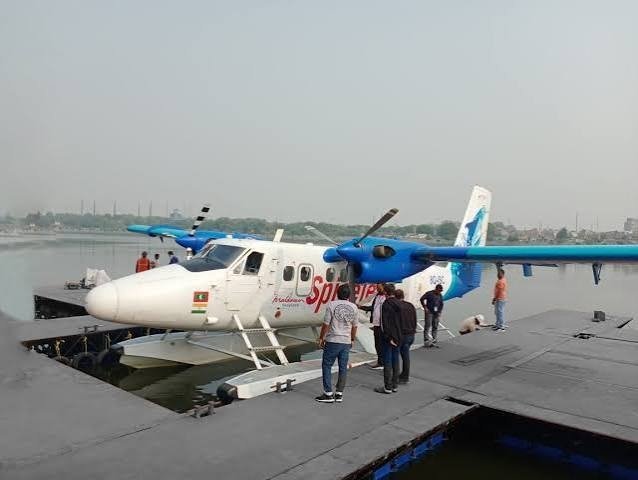
Testing validates whether the fabricated pontoon performs according to the approved engineering design.
Unlike design vetting, testing focuses on the finished structure rather than engineering calculations.
Testing may include:
Confirms that marine-grade steel meets specified chemical composition and mechanical properties.
Verifies welding quality using visual inspection and, where required, non-destructive testing (NDT) methods.
Ensures fabrication matches approved engineering drawings and specified tolerances.
Confirms that the floating structure achieves the required freeboard, stability, and flotation characteristics.
Evaluates deck performance under actual equipment loads or simulated operational conditions.
Checks paint thickness, surface preparation, and corrosion protection quality before deployment.
| Parameter | Design Vetting | Testing | Pontoon Certification |
| Focus | Engineering design | Fabrication quality | Overall compliance |
| Timing | Before fabrication | During & after fabrication | Before delivery |
| Conducted By | Structural engineers | QA/QC & inspectors | Independent authority |
| Reviews Calculations | ✔ | ✖ | Partial |
| Physical Inspection | ✖ | ✔ | ✔ |
| Material Verification | Limited | ✔ | ✔ |
| Final Compliance | ✖ | Partial | ✔ |
| Supports Buyer Approval | High | High | Very High |
For floating infrastructure, certification is only meaningful when supported by sound engineering principles. A well-designed Floating Pump Pontoon, Construction Pontoon, or Floating Jetty should demonstrate structural integrity, operational stability, and compliance with project-specific requirements before deployment.
Structural load design determines whether the pontoon can safely support static and dynamic loads throughout its service life.
Engineering calculations typically consider:
For heavy-duty applications, AIPL designs floating infrastructure capable of handling loads of 1000+ tonnes, depending on project requirements.
Proper buoyancy calculations ensure that the pontoon maintains adequate freeboard while carrying its intended operational load.
Engineering analysis evaluates:
Accurate buoyancy analysis is particularly important for Floating Pump Pontoons supporting pump capacities ranging from 10–2000+ kW.
Even a structurally sound pontoon can experience operational issues if its anchoring arrangement is not properly engineered.
A complete engineering review includes:
Proper mooring design improves operational safety while reducing structural stress over the pontoon's service life.
Fabrication quality directly influences long-term durability.
Professional engineering practices generally include:
Combined with routine maintenance, these practices help achieve a standard design life of 20+ years, extendable to 25–35 years.
None of these three processes should be viewed as a replacement for another.
Instead, they form a complete engineering quality assurance framework.
| Stage | Purpose | Benefit |
| Design Vetting | Confirms engineering adequacy | Prevents design-related failures |
| Testing | Validates fabrication quality | Detects manufacturing defects |
| Pontoon Certification | Verifies overall compliance | Builds buyer confidence and project acceptance |
Projects that include all three stages generally experience:
At Acquafront Infrastructure Private Limited (AIPL), quality assurance begins long before fabrication starts. Every floating infrastructure project is custom engineered using an IIT-driven engineering approach, ensuring that design calculations, fabrication methods, and inspection processes align with project-specific operational requirements.
Rather than manufacturing standard products, AIPL develops IRS-compliant floating infrastructure based on water depth, equipment loads, environmental conditions, and future expansion requirements. This engineering-led methodology supports reliable performance across Floating Pump Pontoons, Construction Pontoons, Floating Jetties, Modular Barges, and other heavy-duty marine applications.
With turnkey SITC execution capability, AIPL manages engineering, fabrication, transportation, installation, testing, and commissioning through a coordinated project approach. Its marine-grade fabrication practices and rigorous quality inspections contribute to floating structures with a 20+ year design life, extendable to 25–35 years through proper maintenance.
This engineering philosophy has been successfully implemented across projects including the Hirakud Reservoir Project, Bansagar Dam Project, Floating CNG Station Projects, Passenger Jetty Projects, Sabarmati Wet & Dry Dock Project, and industrial installations for UltraTech Cement and Vedanta, demonstrating consistent performance across diverse operating environments.
Pontoon Certification verifies that a floating structure complies with specified engineering, fabrication, and inspection requirements.
No. Design vetting reviews engineering calculations before fabrication, while certification verifies overall compliance after manufacturing.
It confirms that the pontoon has been engineered for site-specific loads, stability, buoyancy, and operational conditions.
Testing may include material inspection, weld testing, dimensional checks, buoyancy testing, load testing, and coating inspection.
Engineering-driven manufacturers like AIPL work with recognised inspection agencies and project requirements to support certification.
Yes. Floating Pump Pontoons can undergo certification depending on project specifications and applicable standards.
Yes. Certification helps ensure compliance with engineering requirements, improving operational safety and reliability.
Yes. AIPL supplies engineered floating infrastructure for projects across Gujarat and other Indian states.
Yes. AIPL has successfully executed projects in these regions, including reservoir and industrial applications.
Typical documents include engineering drawings, material certificates, inspection reports, welding records, and testing reports.
Yes. Every floating infrastructure project is custom engineered before fabrication and certification.
The timeline depends on project complexity, inspection requirements, and documentation readiness.
Yes. AIPL follows structured quality inspections and testing as part of its engineering and fabrication process.
AIPL-designed floating infrastructure has a standard design life of 20+ years, extendable to 25–35 years with proper maintenance.
An engineering-driven manufacturer delivers better structural performance, quality assurance, documentation, and long-term operational reliability.
Certification, design vetting, and testing each play a unique role in delivering safe and dependable floating infrastructure. Understanding the difference helps buyers evaluate technical proposals beyond basic specifications and pricing.
Projects that combine detailed engineering reviews, rigorous testing, and recognised certification are better positioned for reliable performance, lower maintenance, and longer service life. These processes reduce project risks while improving confidence in the finished floating structure.
By partnering with an engineering-driven manufacturer that emphasises custom design, marine-grade fabrication, and comprehensive quality assurance, project owners can make informed decisions that support long-term operational success.
Consult experienced engineers to design customized floating infrastructure tailored to your operational requirements.
📞 +91 7678232371
📩 Admin@acquainfra.com
Mr. Achin Agrawal
Director & CTO
Acquafront Infrastructure Private Limited
Mr. Achin Agrawal leads the engineering and technology initiatives at Acquafront Infrastructure Pvt. Ltd. (AIPL), specialising in modular floating infrastructure, marine engineering, lifting barges, construction pontoons, floating work platforms, and heavy-duty marine systems. With extensive experience in designing and executing complex floating infrastructure projects, he has contributed to solutions deployed across reservoirs, dams, ports, industrial waterfronts, and inland waterways throughout India. Under his technical leadership, AIPL continues to deliver IIT-driven engineering, IRS-compliant fabrication, and turnkey SITC solutions that meet the evolving needs of India's marine infrastructure sector.

