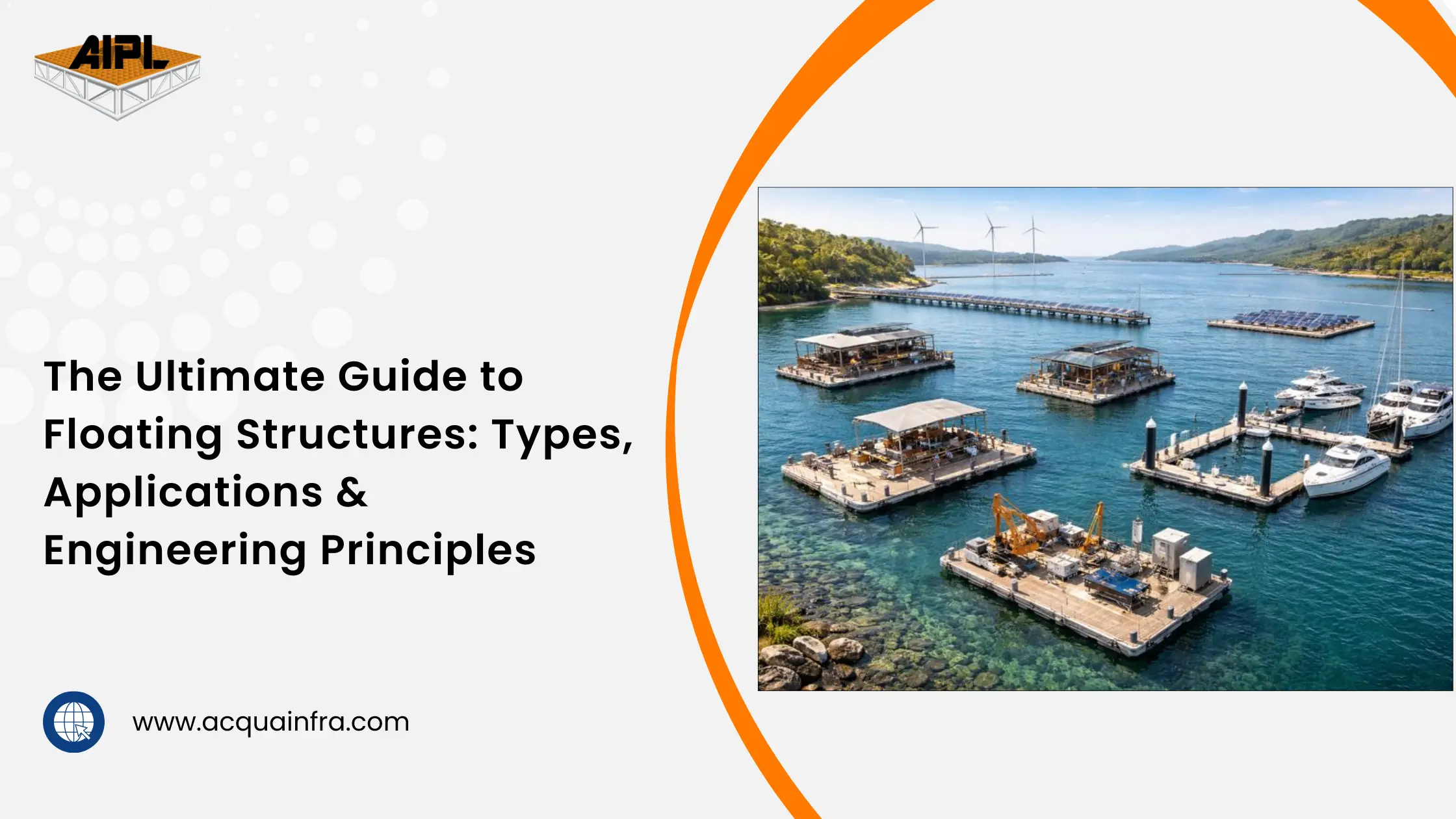
Floating structures are no longer niche solutions limited to marinas or temporary platforms. From ports and inland waterways to defence, tourism, and smart waterfronts, floating structures are shaping the future of marine infrastructure.
As someone who has worked closely with waterfront and marine projects, I’ve seen how floating solutions often solve problems that fixed structures simply can’t—especially where water levels, soil conditions, or environmental sensitivity are major concerns.This guide breaks down Ultimate Guide to Floating Structures floating structures in a simple, practical, and decision-friendly way.
What Are Floating Structures?
Floating structures are engineered platforms designed to remain buoyant on water, supported by flotation units instead of fixed foundations. They are anchored or moored to maintain position while adapting naturally to water-level changes.
Why Floating Structures Are Gaining Popularity
- Rising water levels and tidal variations
- Weak seabed or deep-water conditions
- Faster installation with minimal civil work
Environment-friendly construction
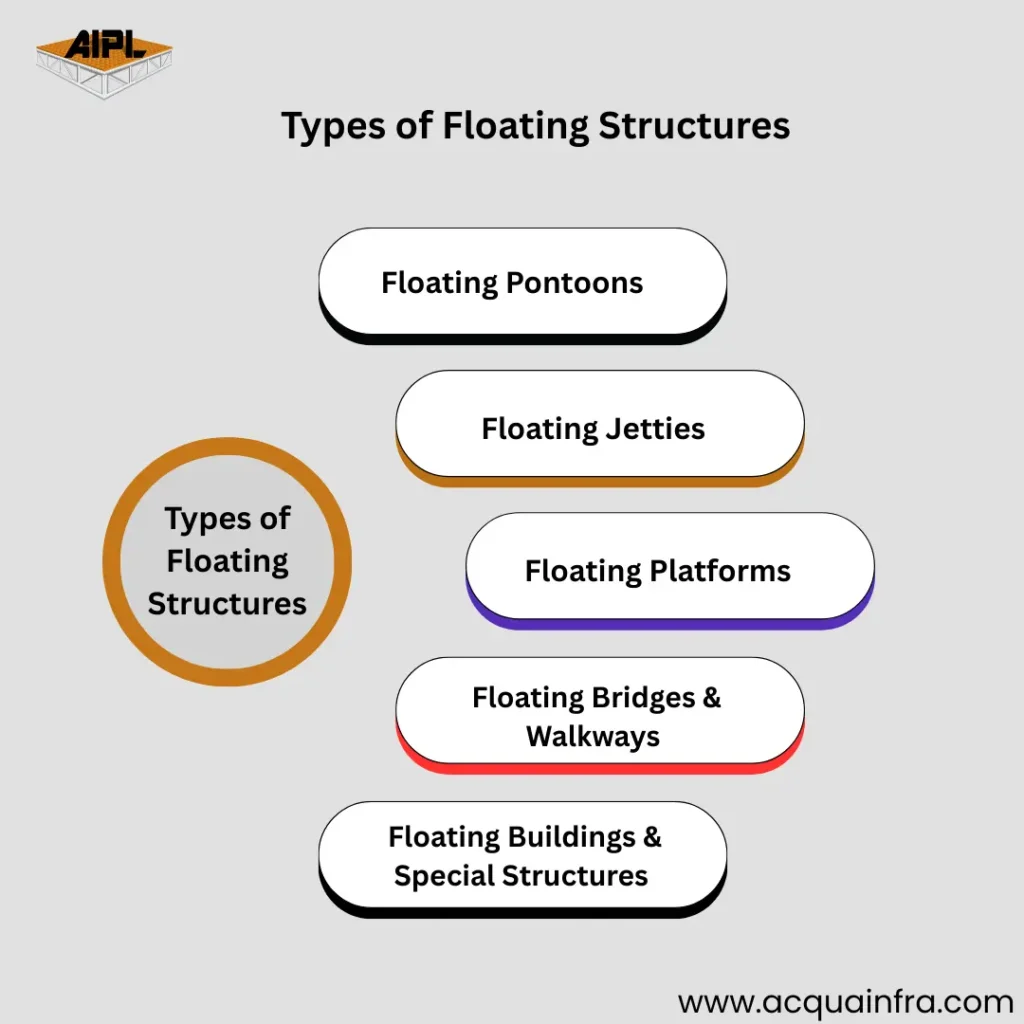
Types of Floating Structures
1. Floating Pontoons
Most common type, used for docks, jetties, and walkways.
Real-life use:
Marinas in Goa and Kerala use modular floating pontoons to accommodate yachts and leisure boats during seasonal water-level changes.
2. Floating Jetties
Designed for passenger ferries, patrol boats, and cargo handling.
Real-life use:
Inland water terminals on the Ganga use floating jetties for year-round ferry operations without rebuilding after floods.
3. Floating Platforms
Heavy-duty platforms for industrial, defence, or offshore activities.
Real-life use:
Oil & gas maintenance platforms and floating work barges used for piling and dredging operations.
4. Floating Bridges & Walkways
Pedestrian or light-vehicle connectivity over water bodies.
Real-life use:
Floating walkways at tourist destinations and eco-parks where permanent bridges are restricted.
5. Floating Buildings & Special Structures
Includes floating restaurants, event decks, and research stations.Real-life use:
Floating cafes and tourism pontoons in backwater regions with strict land-use restrictions.
Applications of Floating Structures
Ports & Inland Waterways
- Ferry terminals
- Patrol and service docks
- Temporary cargo handling platforms
Marinas & Tourism
- Yacht berths
- Floating restaurants
- Recreational walkways
Industrial & Utility Use
- Pump houses
- Floating solar support platforms
- Equipment staging areas
Defence & Emergency Services
- Patrol boat docking
- Rapid deployment platforms
- Disaster-response jetties
Core Engineering Principles Behind Floating Structures
1. Buoyancy & Load Distribution
Structures are designed using Archimedes’ principle, ensuring adequate freeboard even under maximum live load.
2. Stability
Proper centre of gravity and pontoon spacing prevent tilting and excessive movement.
3. Mooring & Anchoring
Chains, piles, or shore anchors ensure controlled movement without drift.
4. Durability in Marine Conditions
Materials are selected to resist:
- UV exposure
- Salinity
- Wave action
- Biofouling
5. Safety & Compliance
Designed as per IS codes, PIANC guidelines, and port authority norms.
Practical Design Considerations (Real-World Insight)
- High-traffic ferry terminal: Requires anti-slip decking, higher freeboard, and robust fender systems
- Tourism pontoon: Focus on aesthetics, comfort, and gentle motion
- Industrial platform: Prioritises load capacity, impact resistance, and low maintenance
How AIPL Can Assist in Floating Structure Projects
At AIPL, we don’t just supply floating structures—we engineer solutions.
Our expertise includes:
- Site assessment & feasibility studies
- Custom pontoon and floating platform design
- Mooring & anchoring system engineering
- Compliance with Indian and international standards
- Installation, refurbishment, and lifecycle support
Whether it’s a passenger jetty, marina dock, or industrial platform, AIPL ensures performance, safety, and longevity.
AIPL’s Proven Experience in Guide to Floating Structures: Types, Applications & Engineering Principles
- Technology: SIFJ (Steel Integrated Floating Jetty)
- Engineering Value:
- Designed for heavy pump loads (up to 10 tonnes)
- Adaptable anchoring & mooring systems
- Demonstrates buoyancy, stability, and modular scalability
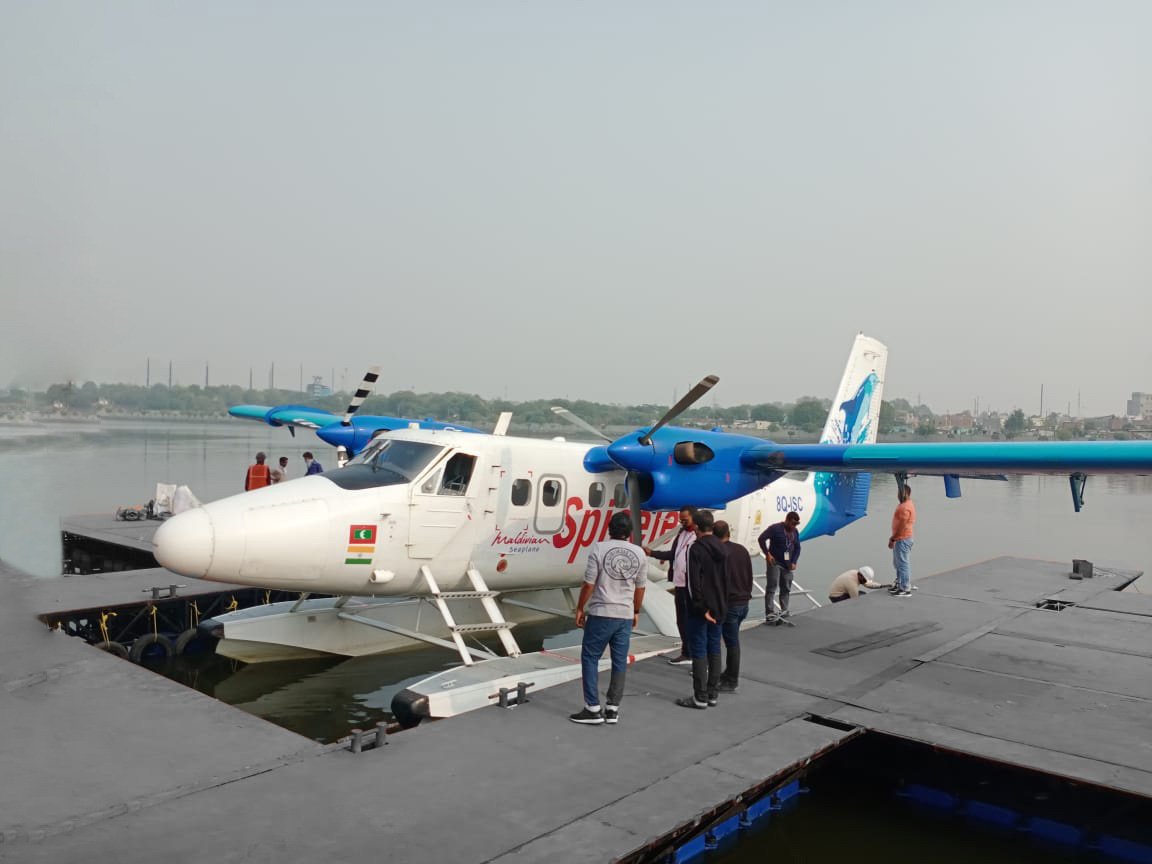
2. SIFJ Wet & Dry Dock for Seaplane – Sabarmati Riverfront (2021)
- Client: SpiceJet Technic Pvt. Ltd.
- Engineering Value:
- Dual-purpose floating dock
- Precise load balancing and stability control
- Demonstrates advanced floating infrastructure design
3. Floating Gurudwara – Punjab (2019)
- Client: Punjab State Government
- Engineering Value:
- Large-area floating stages (636 sq. m)
- Crowd load management
- Safety and redundancy in floating structures
4. Modular Barges for Industrial & Utility Use (Multiple Projects)
- Applications:
- Water pumping
- Dredging support
- Equipment staging
- Engineering Value:
- Load capacity up to 10,000 kg/m²
- Modular interconnections
- Designed as per IS, IRS, IIT standards
5. Floating Passenger Jetties – Guleria Ghat, Varanasi (2018)
- Engineering Value:
- Compact SIFJ design
- Shore-to-deck integration
- Ideal example of small-scale floating jetty engineering
Conclusion
Floating structures offer flexibility, sustainability, and engineering efficiency where traditional construction struggles. With the right design and execution, they become long-term assets—not temporary fixes.
Frequently Asked Questions
What is the lifespan of floating structures?
Typically 25–40 years, depending on material and maintenance.
Are floating structures safe during floods?
Yes, they rise with water levels when properly moored.
Can floating structures handle heavy loads?
Yes, industrial-grade platforms are designed for high loads.
Do floating structures require piling?
Not always—many use anchoring or chain mooring systems.
Are floating structures environmentally friendly?
They have minimal seabed disturbance compared to fixed structures.
What materials are commonly used?
HDPE pontoons, concrete floats, steel frames, aluminium decking.
How are floating structures maintained?
Periodic inspection, cleaning, and hardware replacement.
Do they require government approvals?
Yes, depending on location and usage.
Can floating structures support buildings?
Yes, when engineered for static and dynamic loads.
How do they handle wave action?
Through pontoon design, damping systems, and flexible mooring.
Are floating structures cost-effective?
Often cheaper than piling in deep or soft seabeds.
Planning a Water, Mining, Energy, or Floating Infrastructure Project?
Enquire Now!
Talk to AIPL’s engineering team to design a customised Sectional Barge solution tailored to your load requirements, site conditions, and compliance standards.
📞 +91 7678232371
🌐 www.acquainfra.com
📩 Admin@acquainfra.com
About the Author
Mr. Achin Agrawal, Director & CTO.
- Expertise includes R&D, Product development, Project design & engineering.
- National Meritorious Innovation Award 2018 by NRDC (A DST Enterprise) presented during Innovate India conference 2019 at EDII, Ahmedabad.
- Recognised for groundbreaking innovation with patent no. 485553 in marine Industry.