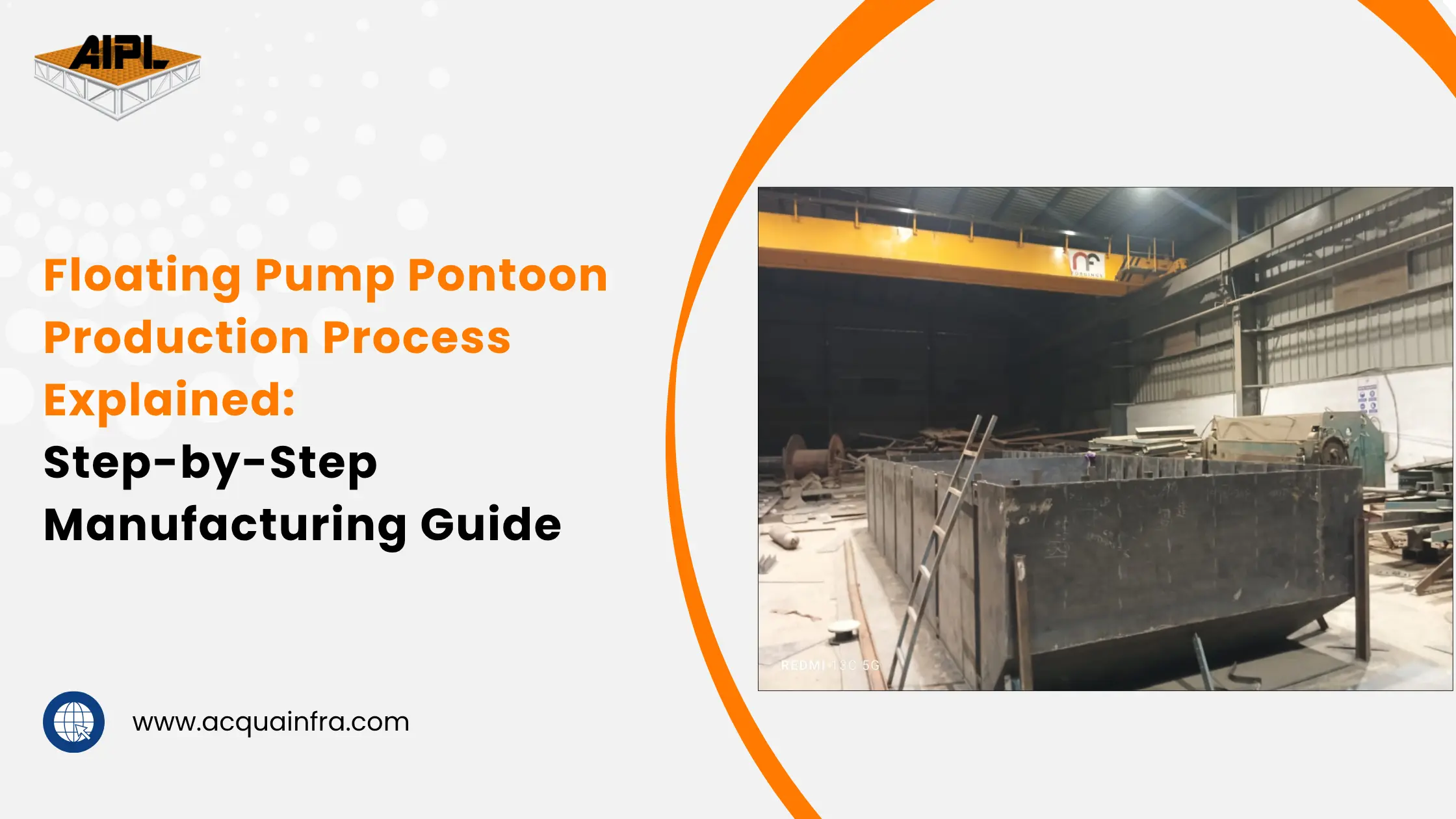
Curious about what actually goes into building a high-performance Floating Pump Pontoon?
Behind every reliable water intake platform is a precise engineering and fabrication process that determines:
Many projects fail not because of design intent — but because of poor manufacturing execution.
This blog walks you through the complete production stages of a Floating Pump Pontoon, helping you understand how quality fabrication directly impacts performance.
With insights aligned to real project execution by companies like AIPL, you’ll get a clear view of how engineered pontoons are actually built.
A Floating Pump Pontoon is a modular floating structure designed to support pumps, motors, and intake systems on water bodies.
Key capabilities:
Each pontoon is engineered based on project requirements — making production quality critical to performance.
Still wondering how a pump pontoon works? This quick video breaks it down for you:
Before diving into stages, it’s important to understand:
👉 A Floating Pump Pontoon is not just a fabricated box — it is a load-bearing engineered structure
Poor production can lead to:
This is why engineering-driven manufacturers focus on precision, testing, and quality control at every stage.
The process begins with material verification and preparation.
The structural backbone of the pontoon is fabricated.
This stage defines the floating capability.
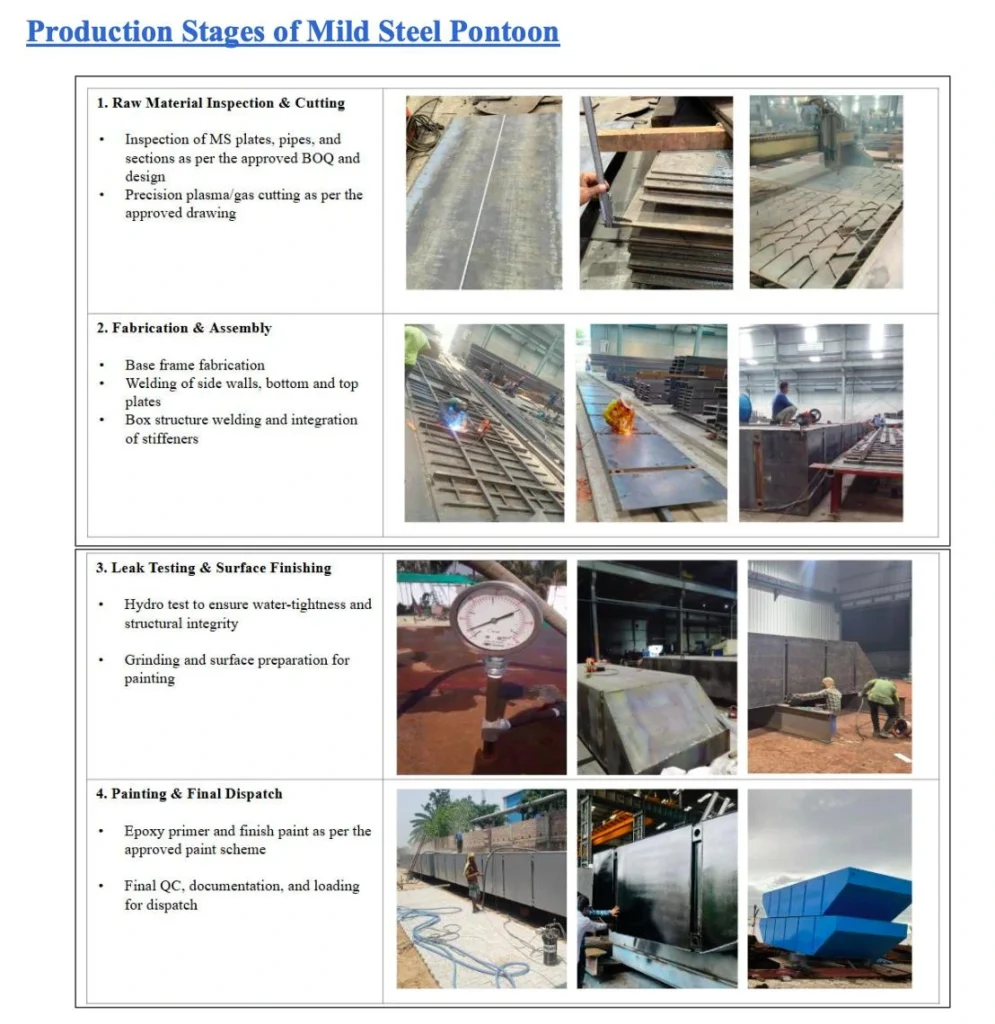
One of the most critical quality checks.
Before coating, surface preparation is essential.
Floating structures are exposed to harsh environments.
Before delivery, the pontoon undergoes a final inspection.
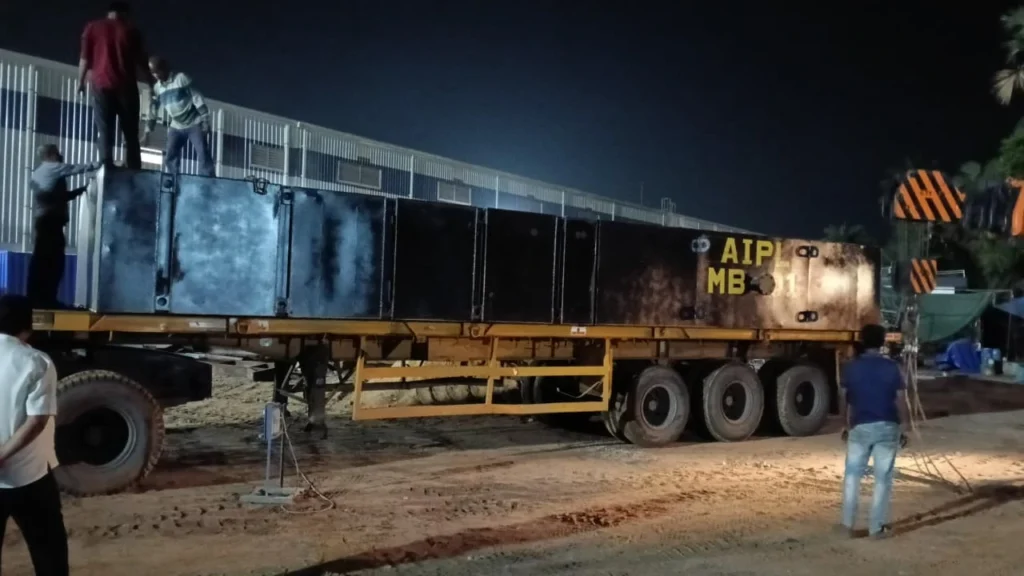
Production is closely linked with engineering design.
✔ Load-bearing capacity (up to 50+ tonnes)
✔ Buoyancy calculation
✔ Structural stiffener design
✔ Welding quality standards
✔ Compatibility with anchoring systems
Companies like AIPL ensure engineering-led production, not just fabrication.
Watch how AIPL’s Acqua Flow Series delivers efficient and reliable water pumping solutions through engineered pontoons and barges:
Every Floating Pump Pontoon is different.
Customisation depends on:
AIPL follows a project-to-project customisation approach, allowing flexibility across industries.
To ensure reliability, always look for:
✔ Certified material usage
✔ Controlled welding processes
✔ Leak testing protocols
✔ Proper coating system
✔ Experienced fabrication team
These factors directly impact long-term performance.
Material inspection, fabrication, testing, coating, and dispatch.
To ensure the pontoon is completely watertight.
Primarily mild steel with protective coatings.
Depends on size and customisation, typically a few weeks.
Up to 50+ tonnes depending on design.
20+ years, extendable to 25–35 years.
Yes, based on project requirements.
Epoxy primer and marine-grade coating.
Choose suppliers with engineering expertise and proven fabrication quality like AIPL.
Engineering-driven companies like AIPL provide modular Pump Pontoon solutions.
Yes. AIPL can deliver projects across Gujarat, Maharashtra, Tamil Nadu, & West Bengal.
Yes, poor fabrication can lead to failure.
A method to check leakage and structural integrity.
Yes, designed for heavy-duty applications.
By choosing experienced and engineering-driven manufacturers.
The performance of a Floating Pump Pontoon is directly linked to its manufacturing quality.
From raw material inspection to final coating, every stage plays a critical role in ensuring:
With engineering-driven fabrication and real project execution, companies like AIPL demonstrate how high-quality production leads to high-performance Pump Pontoon infrastructure.
Consult experienced IIT engineers to ensure high-quality production and long-term reliability.
📞 +91 7678232371
🌐 www.acquainfra.com
📩 Admin@acquainfra.com
Mr. Achin Agrawal
Director & CTO
Acquafront Infrastructure Private Limited
Expert in floating infrastructure engineering and modular water systems.

