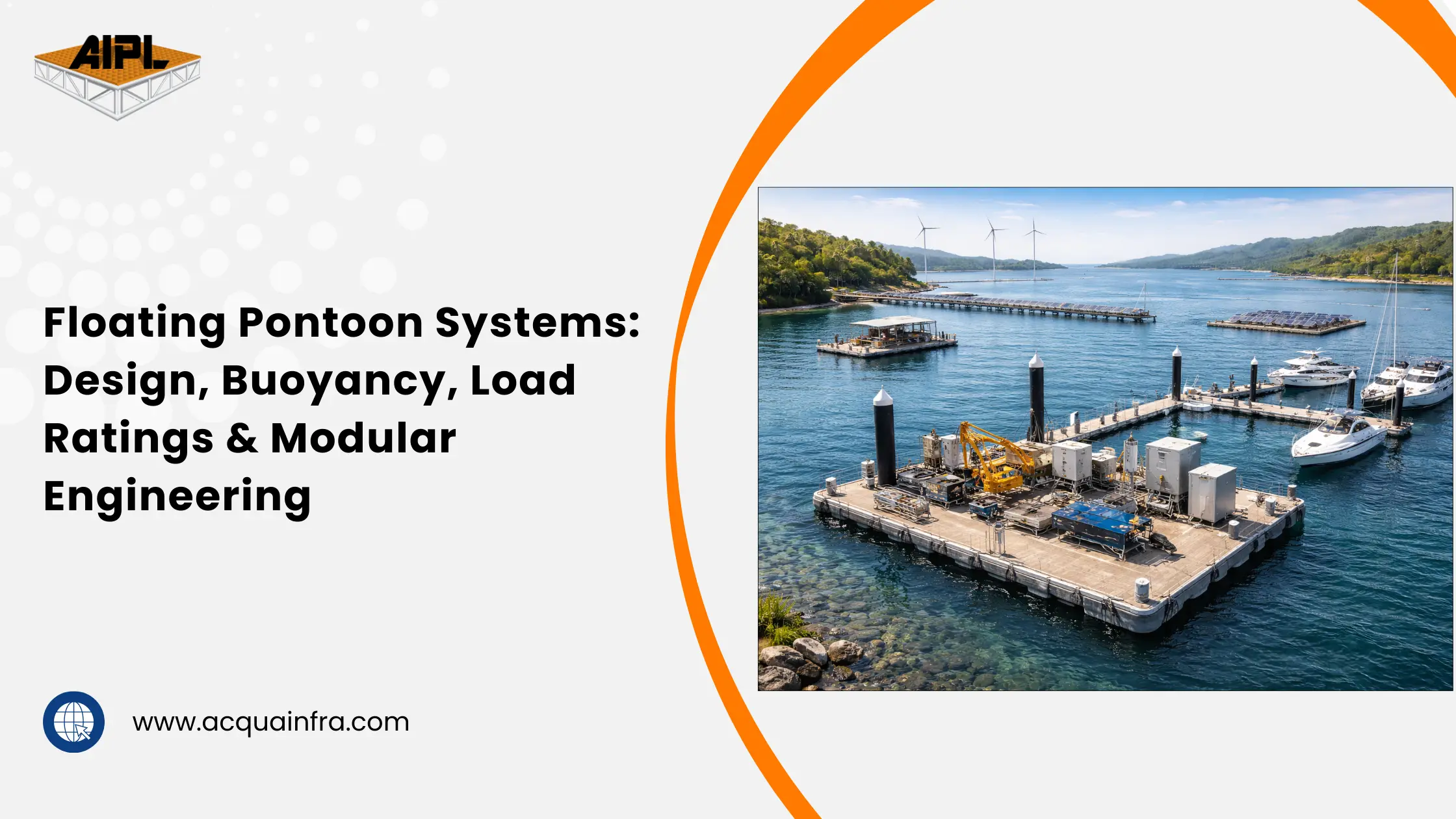
As marine and inland water infrastructure expands across India’s rivers, reservoirs, ports, and industrial waterways, floating pontoon systems have become the backbone of modern docking, access, and utility platforms.
From passenger jetties to heavy-duty industrial staging, pontoon systems offer predictable performance, modular scalability, and cost efficiency—when designed correctly.
This guide breaks down design principles, buoyancy calculations, load ratings, and modular engineering in a numbers-backed, real-world format to help project owners make informed decisions.
1. What Is a Floating Pontoon System?
A floating pontoon system is a buoyant modular platform designed to support static and dynamic loads over water.
Steel pontoons: 20–25 years (with annual maintenance)
2. Pontoon Design Fundamentals
Standard Pontoon Dimensions
Parameter
Typical Range
Length
3–12 meters
Width
2–5 meters
Freeboard
500–600 mm
Draft (loaded)
400–900 mm
Design depends on water depth, fluctuation range, and load class.
3. Buoyancy Principles
Buoyancy determines whether your pontoon floats safely or fails prematurely.
Core Formula (Practical Use)
1 cubic meter of displacement ≈ 1,000 kg of buoyant force
Example:
If a pontoon displaces 20 m³ of water,
Maximum buoyancy = 20,000 kg
Safe working load (60% rule) = 12,000 kg
This margin accounts for:
Dynamic movement
Wave action
Long-term material fatigue
4. Load Ratings: What Can a Pontoon Actually Carry?
Common Load Classes
Application
Load Rating
Passenger jetties
300–500 kg/m²
Light equipment
500–1,000 kg/m²
Pumps & generators
1,500–3,000 kg/m²
Cranes & piling
5,000–10,000 kg/m²
Real-Life Example
A floating pump pontoon supporting:
Pump weight: 3.5 tonnes
Motor & accessories: 1.2 tonnes
Operator load: 300 kg
➡ Required load capacity: 5+ tonnes with safety factor
5. Modular Engineering: Why Modularity Matters
Key Modular Advantages
Deployment time reduced by 40–60%
Expansion possible without redesign
Transport cost reduced by up to 35%
Damaged modules can be replaced individually
Typical Modular Connection Systems
Bolted steel frames
HDPE pin-lock systems
Flexible rubber couplings (for wave zones)
6. Stability & Safety Parameters
Stability Metrics Engineers Watch
Metacentric height (GM): >0.5 m preferred
Heel angle under full load: <5°
Freeboard after loading: ≥250 mm (HDPE) & ≥500 mm (MS)
Stable pontoons reduce:
Operator fatigue
Equipment vibration
Structural wear
7. Mooring & Anchoring Loads
Pontoon stability also depends on horizontal forces.
Typical Design Loads
River current: 1–3 m/s
Wind load: 80–140 km/h
Wave height (inland): 0.3–0.8 m
Mooring systems may include:
Chain + deadweight anchors
Pile-guided systems
Shore tie-rods
8. Materials Used in Pontoon Systems
Material
Key Benefit
HDPE
Zero corrosion, low maintenance
Marine-grade steel
High load capacity
FRP
Lightweight, chemical resistance
Aluminum
Weight-sensitive applications
Material choice impacts:
CAPEX
Maintenance cycles
Life-cycle cost
To understand the design, features, and applications of AIPL’s pumping pontoons, refer to this video: Acqua Flow Series | Pontoons & Barges for Water Pumping – https://youtu.be/L56VW0cXwAI?si=cQEVl4-uEhRv4Fp3
9. Cost Perspective (Indicative)
Pontoon System Cost Range (India)
Passenger pontoon: ₹25–50 lakh
Pump pontoon: ₹35–80 lakh
Heavy-duty industrial pontoon: ₹1–3 crore
Costs vary with:
Load rating
Coating system
Mooring complexity
10. Practical Real-World Use Cases
1: Riverfront Passenger Jetty
Load: 400 kg/m²
Seasonal water fluctuation: 6–8 meters
Solution: Modular HDPE pontoons with pile guides
2: Industrial Pump Platform
Load: 6 tonnes concentrated
Solution: Mild Steel pontoon with reinforced deck beams
3: Temporary Construction Platform
Duration: 12 months
Solution: Leased modular pontoon system
How AIPL Can Assist in Floating Pontoon Systems
AIPL delivers engineering-driven pontoon solutions, not off-the-shelf platforms.
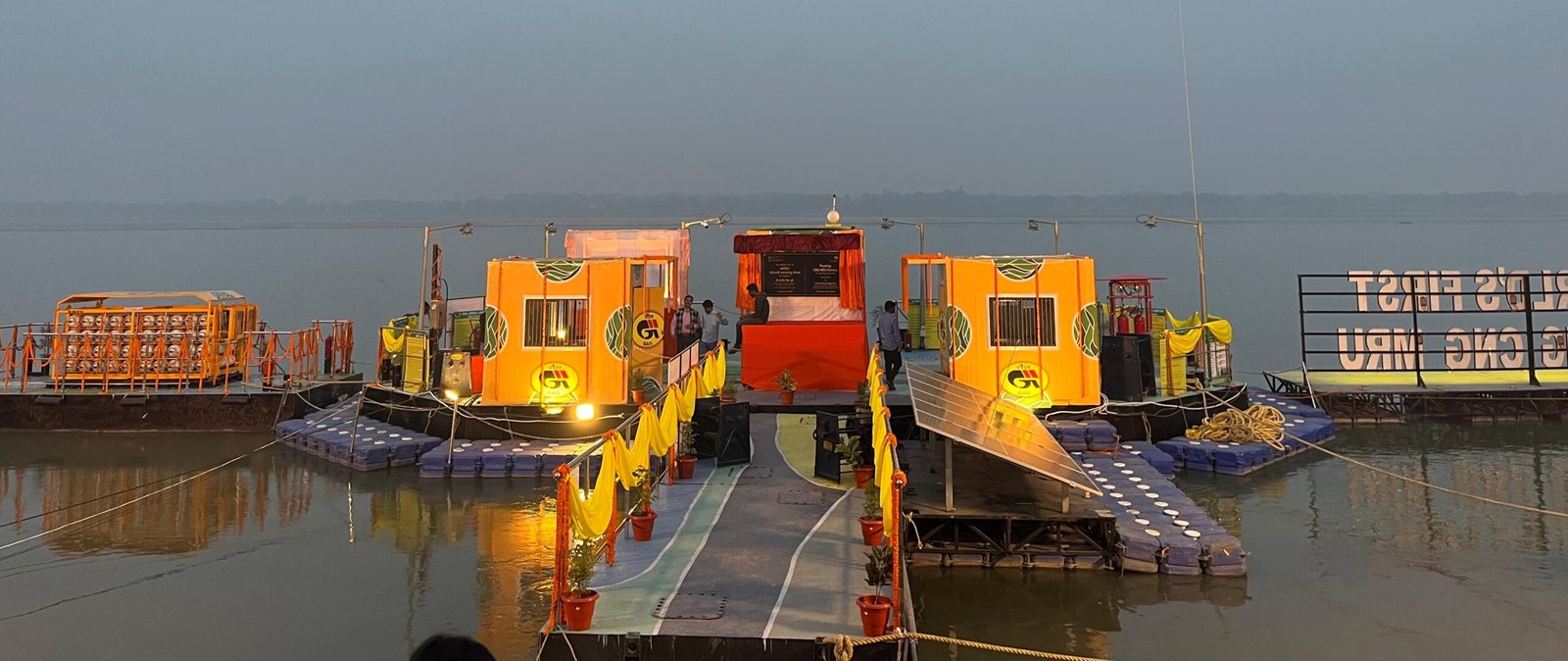
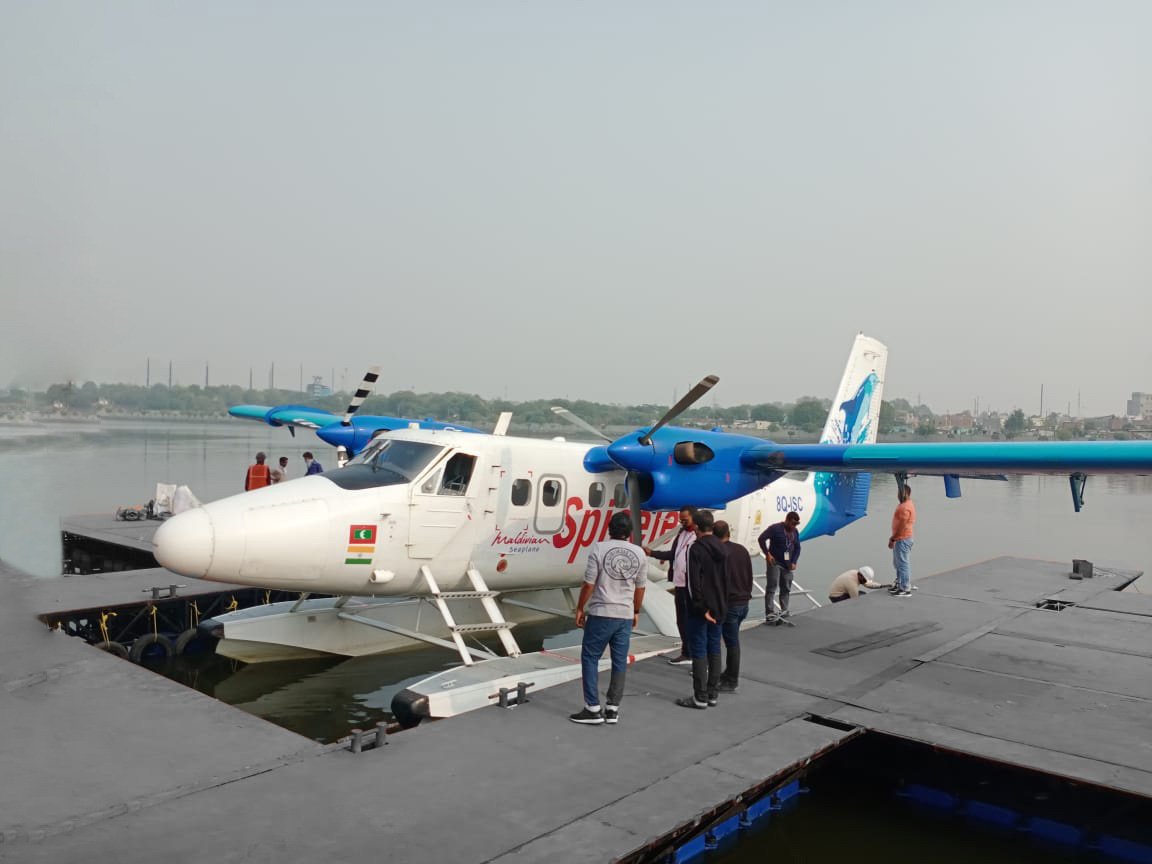
Large-area pontoon designed for long-term utility operations
Shows scalability of modular pontoon systems
Designed for water-level fluctuation & environmental load
Conclusion
Floating pontoon systems combine engineering precision, modular flexibility, and predictable performance. When designed quantitatively—based on load, buoyancy, and stability—they offer long-term value across marine and inland projects.
Frequently Asked Questions
What is the safe load limit of a pontoon?
Usually 60% of total buoyancy is considered safe working load.
How long do pontoon systems last?
20–30 years depending on material and maintenance.
Can pontoons handle heavy equipment?
Yes, heavy-duty pontoons can handle 10,000 kg/m² loads.
Are modular pontoons reusable?
Yes, they can be dismantled and reused across projects.
Do pontoons require dredging?
No, floating systems adapt to water level changes.
Planning a Water, Mining, Energy, or Floating Infrastructure Project?
Enquire Now! Talk to AIPL’s engineering team to design a customised Sectional Barge solution tailored to your load requirements, site conditions, and compliance standards. 📞 +91 7678232371 🌐 www.acquainfra.com 📩 Admin@acquainfra.com
About the Author Mr. Achin Agrawal, Director & CTO.
Expertise includes R&D, Product development, Project design & engineering.
National Meritorious Innovation Award 2018 by NRDC (A DST Enterprise) presented during Innovate India conference 2019 at EDII, Ahmedabad.
Recognised for groundbreaking innovation with patent no. 485553 in marine Industry.
AIPL specializes in modular maritime and floating-infrastructure platforms for energy, water, marine, transport, construction, pumping and tourism sectors, supported by a decade of proven engineering.
Registered Under:
Quick Links
Office
3RD Floor, Tower-C, Office No. C - 320 I-THUM Plot No.A-40, Sector 62, NOIDA, Distt Gautam Buddha Nagar, UP – 201301