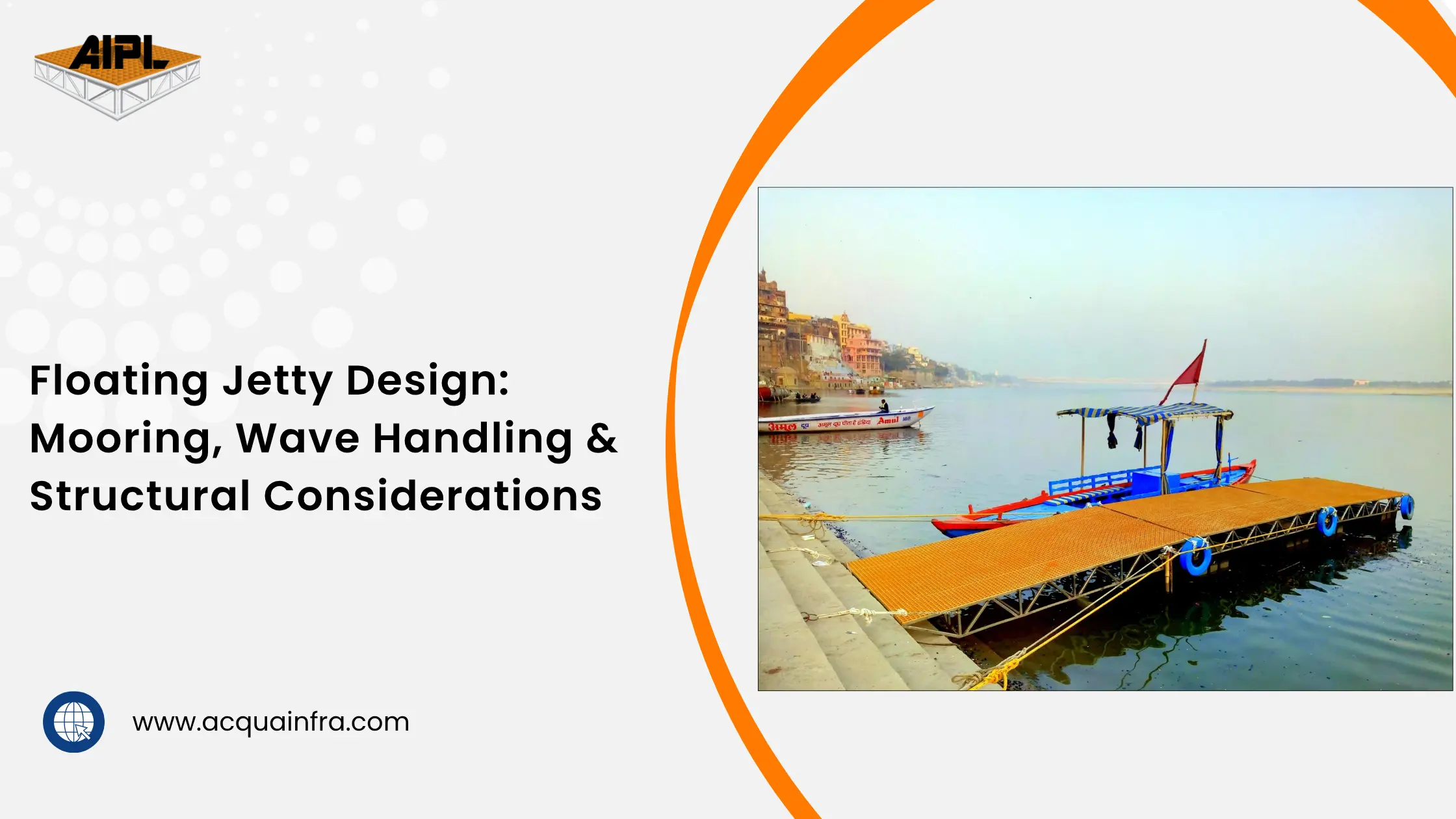
Across marine infrastructure projects—from ports and inland waterways to waterfront tourism developments—engineers, port planners, and developers must address a fundamental design challenge:
How can a floating jetty remain stable, safe, and fully functional under wave action, fluctuating water levels, and continuous operational loads?
Poorly engineered floating jetties can lead to several operational and safety issues, including:
For this reason, modern floating jetty design must incorporate robust mooring systems, wave response analysis, and structural engineering considerations from the very beginning of the project.
Across India, engineering-focused companies such as Acquafront Infrastructure Private Limited (AIPL) have delivered multiple floating infrastructure projects, including passenger jetties, floating docks, and modular floating platforms across rivers and inland waterways.
In this blog, we explore the core engineering principles behind floating jetty design, focusing on mooring systems, wave response behaviour, and key structural design considerations that ensure long-term stability, safety, and performance.
Floating jetty design refers to the engineering process of designing a floating docking platform that remains stable under varying water levels, environmental forces, and operational loads.
Unlike fixed jetties, floating jetties:
Modern floating jetty design often uses modular floating systems to simplify installation and scalability.
AIPL’s floating infrastructure projects use engineered floating platforms designed for structural stability, passenger movement, and marine safety standards.
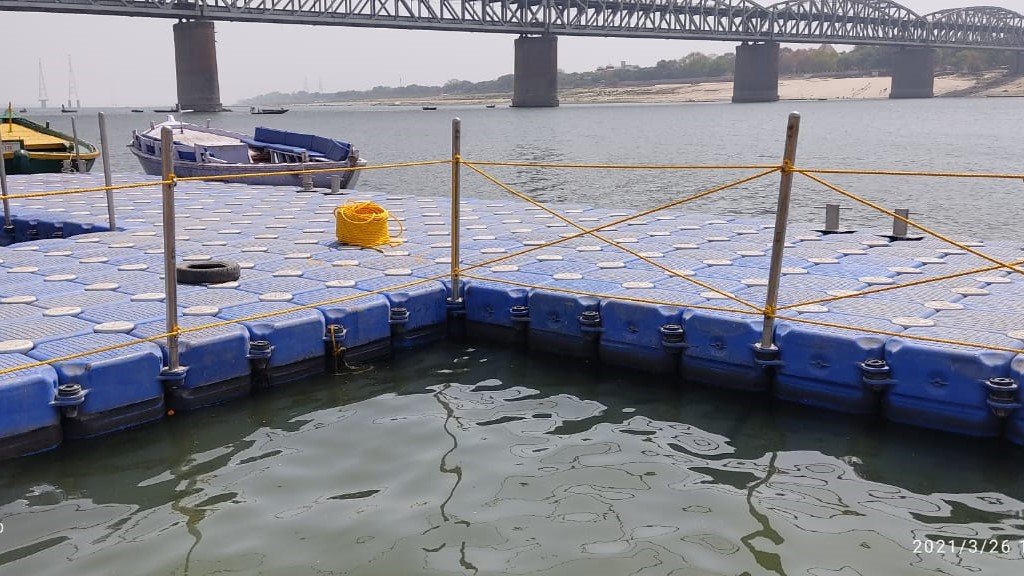
A well-engineered floating jetty design typically includes:
Each component must work together to ensure safe docking and passenger movement.
One of the most critical elements of floating jetty design is the mooring system, which keeps the jetty stable and aligned with the shore.
Typical mooring configurations include:
Anchors are fixed into the river or seabed to prevent lateral drift.
Mooring lines connect the floating jetty to the shoreline to maintain alignment.
Chains or wire ropes absorb wave motion and water level variation.
Multiple anchors are installed to prevent single-point failure.
Engineering-driven floating jetty design considers water current, seasonal level fluctuation, and wind loads when designing these systems.
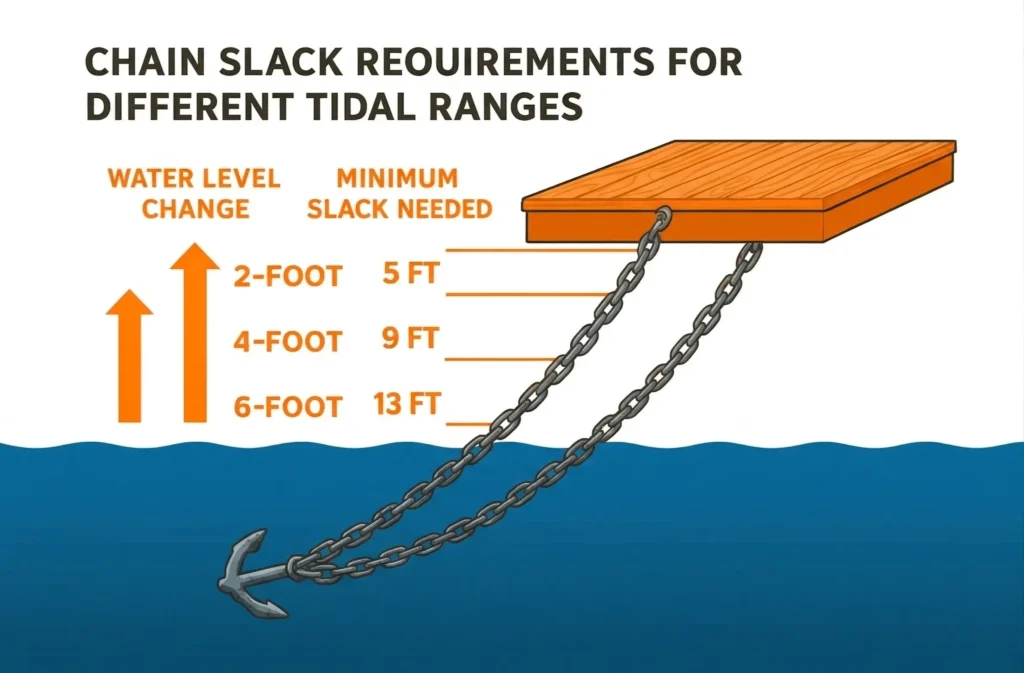
Alt Tag: Mooring and anchoring systems used in floating jetty design
Another critical factor in floating jetty design is wave response and motion control.
Floating structures must absorb wave energy while maintaining operational stability.
Important considerations include:
The jetty must remain stable under expected wave conditions.
Floating modules should absorb motion without excessive oscillation.
Ensures that the deck remains above water during wave peaks.
Allows safe access despite vertical movement.
Floating infrastructure projects like passenger jetties and floating docks must incorporate wave handling capabilities to ensure safety.
Structural engineering determines whether a floating jetty performs safely over time.
Typical structural parameters include:
| Parameter | Consideration |
| Dead Load | Weight of jetty structure |
| Live Load | Passengers, equipment |
| Environmental Load | Wind, current |
| Impact Load | Vessel docking force |
| Safety Factor | Additional structural margin |
Design codes often used in floating jetty design include:
These codes ensure that floating infrastructure remains stable and durable.
Engineering expertise in floating jetty design is best demonstrated through executed projects.
Examples include:
AIPL installed passenger jetties under the Cruise Development Project at Ravidas Ghat and Raj Ghat, enhancing inland waterway transportation infrastructure .
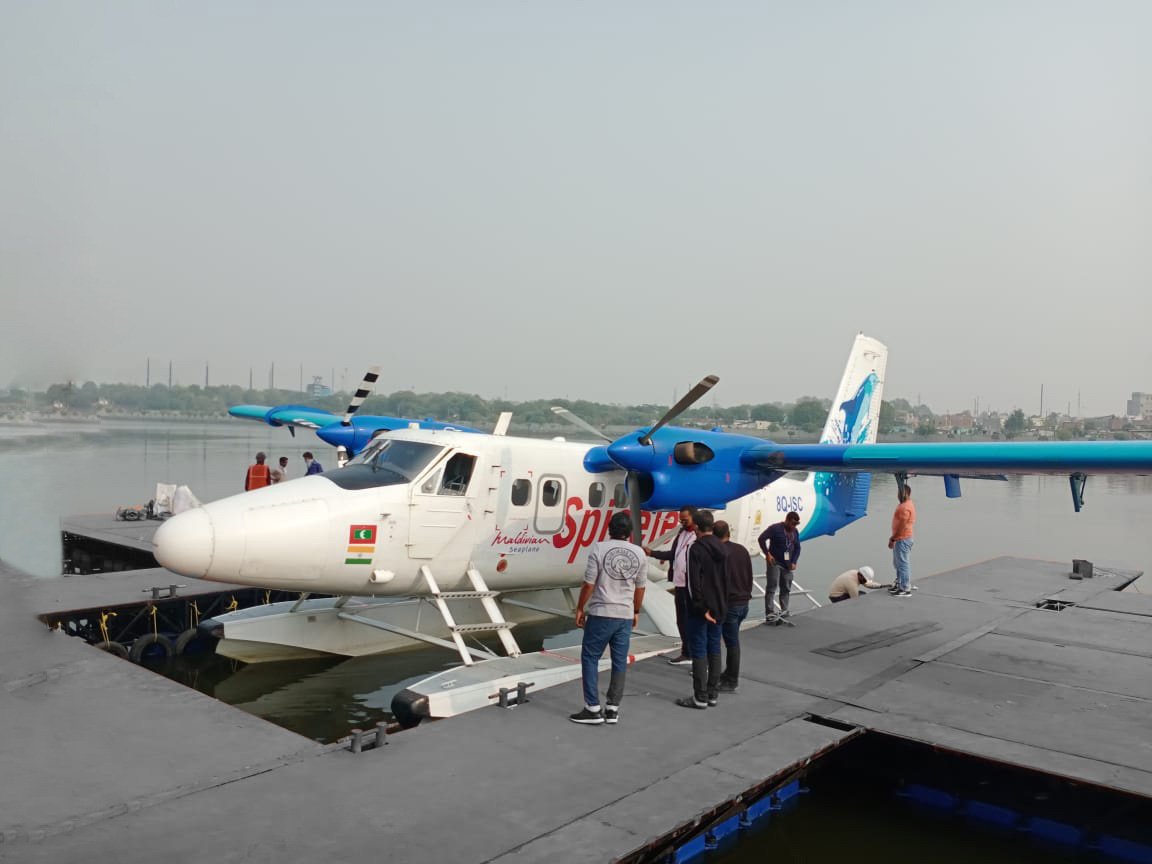
A 308 sq. meter floating structure was supplied to support seaplane maintenance operations.
A 636 sq. meter floating stage was installed during the 550th Guru Nanak Dev Ji celebration, demonstrating heavy-load floating infrastructure capability.
These projects show how engineered floating jetty design can support diverse marine applications.
India’s floating infrastructure market is growing rapidly, with demand from:
Top floating jetty manufacturers and suppliers typically provide:
Engineering-focused companies stand out in this segment.
Acquafront Infrastructure Private Limited (AIPL) is among the companies supplying modular floating jetty solutions in India, backed by executed projects across multiple states, including Uttar Pradesh, Gujarat, Madhya Pradesh, Odisha, and Punjab.
Their floating infrastructure portfolio includes:
With IIT-driven engineering and patent-backed floating systems, AIPL has established itself as a reliable supplier in the Indian floating infrastructure market.
Floating jetty design is the engineering process of designing a floating docking platform supported by pontoons or modular floats.
Through engineered mooring systems and balanced structural load distribution.
Typically steel, HDPE modules, or concrete floating systems.
Dead load, live load, environmental load, and vessel impact load.
Yes. They are commonly used in inland waterways.
Yes. They rise and fall with water levels.
Shipping, tourism, marine construction, passenger transport, and energy sectors.
Typically 15–25 years, depending on materials and maintenance.
Choose suppliers with real marine infrastructure projects, engineering expertise, and structural certification. Companies like AIPL provide floating jetty solutions backed by executed projects across India.
Several marine infrastructure companies provide floating jetty solutions, including engineering-driven firms like AIPL specializing in modular floating infrastructure.
Yes. Floating jetties have been deployed across multiple Indian states. AIPL has executed projects across Uttar Pradesh, Gujarat, Madhya Pradesh, Odisha, and Punjab.
Yes. They are widely used for river cruises and marina docking.
Yes, if designed with proper load capacity and mooring systems.
Yes. Modular systems allow scalable design.
Evaluate load capacity, environmental conditions, wave handling, and engineering certifications.
Floating jetty design requires careful engineering integration of:
When properly engineered, floating jetties provide reliable docking infrastructure for rivers, lakes, and coastal areas.
With executed projects across passenger jetties, floating docks, and modular infrastructure platforms, companies like AIPL demonstrate how engineering-driven floating jetty design can support modern marine infrastructure development in India.
Planning a floating jetty project?
Consult experienced floating infrastructure engineers to design safe, scalable, and site-specific floating jetty systems.
📞 +91 7678232371
🌐 www.acquainfra.com
📩 Admin@acquainfra.com
Mr. Achin Agrawal
Director & CTO
Acquafront Infrastructure Private Limited
Expert in floating infrastructure engineering and modular marine systems.

