
As the world shifts towards sustainable solutions, the idea of floating CNG stations is currently being created as a major move in the field of infrastructure to fuel. One of the most stunning installations is currently happening in the historical Khirkiya Ghat in Varanasi which is where the very first floating CNG filling station was set up. The station has now been a model for technological innovation and environmental sustainability.
A Breakthrough at Khirkiya Ghat The central part of this amazing design is 324 square. millimeter. floating structure built through GAIL India Limited, designed to cater to the needs of cruise ships powered by CNG as well as vessels operating in the Ganga River. This unique design actively tackles critical environmental issues, including air and noise pollution, as well as river contamination, while ensuring year-round functionality, even during floods.
Floating CNG (Compressed Natural Gas) stations are innovative fueling solutions designed to provide CNG supply to water-based transportation systems, such as boats and ferries, without the need for land-based infrastructure. These stations are strategically placed on floating platforms, allowing seamless refueling in waterways while addressing environmental concerns.
A Floating CNG Station consists of:
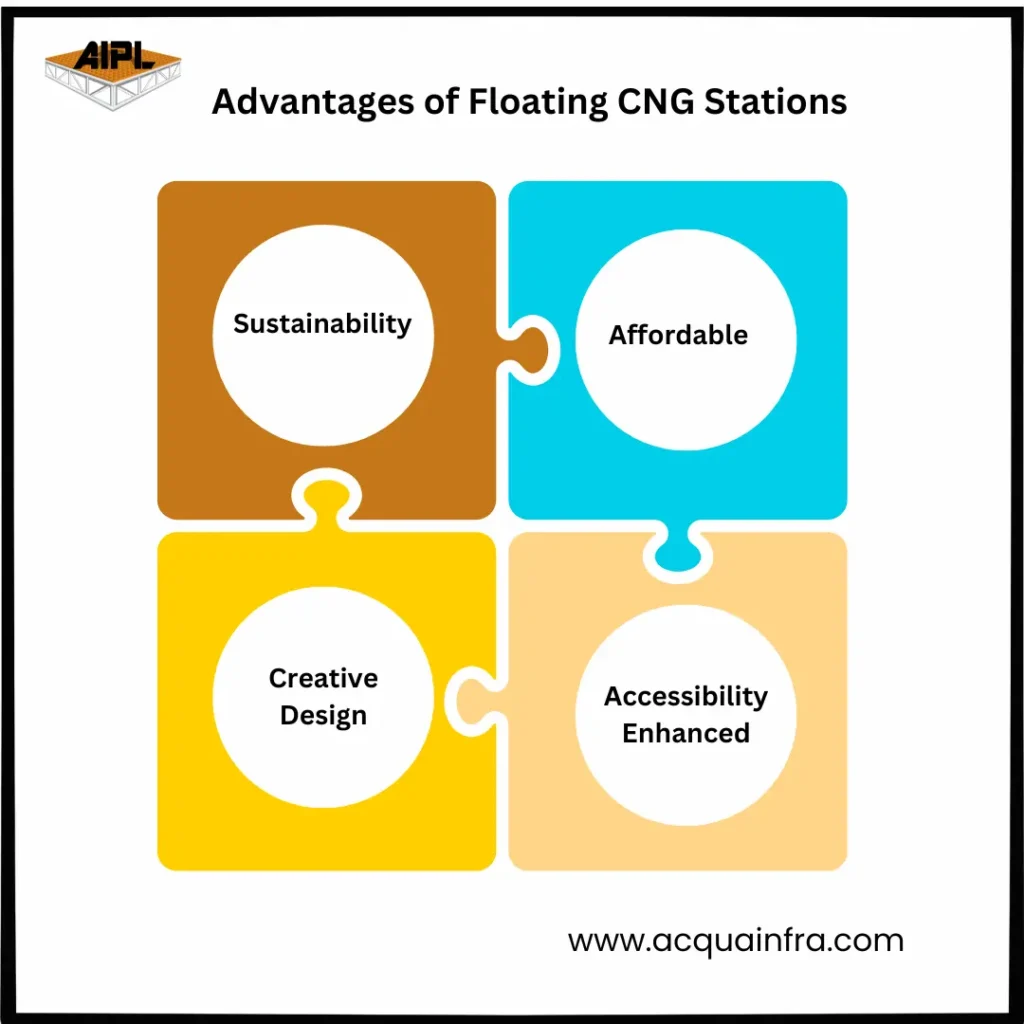
Floating CNG stations offer multiple advantages for the marine industry. They are eco-friendly, significantly reducing water, air, and noise pollution compared to traditional diesel-powered boats. These stations provide efficient fueling, eliminating the need for vessels to travel long distances for refueling, thereby saving time and operational costs. Additionally, they are cost-effective, allowing boat operators to benefit from lower fuel expenses. Designed to adapt to varying water levels, floating CNG stations ensure year-round operation, functioning seamlessly even during floods or seasonal water changes.
CNG-based stations that float have several benefits: Sustainability for the Environment In assisting vessels powered by CNG, they dramatically minimize noise and air pollution and help create cleaner and more sustainable waterways. Performance: Designed to run without a hitch, even during the flooding season.
They provide continuous service for fueling. Space Optimization Since they're floating over the waters, these stations effectively utilize space, and they also bypass limitations on land areas with high density of waterfronts. Advanced Technology at Play This new venture is because of the use in the form of Modular floating Mild Steel Barges.
The floating Tank used to complete the filling of CNG situated within Khirkiya Ghat is not just about the latest technological advances, it's an important step towards preserving the earth. Reduction of water pollution Through reducing the magnitude of impact caused by spills of oil and fuel. Reduction of Noise It's more quiet than diesel engines that are more traditional and create a peaceful atmosphere. More clean air CNG is an environmentally friendly fuel option that reduces the harmful emissions. The CNG Station floating located in Khirkiya Ghat is a testament of India's commitment to sustainable energy solutions. It will transform the fuel infrastructure of all waterways around the world.
As the demand for sustainable energy solutions grows, floating CNG stations offer an innovative way to provide compressed natural gas (CNG) in remote and water-based areas.
At AIPL (Acquafront Infrastructure Pvt Ltd), we specialize in the design, manufacturing, deployment, and installation of modern floating infrastructure. Our advanced floating platforms are engineered to support CNG dispensers, making energy distribution more efficient, accessible, and reliable.
With our expertise in modular floating technology, we ensure cost-effective, durable, and safe solutions that meet industry standards while maximizing operational convenience.
Proven Expertise: AIPL built the world's first floating CNG filling station at Khirkiya Ghat, Varanasi, and GAIL India Limited successfully launched it into service.This historic project demonstrated AIPL's capacity to offer creative and long-lasting solutions.
AIPL designs and engineers Modular Floating Mild Steel Barges, ensuring scalability, stability, and long-lasting performance.This ensures that operations are safe and effective all year long, especially during flood seasons.
Tailored Solutions: AIPL provides customized solutions to satisfy particular needs, guaranteeing optimal operational effectiveness and environmental sustainability, from conception to installation.
Principal Advantages of Working with AIPL
Sustainability of the Environment: By promoting CNG-powered boats and excursions, AIPL's Floating CNG Stations contribute to a reduction in air, water, and noise pollution.
Space Optimization and Flexibility: AIPL guarantees effective space use while preserving the ability to grow or move as necessary by leveraging floating platforms.
AIPL provides comprehensive solutions, such as:
Planning and Consultation: Comprehending customer requirements and creating tailored plans for the installation of floating CNG stations.
Design and Engineering: Making use of cutting-edge modular designs to provide maximum safety and functionality.
Installation and Commissioning: Providing professional technical assistance to guarantee a smooth and effective installation procedure.
Maintenance and Support: To ensure continuing service, provide ongoing maintenance and operational support.
AIPL is transforming the future of fuel infrastructure with a strong dedication to technological innovation and environmental sustainability.
The Future of Floating CNG Stations
They are sustainable and provide creative solutions to urban issues and encourage eco-friendly use of CNG fuel. Countries that are embracing renewable energy initiatives could be the first to adopt this revolutionary approach.

Join forces with AIPL to provide your waterways with cutting-edge, environmentally friendly fuel infrastructure solutions.
Find out how floating CNG stations are setting the foundation in the direction of sustainable travel. To find out more about this cutting-edge technology and its effect on the protection of the environment, visit Acquafront Infrastructure. Ltd. today!
Energy Floating Solar Panels are solar photovoltaic (PV) systems installed on floating platforms over water bodies to generate clean and renewable electricity without occupying land.
The Acqua Energy Series is Acquafront’s integrated floating energy solution designed for energy generation, storage, and distribution, using high‑durability floating platforms engineered for Indian water conditions.
Floating solar systems can be installed on reservoirs, ponds, lakes, canals, dams, and other calm or low‑current inland water bodies.
Floating solar plants do not require land acquisition, reduce water evaporation, and offer higher efficiency due to natural cooling from water surfaces.
Acquafront uses RCC/GFRC floating beams filled with EPS, offering high strength, buoyancy, corrosion resistance, and long service life.
The floating platforms are designed for a service life of up to 50 years, subject to normal operation and periodic maintenance.
Systems are modular and scalable, starting from 10 kW and expandable to 100 kW, 500 kW, 1 MW, and utility‑scale installations.
Yes. The modular design allows easy expansion by adding more floating units and solar panels without disturbing existing installations.
Yes. Floating solar panels cover a portion of the water surface, significantly reducing evaporation losses, especially in reservoirs and ponds.
Yes. When properly designed and installed, floating solar systems are suitable for drinking water reservoirs and help reduce algae growth.
Anchoring systems are designed based on site‑specific parameters such as water depth, wind load, and water level variations, using dead anchors, RCC anchors, or mooring systems.
Yes. RCC/GFRC floating beams are highly resistant to corrosion, UV exposure, and harsh environmental conditions.
No. The floating platforms are engineered to maintain stability under wind, wave, and water level fluctuations.
Key advantages include long lifespan, low maintenance, modular scalability, eco‑friendly materials, and compliance with Indian engineering standards.
Yes. Battery Energy Storage Systems (BESS) can be integrated for energy storage, peak load management, and off‑grid applications.
Yes. Floating solar plants can be designed for both grid‑connected and off‑grid applications, including remote and rural areas.
Municipal bodies, irrigation departments, industries, water utilities, mining, smart cities, and renewable energy developers can benefit from floating solar systems.
Floating solar promotes clean energy generation, reduces carbon emissions, conserves land and water, and supports India’s renewable energy goals.
Maintenance includes periodic inspection of solar panels, electrical systems, anchoring arrangements, and floating platforms.
Yes. Designs are aligned with applicable Indian engineering practices, structural standards, and quality norms.
Yes. Acquafront offers end‑to‑end services including site survey, design, manufacturing, supply, installation, commissioning, and maintenance support.
Installation timelines depend on project size and site conditions but are generally faster than land‑based solar projects due to modular construction.
Yes. Properly designed floating solar systems have minimal environmental impact and may improve water quality by reducing algae growth.
Yes. Modular floating solar systems can be dismantled and relocated if project requirements change.
The cooling effect of water reduces solar panel temperature, resulting in higher energy output compared to conventional ground‑mounted systems.
Acquafront combines engineering expertise, patented floating technology, durable materials, and turnkey execution, making it a reliable partner for floating solar projects.
Acquafront Infrastructure Pvt. Ltd. provides auxiliary floating infrastructure solutions, access platforms, and support pontoons for offshore oil and gas operations, aligned with marine engineering standards.
About the Author
Mr. Achin Agrawal, Director & CTO.

