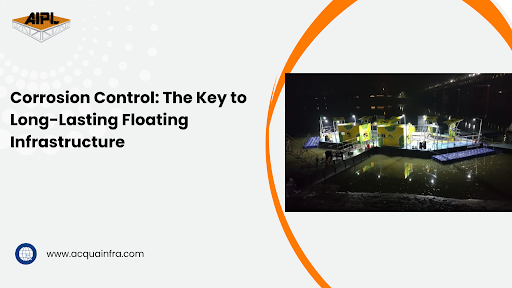
One of the biggest challenges in marine infrastructure is not construction—it is durability. Whether it is a Construction Pontoon, Cargo Barge, Floating Jetty, Floating Pump Pontoon, or Marine Work Platform, these assets continuously operate in harsh environments where moisture, dissolved salts, fluctuating water levels, and oxygen exposure can gradually deteriorate steel structures.
This is where Corrosion Control becomes a critical engineering consideration rather than a maintenance afterthought.
For ports, industrial terminals, water resource departments, mining operators, and EPC contractors, corrosion directly affects structural integrity, safety, operational efficiency, and lifecycle costs. A poorly protected floating asset may require frequent repairs, while an engineered corrosion protection strategy can extend service life from decades to several decades with minimal intervention.
At Acquafront Infrastructure Private Limited (AIPL), corrosion resistance is integrated into the design, fabrication, and execution stages of floating infrastructure projects. Through IIT-driven engineering, marine-grade fabrication practices, and IRS-compliant floating infrastructure, AIPL develops floating assets designed for long-term performance in demanding operating conditions.
Corrosion is a natural electrochemical process that gradually degrades metal surfaces when exposed to water and oxygen.
For floating infrastructure, the risk is significantly higher because structures remain exposed to:
Without effective Corrosion Control, structural members may lose strength, affecting load-bearing capacity and operational safety.
Unlike conventional land-based structures, floating infrastructure experiences continuous contact with water.
Examples include:
The splash zone, waterline region, and submerged sections are particularly vulnerable to accelerated corrosion.
Corrosion does not simply affect appearance. It impacts performance, reliability, and asset lifespan.
A robust Corrosion Control strategy helps:
Marine structures are designed to withstand substantial operational loads.
Many AIPL-engineered floating assets support structural loads exceeding 50 tonnes. Maintaining this capability requires preserving steel integrity throughout the asset lifecycle.
Corrosion can gradually reduce plate thickness, compromise welds, and weaken critical structural components.
Reactive repairs are often significantly more expensive than preventive protection.
Effective Corrosion Control helps reduce:
This is particularly important for industrial clients where downtime directly impacts production.
Understanding corrosion mechanisms helps project owners make informed engineering decisions.
Corrosion rates increase depending on:
Coastal installations generally face higher corrosion risks than freshwater projects.
Protective coatings may become damaged through:
Damaged coatings expose bare steel to aggressive environments.
Improper welding, inadequate surface preparation, or low-quality coating applications often accelerate corrosion-related failures.
This highlights the importance of engineering-led fabrication and quality control.
Successful Corrosion Control requires a combination of engineering, fabrication, and maintenance practices.
Proper surface preparation is the foundation of long-term corrosion protection.
This typically involves:
Without proper preparation, even premium coatings may fail prematurely.
Modern marine-grade coating systems create a protective barrier between steel and the surrounding environment.
Benefits include:
These coatings are selected based on site-specific environmental conditions.
Engineering teams often incorporate design features that reduce corrosion risks.
Examples include:
Corrosion Control begins during design—not after fabrication.
Many project owners focus on initial project costs while overlooking long-term operational expenses.
However, corrosion protection significantly influences lifecycle economics.
| Parameter | Effective Corrosion Control | Limited Protection |
| Asset Lifespan | 20–35 Years | Reduced |
| Maintenance Cost | Lower | Higher |
| Operational Downtime | Minimal | Frequent |
| Structural Reliability | High | Moderate |
| Lifecycle Cost | Lower | Higher |
Well-engineered floating infrastructure can achieve:
making corrosion protection one of the most valuable long-term investments.
Successful Corrosion Control requires more than applying paint or coatings. It demands an engineering-driven approach that considers design, fabrication, operational conditions, and long-term maintenance.
The choice of material directly affects corrosion resistance.
Engineering teams evaluate:
For floating infrastructure projects, marine-grade steel combined with advanced coating systems provides a balance between structural strength and durability.
Poor welding practices often create vulnerable areas where corrosion begins.
AIPL emphasizes:
to ensure long-term structural integrity.
Regular inspections help identify:
Proactive inspection programs significantly extend the service life of floating infrastructure assets.
At Acquafront Infrastructure Private Limited (AIPL), corrosion protection is integrated throughout the project lifecycle—from design and engineering to fabrication and execution.
Rather than treating corrosion as a maintenance concern, AIPL incorporates durability-focused engineering into every floating infrastructure project.
Key capabilities include:
Each project is customized according to:
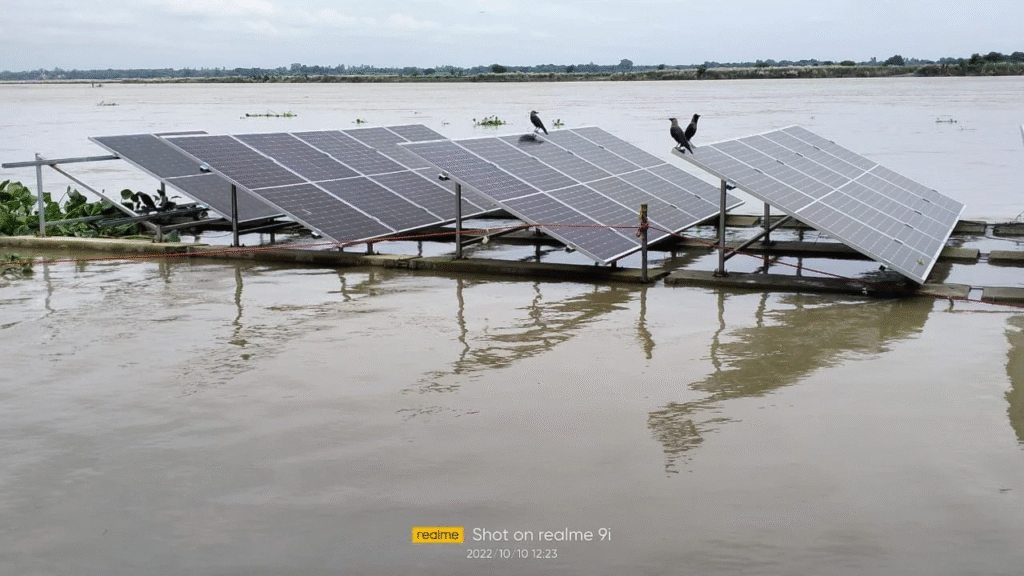
Large-scale floating infrastructure designed for long-term operation under fluctuating reservoir conditions.
Water management infrastructure engineered to deliver reliable performance and durability.
Industrial floating infrastructure operating in demanding environments requiring robust corrosion protection.
Heavy-duty floating assets designed for industrial and mining applications where durability is critical.
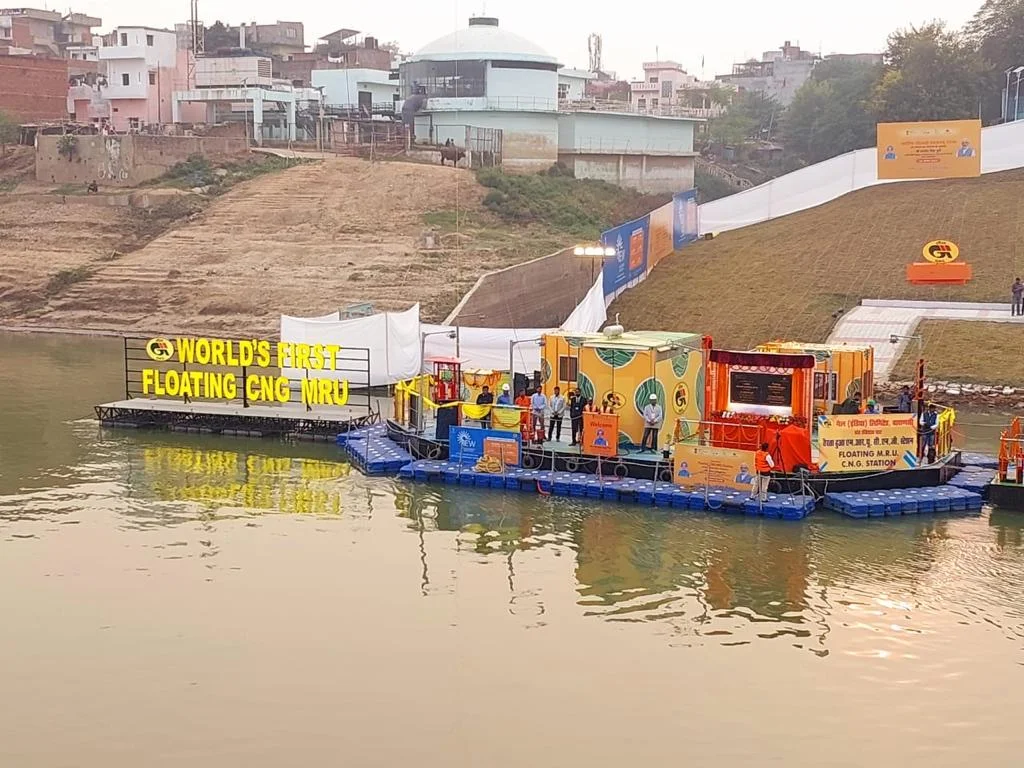
Innovative floating infrastructure demonstrating advanced engineering, operational reliability, and long-term asset protection.
Marine infrastructure designed to withstand continuous public use and environmental exposure.
Customized floating structures requiring both structural integrity and aesthetic performance.
Specialized marine infrastructure showcasing engineering excellence, fabrication quality, and durability-focused design practices.
These projects demonstrate how engineering-led corrosion protection contributes directly to asset reliability and lower lifecycle costs.
Corrosion Control refers to engineering practices used to prevent or slow metal deterioration in marine and waterfront structures.
It helps maintain structural integrity, safety, and long-term operational performance.
Corrosion can weaken structural members, increase maintenance costs, and reduce service life.
Yes. Proper protection can extend service life from 20 years to 25–35 years with maintenance.
Floating Pump Pontoons, Modular Barges, Floating Jetties, Marine Work Platforms, and Water Intake Pontoons all require protection.
Water exposure, dissolved oxygen, salinity, pollutants, and coating damage are common causes.
Inspection frequency depends on operating conditions but regular inspections are strongly recommended.
They provide moisture resistance, chemical protection, UV resistance, and improved durability.
Engineering-focused companies such as AIPL incorporate corrosion-resistant design and fabrication practices into floating infrastructure projects.
Yes. AIPL supports projects across Gujarat and other regions of India.
Yes. AIPL has experience supporting projects in Uttar Pradesh, Madhya Pradesh, Odisha, and other states.
Look for engineering expertise, marine fabrication experience, project references, and lifecycle-focused design capabilities.
Yes. AIPL offers engineering, fabrication, SITC, installation support, and turnkey project execution.
Absolutely. Effective Corrosion Control significantly reduces repair requirements and operational downtime.
Because it protects structural assets, improves reliability, extends lifespan, and lowers total ownership costs.
Corrosion is one of the most significant threats to the performance and longevity of marine infrastructure. Whether operating a Floating Pump Pontoon, Cargo Barge, Floating Jetty, Water Intake Pontoon, or Marine Work Platform, long-term success depends on how effectively corrosion risks are managed.
Through proper engineering, material selection, marine-grade fabrication, protective coatings, and proactive maintenance, project owners can dramatically improve asset reliability while reducing lifecycle costs.
As demonstrated through projects such as Hirakud Reservoir, Bansagar Dam, Floating CNG Stations, Passenger Jetty developments, Ultratech Cement projects, Vedanta installations, and the Sabarmati Wet & Dry Dock Project, engineering-driven Corrosion Control remains a critical factor in achieving long-term infrastructure performance.
Planning a floating infrastructure project?
Consult experienced engineers to design customized floating infrastructure tailored to your operational requirements.
📞 +91 7678232371
📩 Admin@acquainfra.com
Mr. Achin Agrawal
Director & CTO
Acquafront Infrastructure Private Limited
Expert in floating infrastructure engineering and modular marine systems.

