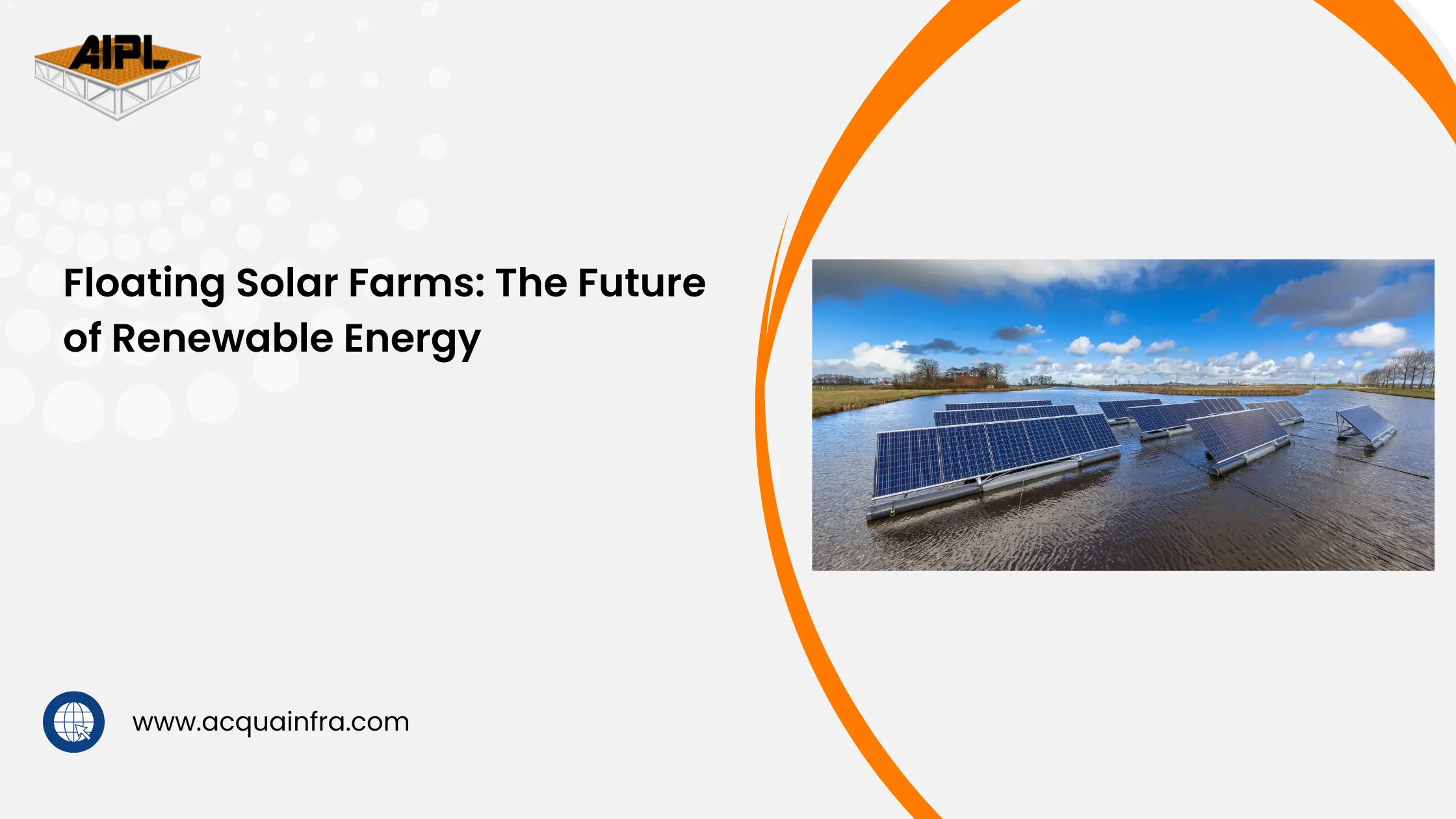
Floating solar farms, also known as Floating Photovoltaic (FPV) systems, are a groundbreaking solution to the world’s increasing energy demands. Installed on water bodies, they reduce land usage, conserve water, and generate clean electricity efficiently. As the world looks for sustainable solutions.
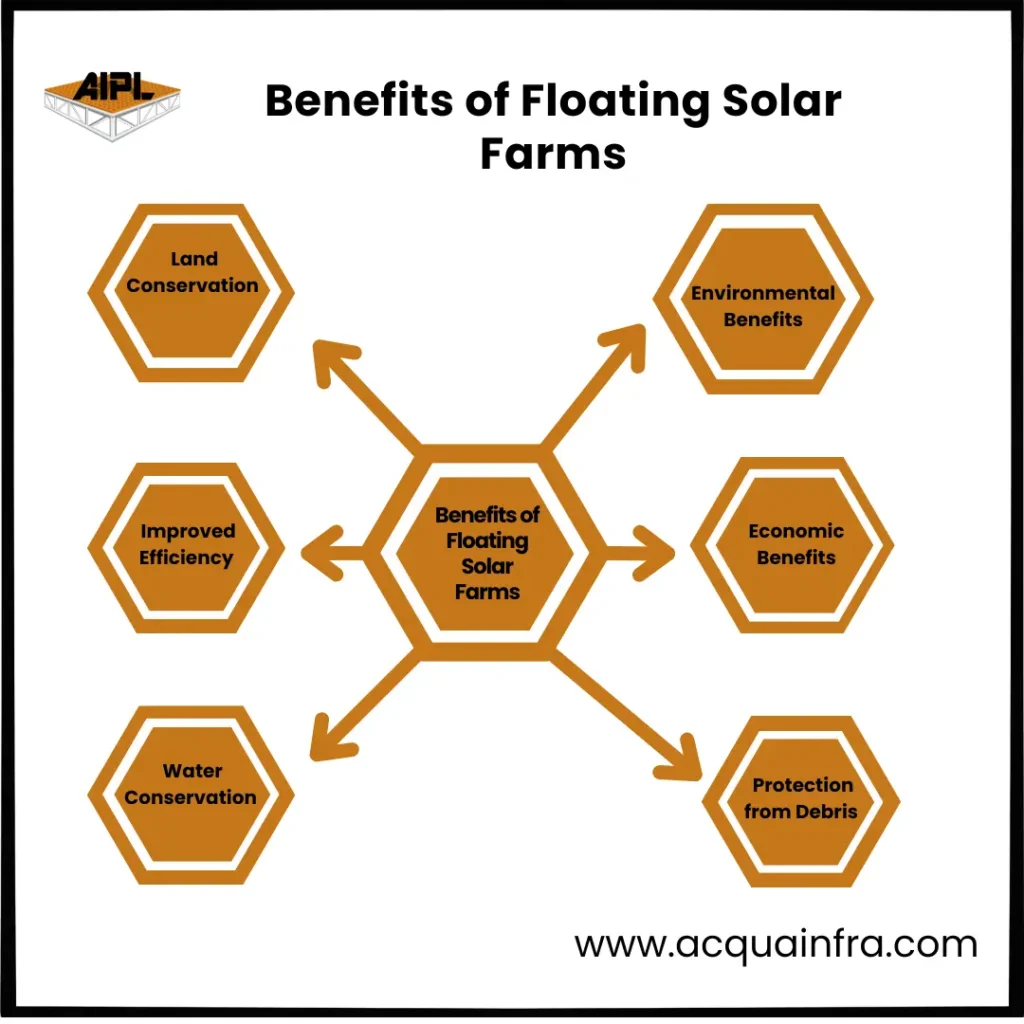
Why Farm Owners Should Consider Floating Solar Farms
For farm owners, floating solar farms offer a dual benefit:
Additionally, government subsidies and tax benefits for renewable energy projects make this an attractive investment for agricultural businesses.
To further enhance the efficiency and durability of floating solar farms, innovative materials like GFRC Solar Beams (Glass Fiber Reinforced Concrete) and floating concrete are being adopted. GFRC Solar Beams are lightweight, highly durable, and resistant to environmental factors such as corrosion and UV radiation. These beams provide robust support for solar panels, ensuring long-term stability and performance.
Similarly, concrete platforms offer unparalleled strength and resilience, making them an ideal choice for construction. Their buoyancy and ability to withstand harsh weather conditions make them a game-changer in renewable energy infrastructure. By incorporating these advanced materials, floating solar farms can significantly reduce maintenance costs, extend operational life, and ensure eco-friendly energy production on a larger scale.
Adding such cutting-edge innovations to the floating solar farm design reinforces the global transition toward sustainable energy solutions.
Energy Floating Solar Panels are solar photovoltaic (PV) systems installed on floating platforms over water bodies to generate clean and renewable electricity without occupying land.
The Acqua Energy Series is Acquafront’s integrated floating energy solution designed for energy generation, storage, and distribution, using high‑durability floating platforms engineered for Indian water conditions.
Floating solar systems can be installed on reservoirs, ponds, lakes, canals, dams, and other calm or low‑current inland water bodies.
Floating solar plants do not require land acquisition, reduce water evaporation, and offer higher efficiency due to natural cooling from water surfaces.
Acquafront uses RCC/GFRC floating beams filled with EPS, offering high strength, buoyancy, corrosion resistance, and long service life.
The floating platforms are designed for a service life of up to 50 years, subject to normal operation and periodic maintenance.
Systems are modular and scalable, starting from 10 kW and expandable to 100 kW, 500 kW, 1 MW, and utility‑scale installations.
Yes. The modular design allows easy expansion by adding more floating units and solar panels without disturbing existing installations.
Yes. Floating solar panels cover a portion of the water surface, significantly reducing evaporation losses, especially in reservoirs and ponds.
Yes. When properly designed and installed, floating solar systems are suitable for drinking water reservoirs and help reduce algae growth.
Anchoring systems are designed based on site‑specific parameters such as water depth, wind load, and water level variations, using dead anchors, RCC anchors, or mooring systems.
Yes. RCC/GFRC floating beams are highly resistant to corrosion, UV exposure, and harsh environmental conditions.
No. The floating platforms are engineered to maintain stability under wind, wave, and water level fluctuations.
Key advantages include long lifespan, low maintenance, modular scalability, eco‑friendly materials, and compliance with Indian engineering standards.
Yes. Battery Energy Storage Systems (BESS) can be integrated for energy storage, peak load management, and off‑grid applications.
Yes. Floating solar plants can be designed for both grid‑connected and off‑grid applications, including remote and rural areas.
Municipal bodies, irrigation departments, industries, water utilities, mining, smart cities, and renewable energy developers can benefit from floating solar systems.
Floating solar promotes clean energy generation, reduces carbon emissions, conserves land and water, and supports India’s renewable energy goals.
Maintenance includes periodic inspection of solar panels, electrical systems, anchoring arrangements, and floating platforms.
Yes. Designs are aligned with applicable Indian engineering practices, structural standards, and quality norms.
Yes. Acquafront offers end‑to‑end services including site survey, design, manufacturing, supply, installation, commissioning, and maintenance support.
Installation timelines depend on project size and site conditions but are generally faster than land‑based solar projects due to modular construction.
Yes. Properly designed floating solar systems have minimal environmental impact and may improve water quality by reducing algae growth.
Yes. Modular floating solar systems can be dismantled and relocated if project requirements change.
The cooling effect of water reduces solar panel temperature, resulting in higher energy output compared to conventional ground‑mounted systems.
Acquafront combines engineering expertise, patented floating technology, durable materials, and turnkey execution, making it a reliable partner for floating solar projects.
Promising step toward a sustainable future. By utilizing underused water surfaces, they address land scarcity, boost energy efficiency, and provide economic benefits. Whether you're an energy enthusiast or a farm owner, exploring this innovative solution is a step toward a cleaner, greener planet.
Ready to explore the future of sustainable living? Discover how floating houses can transform your lifestyle and help the planet. Visit our website Acquainfra to learn more about innovative water-based solutions. Let’s build a greener tomorrow—together!

