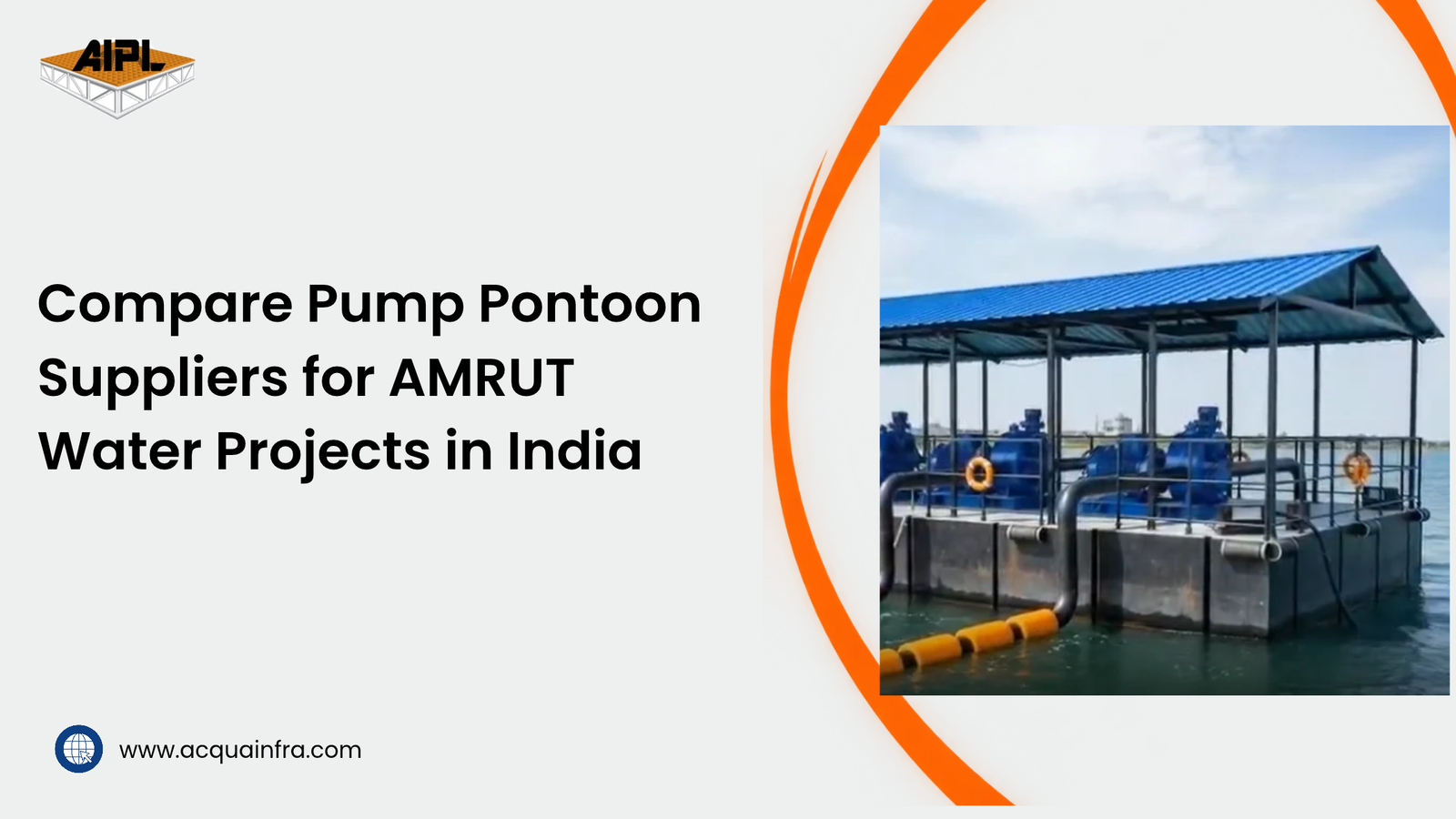
Reliable water supply is important for every city. Under the AMRUT and AMRUT 2.0 missions, urban water supply projects aim to improve access to water and strengthen water infrastructure.
In projects that draw water from reservoirs, dams, lakes, or rivers, the intake system plays an important role. A pump pontoon can support pumping equipment on a floating platform, helping water supply teams draw water from a suitable location.
Choosing the right supplier is important because the pontoon must match the project's water source, pumping needs, site conditions, and operating requirements.
This guide explains how to compare pump pontoon suppliers in India, what to check before selecting a supplier, and how Acquafront Infrastructure Private Limited (AIPL) can be considered for floating pump infrastructure.
A pump pontoon is a floating platform designed to support pumping equipment and related components. It can be used where water needs to be drawn from a river, reservoir, lake, or another suitable water source.
Unlike a fixed platform, a floating platform can move with changes in the water level, depending on its design and mooring arrangement.
A pump pontoon system may include:
The exact design depends on the project. The supplier should understand the site conditions and pumping requirements before recommending a suitable system.
Water supply projects need reliable systems to move water from the source to treatment plants or distribution networks. At suitable sites, floating pump systems can be considered as one option for water intake.
Their suitability depends on the water source, operating water levels, site conditions, and project design.
Some water supply projects draw water from reservoirs and dams. A floating pump platform can provide support for pumping equipment at these locations.
The supplier must consider the water level, depth, movement, and other site conditions before finalizing the design.
Water levels may change between seasons and during periods of high or low rainfall. A properly designed floating system can move with the water level within its intended operating range.
The supplier should explain the system's operating limits and how it will remain stable.
A pump pontoon must safely support the weight of the equipment installed on it. The platform design should consider the pumps, pipes, accessories, maintenance needs, and other expected loads.
The required capacity should be based on the actual project specifications.
At certain sites, a floating intake system may be considered instead of a fixed intake structure. However, the choice depends on technical requirements, site conditions, cost, and project approval.
A project team should compare both options before selecting a solution.
Pump pontoons can be used in different water-related and industrial applications, depending on their design.
Common applications include:
The supplier should assess each project separately. A system designed for one location may not be suitable for another without changes to its design.
When looking for pump pontoon suppliers, buyers should compare more than the quoted price. The supplier's experience, design approach, fabrication quality, installation plan, and support arrangements are also important.
Ask whether the supplier can design a pontoon for your project's actual requirements.
The design process should consider:
A supplier should be able to explain the proposed design in clear language.
Fabrication quality affects the strength and service life of a pontoon.
Ask the supplier about the materials used, fabrication process, inspection methods, corrosion protection, and quality checks. Request relevant technical documents where required by the project.
The checks should match the project's specifications and applicable requirements.
A pontoon is only one part of a pumping system. The platform and equipment must work together.
Before placing an order, clarify whether the supplier is responsible for the floating platform only or also for pumps, piping, electrical equipment, and other components.
This helps avoid confusion about the scope of supply.
Installation involves placing the system at the site and preparing it for operation. Commissioning means checking that the installed system works as intended.
Ask the supplier to explain what is included in the installation scope, what site preparation is required, and which activities will be handled by the buyer.
A pump pontoon may remain in service for many years. Buyers should understand what maintenance it requires and what support the supplier can provide.
Ask about inspection schedules, spare parts, repair support, and the availability of technical assistance.
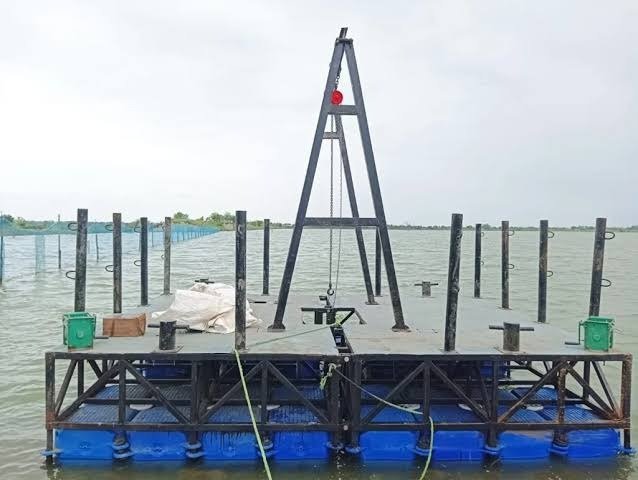
Before choosing a supplier, review the following points with the project engineer and procurement team.
The platform must support the expected equipment and operating loads. Ask for design documents that explain the load capacity and the conditions under which the system can operate.
Buoyancy helps the platform float, while stability helps it remain balanced during operation.
The design should consider the weight and position of the equipment, the platform layout, and the expected water conditions.
Anchoring or mooring keeps the pontoon in its intended position. The arrangement should suit the site, water depth, water movement, and changes in water level.
Materials and protective coatings should be selected according to the operating environment. Ask the supplier how the platform will be protected from corrosion and what maintenance may be needed.
The supplier needs to understand the project's pumping requirements before proposing a system. These may include the required flow rate, pumping head, operating hours, and pump power.
The final equipment selection should follow the approved project specifications.
Workers may need to inspect pumps, pipes, and other equipment. The platform layout should provide suitable access for the required inspection and maintenance activities.
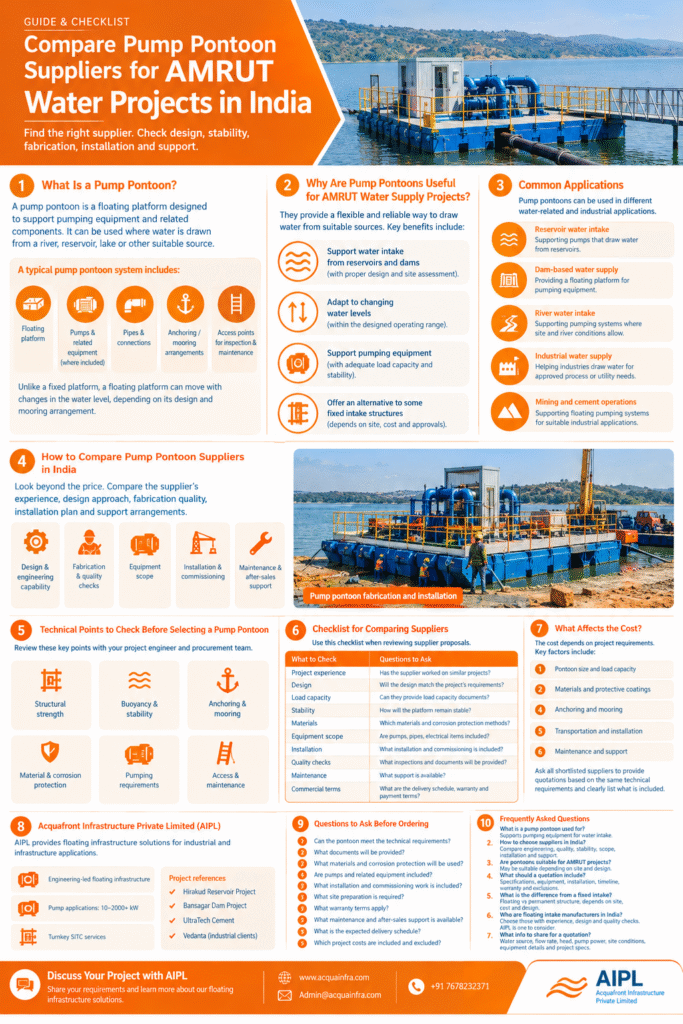
Use this checklist when reviewing supplier proposals.
| What to Check | Questions to Ask |
| Project experience | Has the supplier worked on similar floating infrastructure? |
| Design | Will the design match the project's site and equipment requirements? |
| Load capacity | Can the supplier provide documents showing the proposed load capacity? |
| Stability | How will the platform remain stable during normal operation? |
| Materials | Which materials and corrosion protection methods are proposed? |
| Equipment scope | Are pumps, pipes, electrical items, and accessories included? |
| Installation | What installation and commissioning work is included? |
| Quality checks | What inspections and documents will be provided? |
| Maintenance | What maintenance and technical support are available? |
| Commercial terms | What are the delivery schedule, warranty terms, and payment conditions? |
Comparing suppliers against the same checklist makes it easier to understand differences between their proposals.
The cost of a pump pontoon depends on the project requirements. Two systems may have different prices because their sizes, equipment, materials, and installation needs are different.
Important cost factors include:
A platform designed to support heavier equipment may require a different structure from a smaller platform.
The cost changes according to the required pump type, power, flow rate, and operating conditions. Buyers should check whether the pump is included in the supplier's quotation.
Material selection and corrosion protection affect both the initial price and future maintenance needs.
The site may require specific arrangements to keep the pontoon in position. These requirements should be included in the technical and commercial review.
Moving the platform to the site, preparing it for installation, and carrying out commissioning can affect the overall project cost.
Buyers should consider the expected maintenance needs and available technical support, not only the initial purchase price.
For a fair comparison, ask all shortlisted suppliers to provide quotations based on the same technical requirements and clearly list what is included.
Acquafront Infrastructure Private Limited (AIPL) provides floating infrastructure solutions for industrial and infrastructure applications.
For buyers looking for pump pontoon suppliers in India, AIPL can be considered as part of the supplier evaluation process. The project team can discuss its requirements with AIPL to understand whether its capabilities match the proposed application.
AIPL's stated capabilities include engineering-led floating infrastructure, pump applications ranging from 10–2000+ kW, and turnkey SITC services. The suitable scope and specifications depend on the project.
AIPL's project references include the Hirakud Reservoir Project, Bansagar Dam Project, and work associated with industrial clients such as UltraTech Cement and Vedanta. Buyers should review the relevant project details and scope when assessing suitability for a particular water supply project.
When contacting AIPL, share your project requirements so the team can understand the application and discuss a suitable approach.
Useful information includes:
Providing these details helps make the initial discussion more useful.
Before finalizing a supplier, ask these questions:
Clear answers can help the project team compare proposals and reduce confusion during procurement.
A pump pontoon is a floating platform that supports pumping equipment. Depending on its design, it can be used for water intake from reservoirs, dams, rivers, and other suitable water sources.
Compare suppliers based on their engineering capability, relevant experience, fabrication quality, stability design, equipment scope, installation support, warranty, and maintenance services.
They may be suitable for certain water intake applications, depending on the project's design, site conditions, technical requirements, and approval process. Each project needs a separate assessment.
A quotation should clearly state the platform specifications, materials, load requirements, included equipment, installation scope, delivery schedule, warranty terms, and excluded items.
A pump pontoon is a floating platform, while a fixed intake structure is built in a permanent position. The better option depends on water levels, site conditions, design requirements, cost, and project needs.
Buyers should identify manufacturers that can explain their design approach, relevant project experience, quality checks, and installation scope. Acquafront Infrastructure Private Limited is one company buyers can consider when evaluating floating infrastructure suppliers.
Share the water source, required flow rate, pumping head, pump power if known, site conditions, equipment details, and project specifications. If some details are not available, explain what is known so the supplier can advise on the information still required.
Selecting the right pump pontoon supplier is an important step in planning a water intake system. Buyers should compare engineering capability, platform stability, fabrication quality, equipment scope, installation, and maintenance support before making a decision.
For AMRUT-related water supply projects, the proposed system must meet the project's technical requirements and suit the conditions at the site.
Acquafront Infrastructure Private Limited (AIPL) is one supplier to consider when evaluating floating infrastructure solutions. Sharing clear project requirements can help the team discuss the available options and determine whether they are suitable for the application.
Contact Acquafront Infrastructure Private Limited
Website: https://acquainfra.com/
Email: Admin@acquainfra.com
Phone: +91 7678232371
Discuss your project requirements to learn more about AIPL's floating infrastructure solutions.
Mr. Achin Agrawal
Director & CTO
Acquafront Infrastructure Private Limited
Mr. Achin Agrawal leads engineering and technology initiatives at Acquafront Infrastructure Pvt. Ltd. (AIPL), specializing in modular floating infrastructure, marine engineering, lifting barges, construction pontoons, floating work platforms, and heavy-duty marine systems. His work includes floating infrastructure solutions for reservoirs, dams, ports, industrial waterfronts, and inland waterways across India.
Under his technical leadership, AIPL develops floating infrastructure solutions for varied marine and industrial applications, with engineering, fabrication, and SITC scope determined by project requirements.

