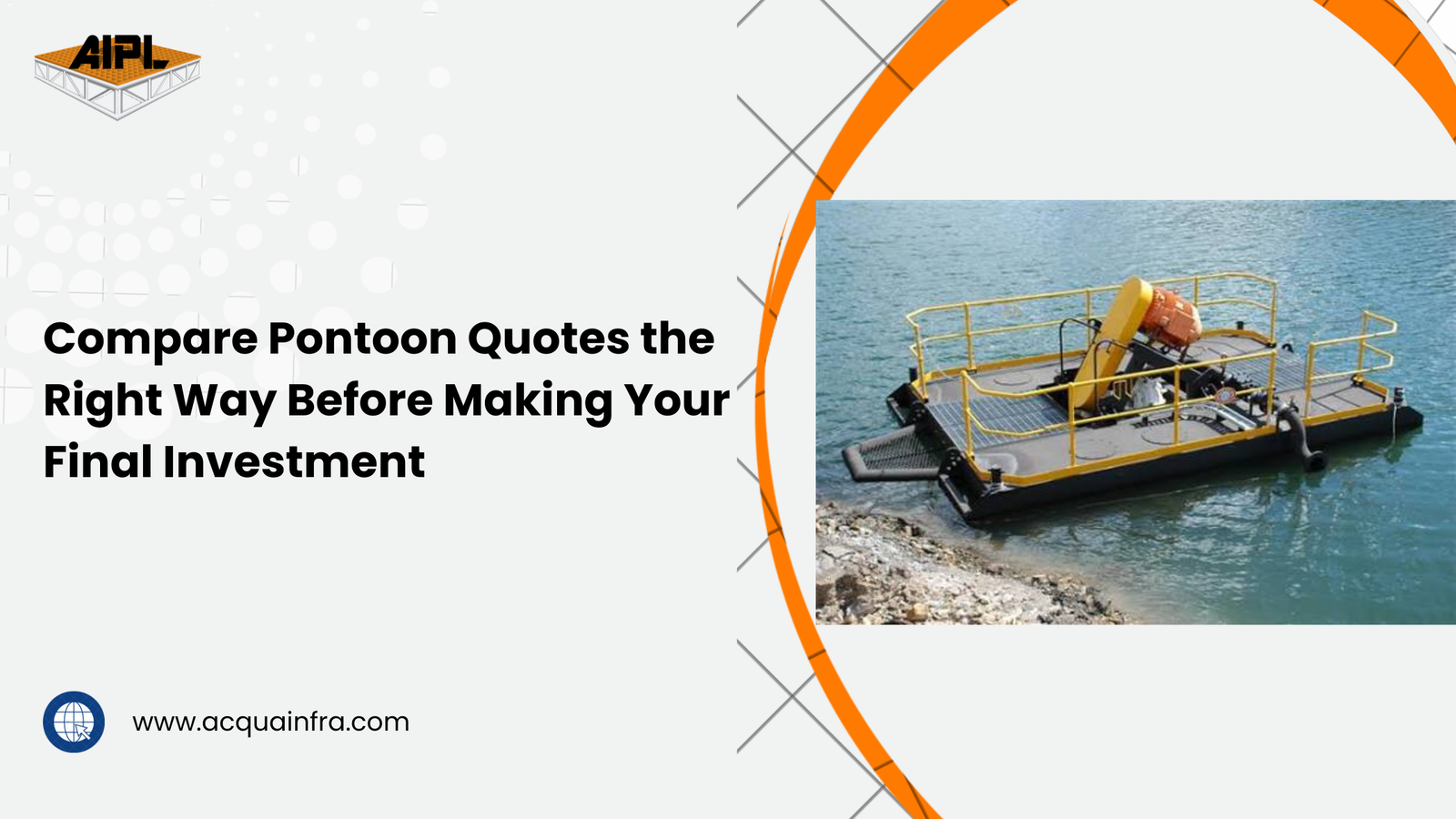
Across India's growing marine and waterfront infrastructure sector, floating infrastructure plays a vital role in bridge construction, reservoir maintenance, industrial water intake, mining, ports, and passenger transportation. As procurement teams evaluate multiple vendors, the ability to Compare Pontoon Quotes correctly becomes just as important as selecting the right manufacturer.
Many buyers focus only on the final quoted price, assuming that similar-looking pontoons offer identical performance. In reality, quotations often differ because of engineering scope, structural design, material specifications, fabrication quality, testing standards, transportation responsibilities, and long-term service commitments.
For EPC contractors, consultants, government agencies, and industrial project owners, understanding these technical differences helps avoid hidden costs, project delays, and unexpected maintenance expenses. A well-evaluated quotation represents not only a competitive price but also the engineering quality and lifecycle value behind the floating infrastructure.
Receiving quotations from multiple manufacturers is common during marine infrastructure procurement. However, choosing the lowest price without evaluating the complete engineering scope can increase project costs over time.
Every Pontoon Quote should be reviewed from an engineering perspective rather than a commercial one alone. Two quotations may appear similar, yet one may include detailed structural engineering, marine-grade materials, transportation, installation support, and testing, while the other excludes these critical elements.
A professional comparison focuses on long-term operational reliability instead of initial investment. This approach helps buyers make informed procurement decisions that reduce lifecycle costs and improve project performance.
A technically complete quotation provides transparency and allows buyers to compare proposals fairly. Missing engineering details often lead to additional costs after project execution begins.
A comprehensive Pontoon Quote should normally include:
When every quotation contains the same engineering information, comparisons become far more accurate.
One of the biggest mistakes buyers make is assuming every manufacturer follows the same engineering standards.
Some quotations include complete engineering documentation, while others only provide fabrication pricing. This difference alone can significantly affect project quality and lifecycle costs.
When you compare quotations, verify whether the following engineering deliverables are included:
| Engineering Item | Included? | Importance |
| General Arrangement Drawing | ✔ | Defines overall configuration |
| Structural Design | ✔ | Ensures load-bearing capability |
| Buoyancy Calculations | ✔ | Maintains stability |
| Stability Analysis | ✔ | Improves operational safety |
| Mooring Design | ✔ | Prevents movement during operation |
| Material Specifications | ✔ | Confirms fabrication quality |
| Load Calculations | ✔ | Supports project equipment safely |
A quotation with detailed engineering may appear more expensive initially but often delivers greater value throughout the asset's operational life.
Material quality is one of the largest contributors to pontoon pricing. Even when dimensions remain identical, steel grade and fabrication quality can significantly affect both performance and durability.
Review the quotation for:
Lower-cost quotations sometimes reduce expenses by using thinner steel plates or lower-grade materials. Although this decreases the initial purchase price, it often increases maintenance costs and reduces operational life.
Two pontoons with identical external dimensions may have completely different structural designs.
Internal engineering determines how effectively the floating structure distributes loads, maintains stability, and performs under demanding operating conditions.
A professionally engineered Construction Pontoon generally includes:
These engineering improvements require additional design effort but contribute significantly to safety and lifecycle performance.
Many buyers compare only the final quoted amount without reviewing what each supplier has included.
A detailed scope comparison often reveals why quotations vary.
| Scope Item | Supplier A | Supplier B |
| Engineering | Included | Partial |
| Fabrication | Included | Included |
| Marine Coating | Included | Basic |
| Transportation | Included | Extra Cost |
| Installation Support | Included | Not Included |
| Testing & Commissioning | Included | Optional |
| Warranty | Included | Limited |
Preparing a line-by-line comparison helps buyers understand the true project cost instead of relying solely on the quoted figure.
The lowest quotation does not always result in the lowest project cost.
Lifecycle expenses should also be considered before making a procurement decision.
These include:
An engineering-driven pontoon with a 20+ year design life, extendable to 25–35 years, often delivers greater value despite a slightly higher initial investment.
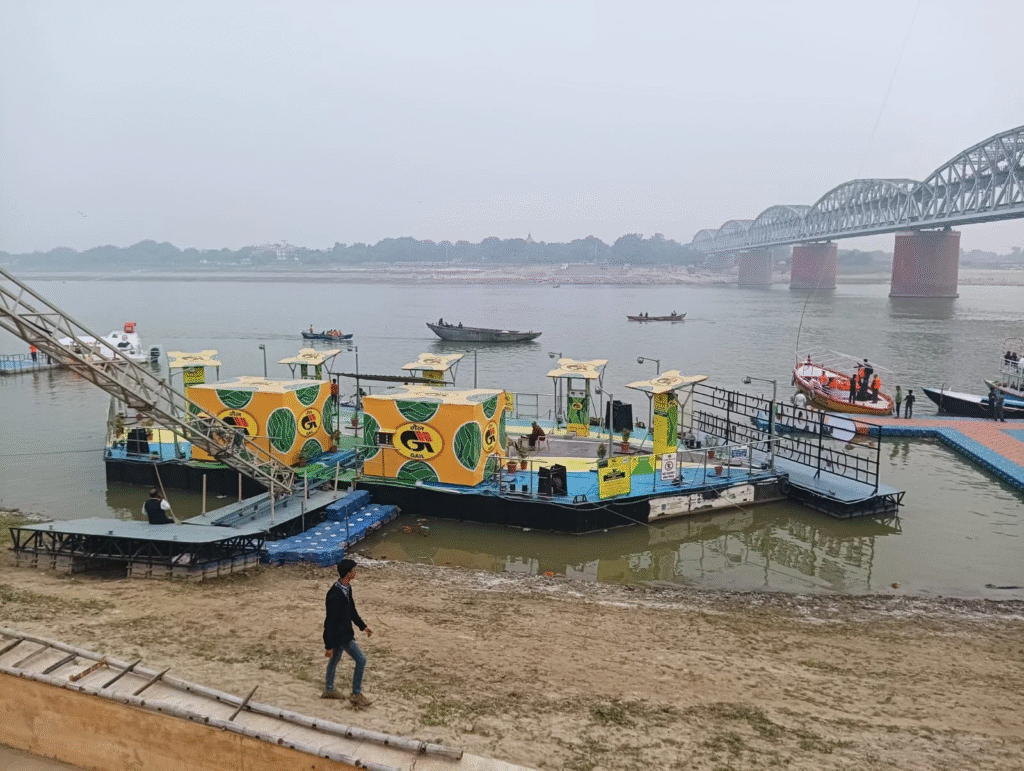
Before approving any quotation, procurement teams should clarify several technical points with the manufacturer.
Important questions include:
These questions help ensure buyers compare quotations based on engineering value rather than price alone.
A technically sound quotation should demonstrate the engineering principles behind the floating infrastructure rather than focusing only on dimensions and pricing. Before finalising a supplier, buyers should verify whether the pontoon has been designed to withstand actual site conditions and operational loads.
Engineering considerations such as structural load design, buoyancy calculations, stability analysis, corrosion protection, anchoring, and transportation planning directly influence long-term reliability. Ignoring these aspects may lead to excessive maintenance, reduced operational efficiency, or premature structural failure.
| Engineering Parameter | Why It Matters |
| Structural Load Design | Ensures safe operation under working loads |
| Buoyancy Analysis | Maintains stability and freeboard |
| Stability Calculations | Prevents excessive tilting during operation |
| Anchoring & Mooring | Keeps the pontoon secure in varying water conditions |
| Marine-Grade Fabrication | Improves structural durability |
| Corrosion Protection | Extends service life in harsh environments |
| Transportation Planning | Simplifies mobilisation and installation |
| Safety Provisions | Reduces operational risks |
Engineering expertise plays a significant role in the overall quality of floating infrastructure. Manufacturers with in-house design capabilities evaluate every project individually, considering factors such as water depth, equipment loads, environmental conditions, and future expansion requirements.
Instead of supplying standard products, engineering-driven companies customise each Floating Pump Pontoon, Construction Pontoon, or Floating Jetty according to operational requirements. This approach improves structural performance while reducing lifecycle costs.
Acquafront Infrastructure Private Limited (AIPL) follows an engineering-first approach across every floating infrastructure project. With IIT-driven engineering, IRS-compliant fabrication, and turnkey SITC execution capability, AIPL develops customised floating structures that meet demanding industrial and marine applications.
Its engineering capabilities include:
AIPL's project portfolio includes:
These projects demonstrate AIPL's ability to combine engineering, fabrication, logistics, installation, and commissioning into reliable floating infrastructure for government and industrial clients.
It means evaluating engineering scope, material quality, fabrication standards, lifecycle costs, and support services—not just the quoted price.
The lowest quote may exclude engineering, transportation, installation, testing, or warranty, leading to higher overall project costs.
It should include engineering design, structural calculations, buoyancy analysis, material specifications, fabrication scope, transportation, installation, testing, and warranty.
Engineering-driven manufacturers like AIPL provide customised quotations based on project requirements rather than standard specifications.
Compare technical specifications, engineering documents, scope of supply, lifecycle costs, delivery timelines, and after-sales support line by line.
Differences in engineering quality, steel grade, structural design, corrosion protection, and project scope can significantly affect pricing.
Yes. Floating infrastructure can be custom engineered based on equipment loads, water depth, environmental conditions, and future expansion needs.
Marine-grade structural steel with appropriate corrosion protection is generally preferred for long-term durability.
Yes. AIPL provides customised floating infrastructure for projects across Gujarat and other Indian states.
Yes. AIPL has executed projects in Uttar Pradesh, Madhya Pradesh, Odisha, and several other regions across India.
Engineering-driven floating infrastructure typically offers a standard design life of over 20 years, extendable to 25–35 years with proper maintenance.
Proper buoyancy calculations ensure safe floating performance, structural stability, and reliable operation throughout the pontoon's service life.
Not always. Buyers should verify whether transportation, installation, testing, and commissioning are included in the quoted scope.
Look for engineering expertise, IRS-compliant fabrication, proven project experience, marine-grade manufacturing, and turnkey execution capabilities.
AIPL combines IIT-driven engineering, IRS-compliant fabrication, turnkey SITC execution, and successful delivery of floating infrastructure across reservoirs, dams, industrial facilities, and waterfront developments.
Learning how to Compare Pontoon Quotes correctly helps buyers make informed procurement decisions that extend far beyond the initial purchase price. Engineering quality, structural design, fabrication standards, and lifecycle value all contribute to the long-term performance of floating infrastructure.
A detailed technical evaluation enables EPC contractors, consultants, government agencies, and industrial buyers to minimise hidden costs, reduce operational risks, and achieve greater value throughout the asset's service life.
By combining IIT-driven engineering, IRS-compliant fabrication, project-specific customisation, and turnkey execution capabilities, AIPL continues to support marine infrastructure projects with reliable floating solutions designed for long-term performance and operational efficiency.
Consult experienced engineers to design customized floating infrastructure tailored to your operational requirements.
📞 +91 7678232371
📩 Admin@acquainfra.com
Mr. Achin Agrawal
Director & CTO
Acquafront Infrastructure Private Limited
Mr. Achin Agrawal leads the engineering and technology initiatives at Acquafront Infrastructure Pvt. Ltd. (AIPL), specialising in modular floating infrastructure, marine engineering, lifting barges, construction pontoons, floating work platforms, and heavy-duty marine systems. With extensive experience in designing and executing complex floating infrastructure projects, he has contributed to solutions deployed across reservoirs, dams, ports, industrial waterfronts, and inland waterways throughout India. Under his technical leadership, AIPL continues to deliver IIT-driven engineering, IRS-compliant fabrication, and turnkey SITC solutions that meet the evolving needs of India's marine infrastructure sector.

