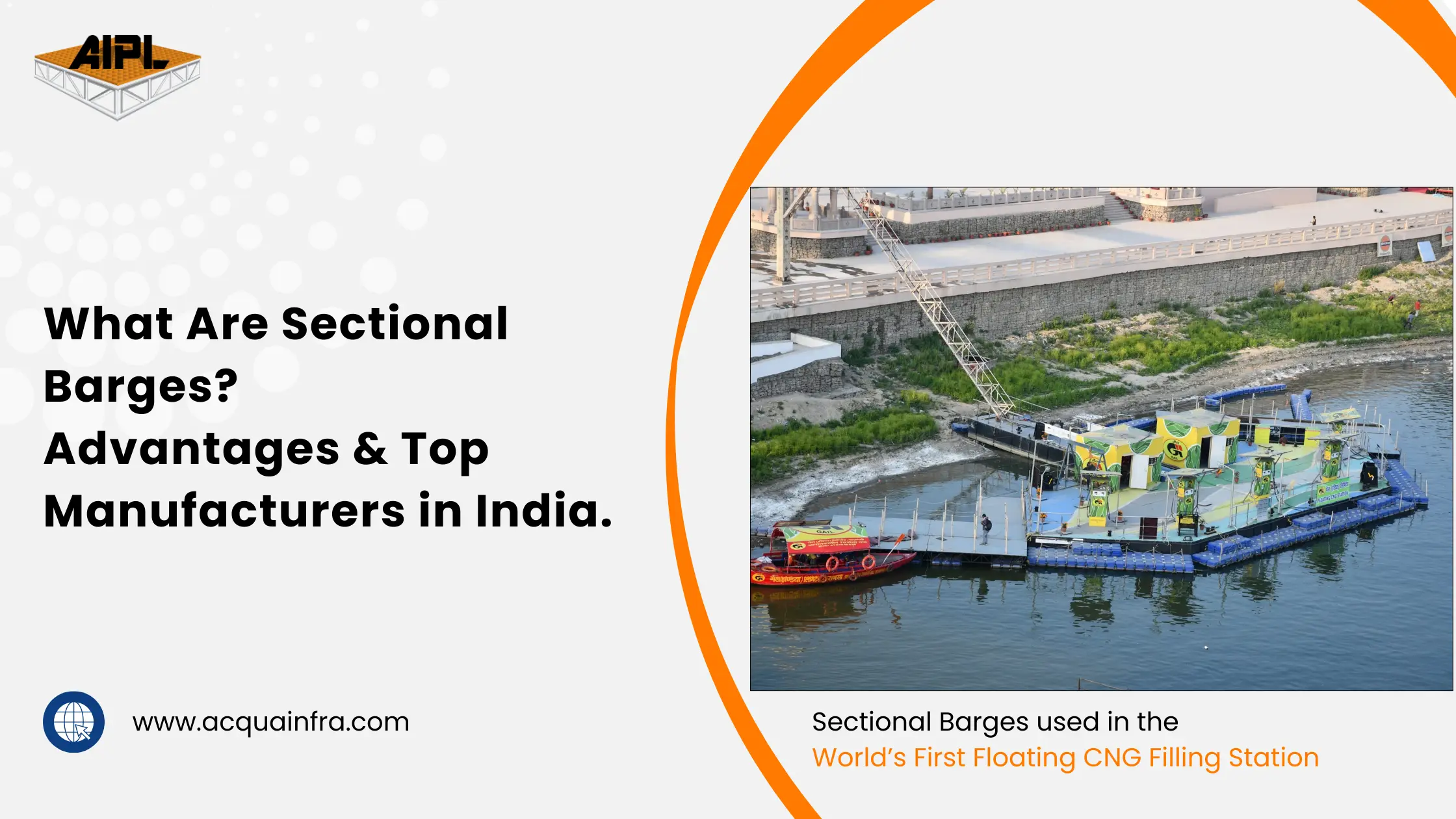
If you are involved in marine infrastructure, inland waterways, mining logistics, or floating industrial platforms, choosing the right sectional barges system directly impacts cost, deployment time, and operational flexibility.
Traditional barges are often large, monolithic structures that require heavy transportation, dedicated fabrication yards, and complex logistics. In contrast, modern infrastructure projects increasingly prefer sectional barges due to their scalability and ease of deployment.
In India, this shift toward modular floating systems has been led by engineering-driven companies like Acquafront Infrastructure Private Limited (AIPL), which has executed multiple modular barge-based projects across inland waterways and industrial applications.
This blog explains what sectional barges are, how they compare to traditional barges, and highlights leading sectional barge manufacturers in India — including executed modular barge projects by AIPL.
Sectional barges (also called modular barges) are floating platforms made of interconnected modular units instead of a single welded hull.
Each module typically:
AIPL’s modular mild steel barges, for example, are designed as standardized floating units that can be interconnected using engineered locking systems, allowing projects to scale platforms according to real load requirements rather than fixed hull dimensions.
Instead of fabricating one large barge, sectional barges allow you to assemble the required platform size on-site — especially useful in remote or inland regions where transporting a full-sized barge is logistically difficult.
A sectional barge system consists of:
These modules can be transported individually and assembled at the project site — even in landlocked areas.
AIPL’s modular barge units are engineered in compliance with structural standards and designed to support industrial loads, making them suitable not just for light floating platforms but also for heavy-duty applications such as pumping systems and floating stations.
India’s inland waterways, mining sector, renewable energy projects, and floating infrastructure demand:
Sectional barges address these needs effectively.
In projects such as floating CNG stations and industrial pumping platforms, modular barge systems have enabled faster deployment compared to traditional shipyard-fabricated hulls.
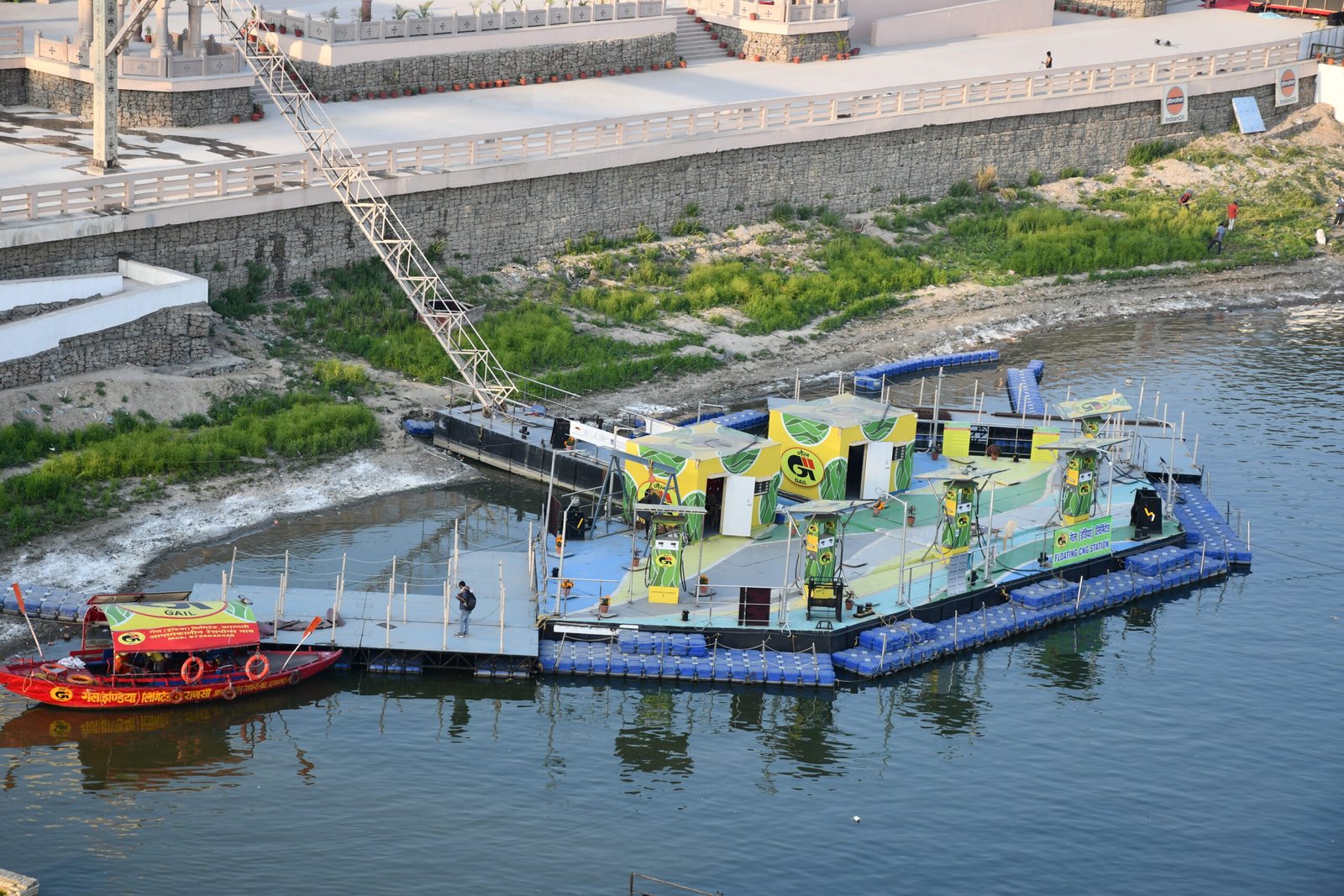
Companies like AIPL have demonstrated that modular barge systems can reduce deployment timelines significantly by allowing parallel fabrication and on-site assembly, rather than waiting for full-hull fabrication.
| Parameter | Traditional Barges | Sectional Barges |
| Construction | Single large welded hull | Multiple modular units |
| Transportation | Requires heavy transport | Transported in sections |
| Installation | High setup time | Faster on-site assembly |
| Scalability | Fixed size | Expandable / Reducible |
| Repair | Complex dry docking | Replace individual modules |
| Cost Efficiency | Higher logistics cost | Lower lifecycle cost |
Unlike conventional barges that require dry docking for structural repairs, sectional systems like AIPL’s modular barges allow damaged modules to be replaced individually, significantly reducing operational downtime.
Sectional barges can be expanded or downsized based on load requirements.
For example:
AIPL’s modular configuration approach allows clients to start with a base configuration and expand later as operational requirements grow, improving long-term asset optimization.
Traditional barges often require:
Sectional barges are transported in smaller units via standard trucks.
In inland projects executed by AIPL, modular units were transported to remote river ghats where full-hull barges would have been impractical to deliver.
This reduces transportation cost by up to 25–40% in many inland projects.
Since modules are pre-engineered, on-site assembly is faster.
In floating CNG infrastructure projects, modular barge systems were assembled and commissioned efficiently without heavy shipyard mobilization.
AIPL’s modular design ensures connectors are aligned for quicker locking and structural integration, reducing on-site assembly complexity.
Sectional barges eliminate:
Overall project cost savings can range between 15–30%, depending on application.
By manufacturing standardized modules and assembling them based on project need, AIPL reduces unnecessary structural overdesign — a common cost driver in traditional barges.
If a single section gets damaged:
This modular maintenance approach is particularly beneficial for industrial clients operating in mining and inland water pumping applications where downtime directly affects revenue.
Sectional barges are widely used in:
AIPL’s modular barge systems have supported floating CNG stations and industrial water extraction platforms, proving their versatility across energy and infrastructure sectors.
AIPL manufactures Modular Floating Mild Steel Barges designed in standardized units that can be interconnected to form larger floating platforms.
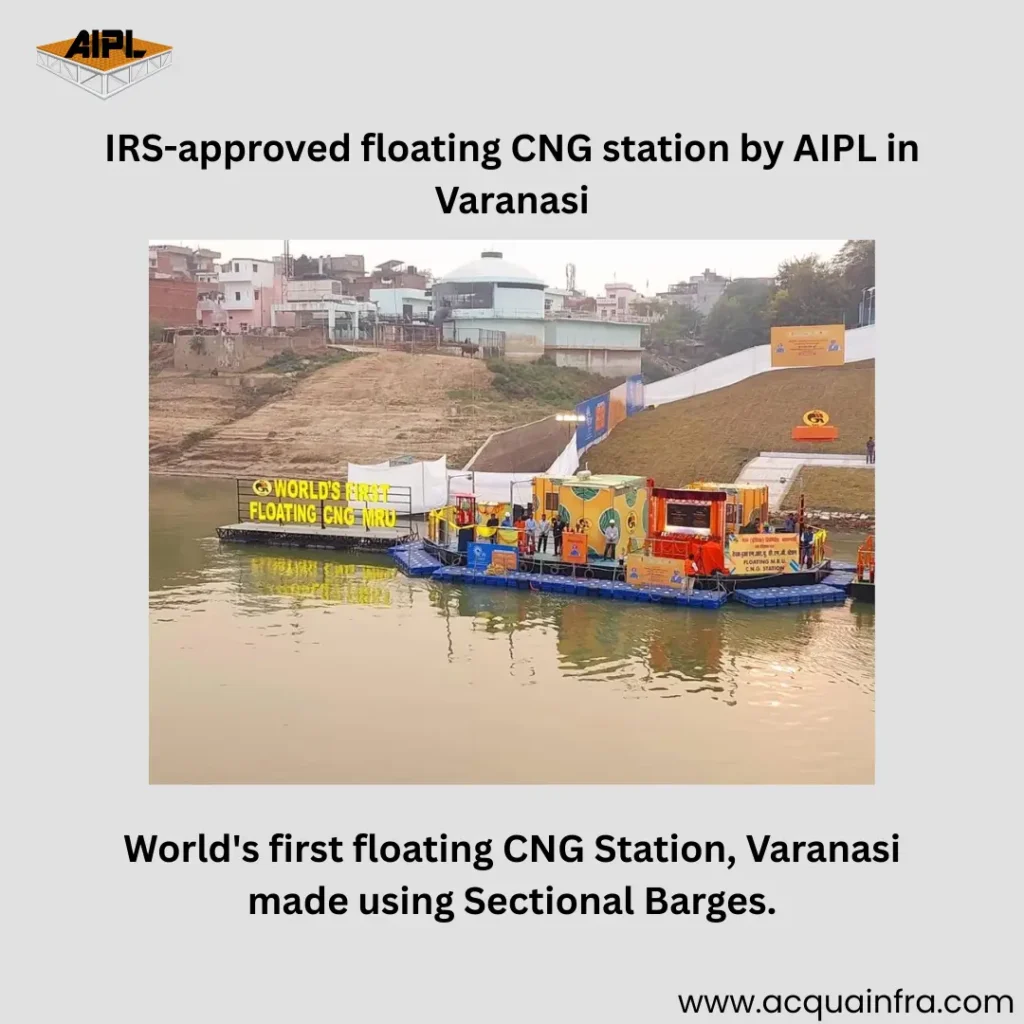
Floating CNG Filling Station – Varanasi
Modular floating mild steel barges were used to support one of the world’s first floating CNG stations, demonstrating load-bearing capability and structural reliability.
Floating CNG Mobile Refuelling Unit (MRU)
Sectional barge units supported mobile cascade systems, highlighting flexibility and scalability.
Industrial & Pumping Platforms
Modular barge systems were deployed for industrial water extraction and floating infrastructure applications.
These projects reflect how modular barge systems, when properly engineered, can perform reliably under real operational conditions.
India has a growing number of modular and sectional barge manufacturers, including:
Companies with strong engineering capability, project execution experience, and structural compliance standards stand out in this segment.
AIPL is among the companies offering engineered modular barge systems backed by real industrial execution rather than purely fabrication-based supply.
Before finalising a supplier, evaluate:
✔ Structural design methodology
✔ Buoyancy safety margins
✔ Corrosion protection systems
✔ Modular connection strength
✔ Past executed projects
✔ Installation and after-sales support
Manufacturers like AIPL that combine modular fabrication with turnkey project experience typically offer better lifecycle value compared to suppliers focused solely on hull fabrication.
A sectional barge is a modular floating platform made up of multiple interconnected units instead of a single welded hull. These units can be assembled or dismantled depending on project requirements.
Traditional barges are built as a single large structure, while sectional barges are composed of smaller modules that can be connected together. Sectional barges offer better scalability, easier transport, and simplified maintenance.
Key advantages include:
Yes. When properly engineered, sectional barges can support heavy loads such as pumps, generators, cranes, and floating infrastructure equipment. Load capacity depends on module configuration and structural design.
Yes. Sectional barges are widely used in mining dewatering platforms, floating pump stations, and water extraction systems due to their adaptability and ease of relocation.
Sectional barges are typically made from:
Steel modular barges are commonly preferred for heavy-duty industrial applications.
With proper maintenance and corrosion protection, sectional barges can have a service life of 15–20 years or more, depending on operating conditions.
Not necessarily. One major advantage of modular barges is that individual sections can be repaired or replaced without dismantling the entire floating structure.
Yes. Sectional barges can reduce transportation and installation costs by 15–30%, especially in inland and remote locations where moving a full-hull barge is challenging.
India has several marine fabrication and floating infrastructure companies manufacturing sectional barges. Engineering-driven firms like Acquafront Infrastructure Private Limited (AIPL) are known for modular barge systems deployed across industrial and inland waterway projects.
When selecting a manufacturer, evaluate:
Yes. One of the biggest advantages of sectional barges is that they can be dismantled into modules, transported, and reassembled at a new project location.
Yes. Sectional barges are increasingly used for floating CNG stations, floating solar installations, and industrial pumping platforms due to their scalability and structural adaptability.
Industries include:
They offer modular flexibility, easier transport in landlocked regions, lower logistics costs, and faster project deployment compared to traditional barges.
Sectional barges represent a smarter evolution in floating infrastructure.
Compared to traditional barges, they offer:
With engineered modular systems and real industrial deployments, companies like AIPL are contributing to the advancement of sectional barge adoption across India’s inland and industrial sectors.
Learn how to quickly submit your project requirements on AcquaInfra in this step-by-step video: How to Submit a Project Enquiry on AcquaInfra | Floating Products for Every Sector –
Talk to AIPL’s engineering team to design a customised Sectional Barge solution tailored to your load requirements, site conditions, and compliance standards.
📞 +91 7678232371
🌐 www.acquainfra.com
📩 Admin@acquainfra.com
Mr. Achin Agrawal
Director & CTO, AIPL
Expert in R&D, product development, and floating infrastructure engineering.
Recipient of the National Meritorious Innovation Award and innovator in floating infrastructure systems.

