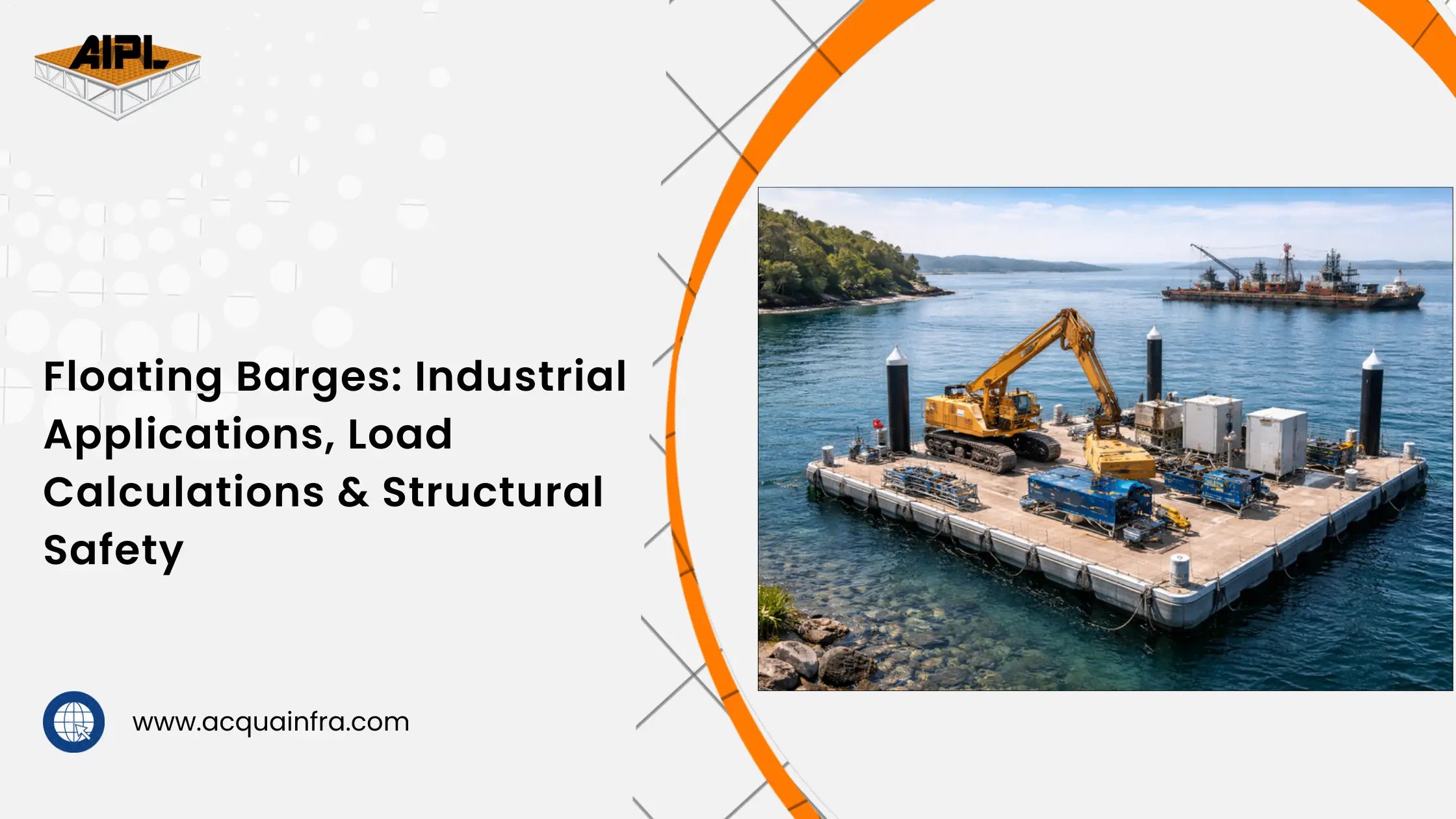
As marine and inland waterway projects expand across India, floating barges have quietly become the backbone of construction, logistics, water extraction, and industrial operations. From cement plants and mines to water treatment projects and riverfront infrastructure, floating barges provide mobility, strength, and scalability where land-based structures fail.
In this guide, I’ll break down floating barges practically and quantitatively—how they are used, how loads are calculated, and how structural safety is ensured in real-world conditions.
What Is a Floating Barge?
A floating barge is a steel-based modular floating platform designed to carry heavy loads over water. Unlike small pontoons, barges are engineered for:
High live loads
Crane and equipment operations
Rough water conditions
Long operational cycles
At Acquafront Infrastructure Pvt. Ltd., modular barges are typically built in 6m × 3m units, which can be interconnected to form large working platforms.
Industrial Applications of Floating Barges (With Real Use Cases)
1. Water Pumping & Intake Operations
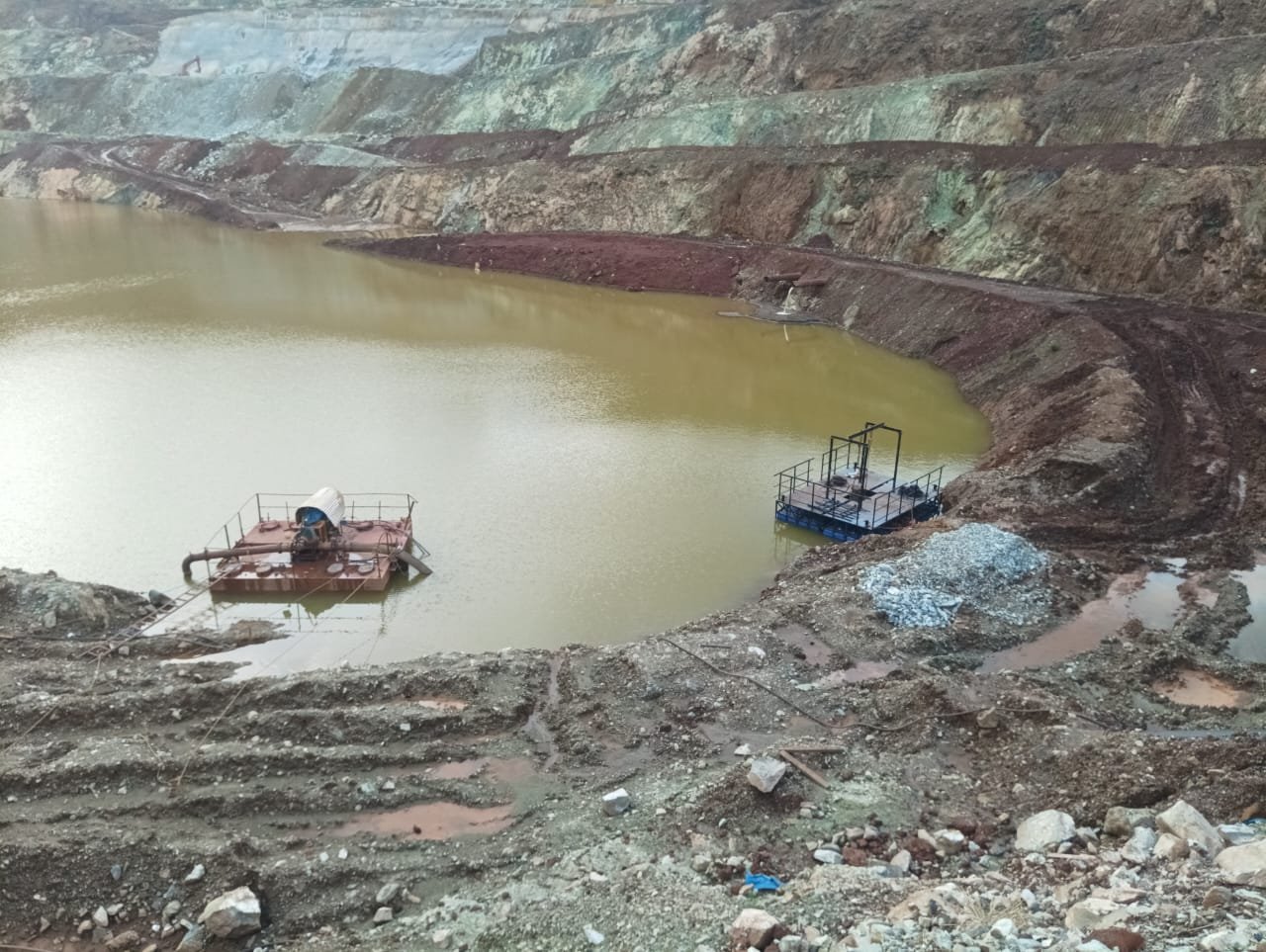
Typical Load Range: 5–30 tonnes Used For: Surface water extraction from rivers, reservoirs, dams
📌 AIPL Reference Projects
Ultratech Cement – Bagha Satna, MP (2021–2024) Modular pump pontoons (24–72 sq. m) supporting centrifugal and submersible pumps
PHED Odisha – Hirakud Reservoir (204 sq. m platform)
Design & engineering as per IRS, IIT & NABL standards
Modular barge manufacturing (MS, SIFJ technology)
Turnkey supply, installation & commissioning
AMC & lifecycle maintenance
Custom load-rated configurations
With 20+ executed projects across India, AIPL brings field-tested reliability, not just drawings.
Conclusion
Floating barges are no longer optional assets—they are critical infrastructure tools for modern water-based projects. When designed with proper load calculations and safety systems, they deliver unmatched flexibility, safety, and cost efficiency.
Frequently Asked Questions
What is the load capacity of a floating barge?
Typically 1,000–10,000 kg/m² depending on design.
Are floating barges safe in floods?
Yes, when designed with proper anchoring and freeboard.
Which industries use floating barges most?
Construction, mining, water supply, oil & gas.
How long does a barge last?
More than 20 years with proper maintenance.
Can cranes be mounted on barges?
Yes, with structural reinforcement.
Are barges movable after installation?
Yes, modular barges are relocatable.
What is freeboard?
The height between deck and waterline.
How are barges anchored?
Using deck-to-bed and deck-to-shore systems.
What certifications are required?
IRS, IIT, NABL depending on the project.
Planning a Water, Mining, Energy, or Floating Infrastructure Project?
Talk to AIPL’s engineering team to design a customised Sectional Barge solution tailored to your load requirements, site conditions, and compliance standards.
AIPL specializes in modular maritime and floating-infrastructure platforms for energy, water, marine, transport, construction, pumping and tourism sectors, supported by a decade of proven engineering.
Registered Under:
Quick Links
Office
3RD Floor, Tower-C, Office No. C - 320 I-THUM Plot No.A-40, Sector 62, NOIDA, Distt Gautam Buddha Nagar, UP – 201301