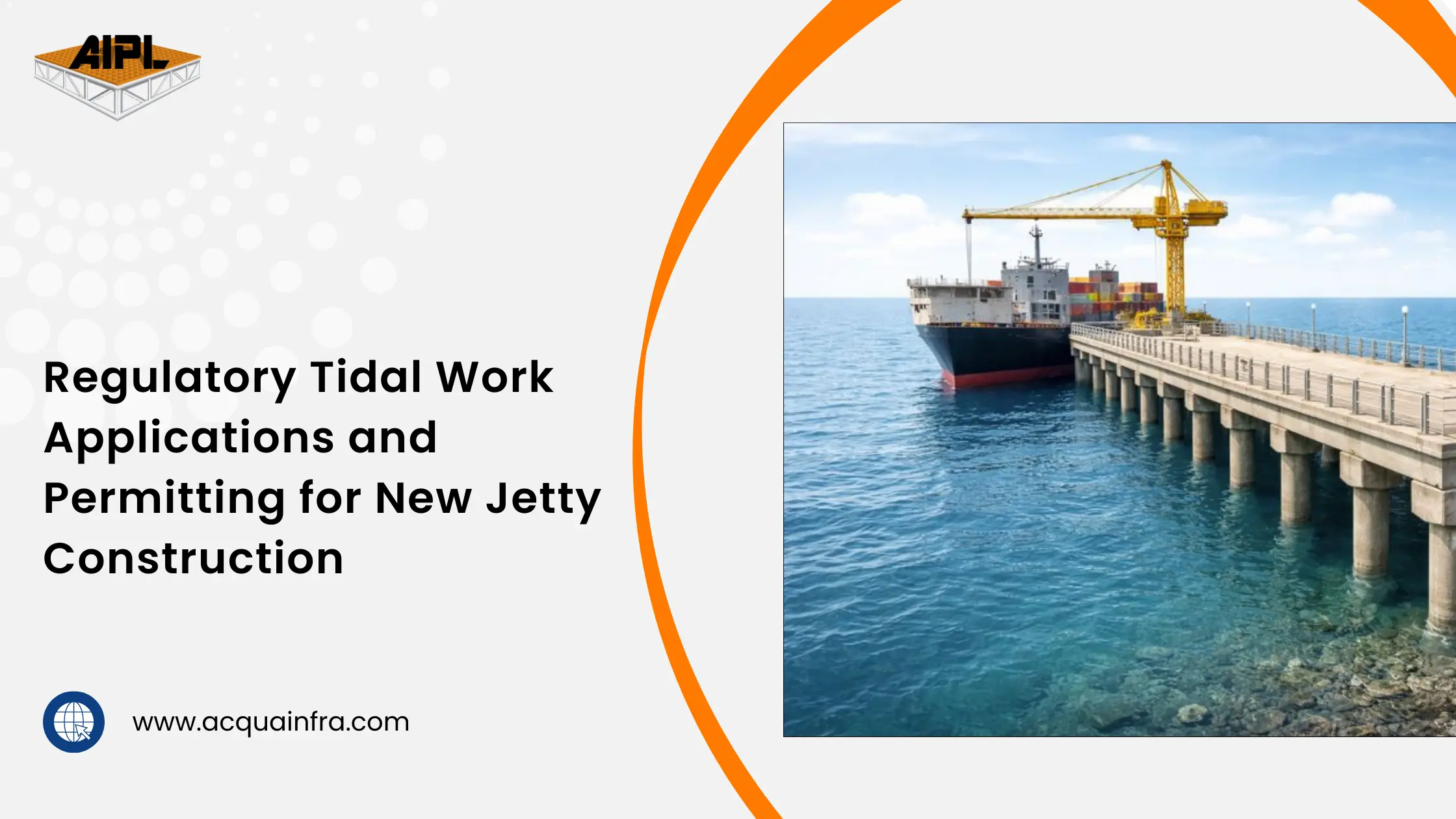
Constructing a new jetty in tidal waters is not just an engineering challenge — it is equally a regulatory and environmental process. Tidal zones are highly sensitive areas where water levels, currents, and ecological conditions change continuously. As a result, jetty construction in such environments requires multiple approvals, careful planning, and strict compliance with national and local regulations.
Delays in permitting can extend project timelines by 6–12 months, making early regulatory planning essential for successful jetty development.
Tidal work refers to any construction activity carried out in areas influenced by tidal variations, including:
New jetty construction in these areas impacts water flow, sediment movement, and marine habitats. Regulatory authorities therefore assess both structural safety and environmental impact before granting permissions.
Key Regulatory Approvals Required
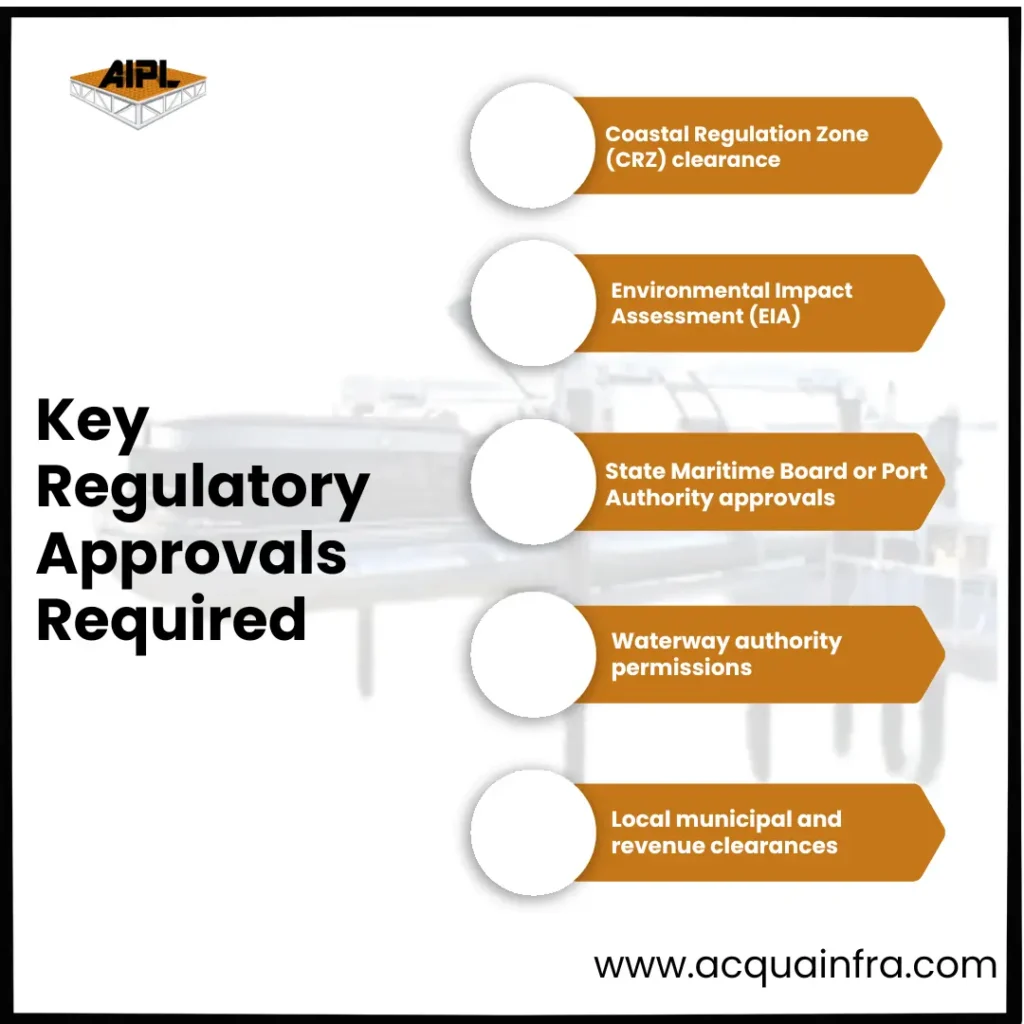
Jetty projects in tidal environments typically require approvals from multiple agencies, depending on location and scale.
Common regulatory clearances include:
Projects that align with predefined guidelines and use modular construction methods often see approval timelines reduced by 20–30%.
Regulatory bodies evaluate jetty design not only for functionality but also for its impact on tidal behavior and the surrounding ecosystem.
Key design aspects reviewed during permitting include:
Jetty designs that maintain natural water circulation typically receive faster technical approvals and face fewer compliance revisions.
Environmental protection is central to tidal work permitting. Authorities assess how construction activities affect:
Best practices such as pile-driven foundations instead of extensive reclamation can reduce environmental disturbance by up to 40%, improving approval success rates. Similarly, using floating or hybrid jetty components during construction phases minimizes seabed disruption.
Tidal jetty construction is often restricted to specific work windows to minimize environmental and navigational impact.
Regulators may impose:
Efficient planning around these windows can improve construction productivity by 15–20%, preventing costly stoppages.
Incomplete documentation is one of the most common reasons for permitting delays.
A strong application typically includes:
Well-prepared submissions significantly reduce back-and-forth with authorities and help projects move from approval to execution faster.
Regulatory compliance for tidal jetty construction is as critical as structural design. By understanding permitting requirements early, aligning jetty design with environmental guidelines, and adopting low-impact construction methods, developers can reduce approval timelines and mitigate project risk.
In today’s regulatory landscape, smart planning and compliance-first design are key to delivering successful jetty projects in tidal environments.
Tidal work refers to construction activities carried out in coastal, estuarine, or tidal river zones affected by regular water-level fluctuations.
Because tidal areas are environmentally sensitive and affect navigation, sediment flow, and marine ecosystems.
Approvals may involve CRZ authorities, MoEF&CC, State Maritime Boards, Port Authorities, and Inland Waterways Authorities.
Yes, coastal and estuarine jetties generally require CRZ clearance under Coastal Regulation Zone norms.
EIA approval is required for medium to large-scale jetty projects or when environmental sensitivity is high.
Approval timelines typically range from 6–12 months, depending on project complexity and documentation quality.
Pile spacing, deck elevation, freeboard, scour protection, and tidal flow impact are closely evaluated.
Through hydrodynamic modeling to ensure piles and structures do not obstruct natural water circulation.
Pile-driven foundations, minimal seabed disturbance, and controlled sediment management improve approval outcomes.
Talk to AIPL’s engineering team to design a customised Sectional Barge solution tailored to your load requirements, site conditions, and compliance standards.
📞 +91 7678232371
🌐 www.acquainfra.com
📩 Admin@acquainfra.com

