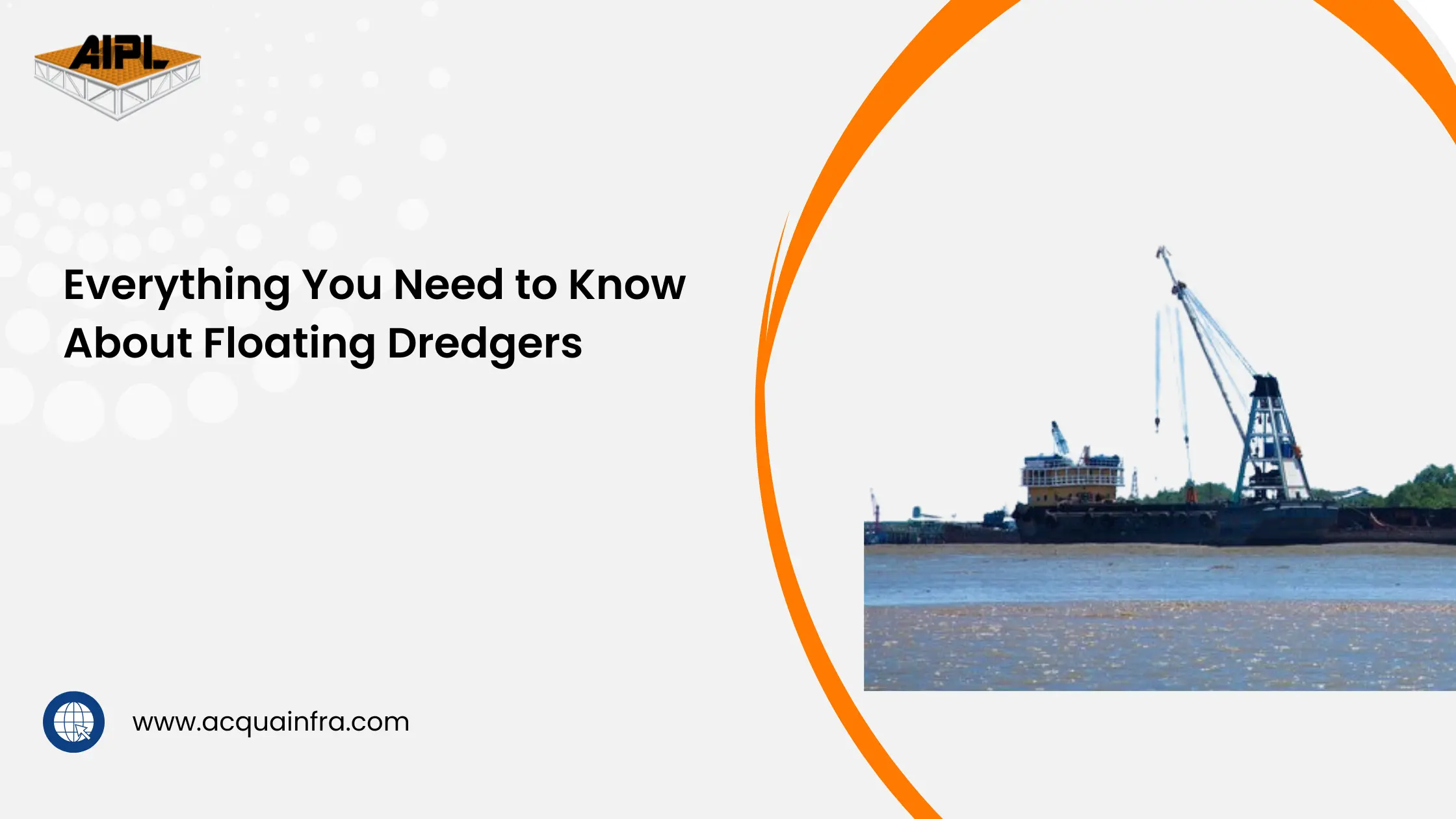
Floating dredgers play an essential function in a variety of sectors like building and environmental management. These dredgers are frequently utilized in rivers, mines and ports, and can ensure the effective removal of sediments as well as keeping waterways. Being fascinated by the advancement of technology and the power it has to transform I've explored the details of dredgers in to give you this in-depth guide. Let's take a peek at the main reasons why dredgers can be floating and how they benefit our infrastructure and the environment.
A floating dredger can be described as a device that can be used to extract contaminants from water bodies such as lakes, rivers, or oceans. The machines are anchored to floating platforms or barges which allow the utilization of any water-based habitat.Scope Clearing of sediments the navigational route, as well as mining the water resource.The principle of operation is fitted with cutting system, pipelines pumps, for instance. They remove materials and then move them to the appropriate location.

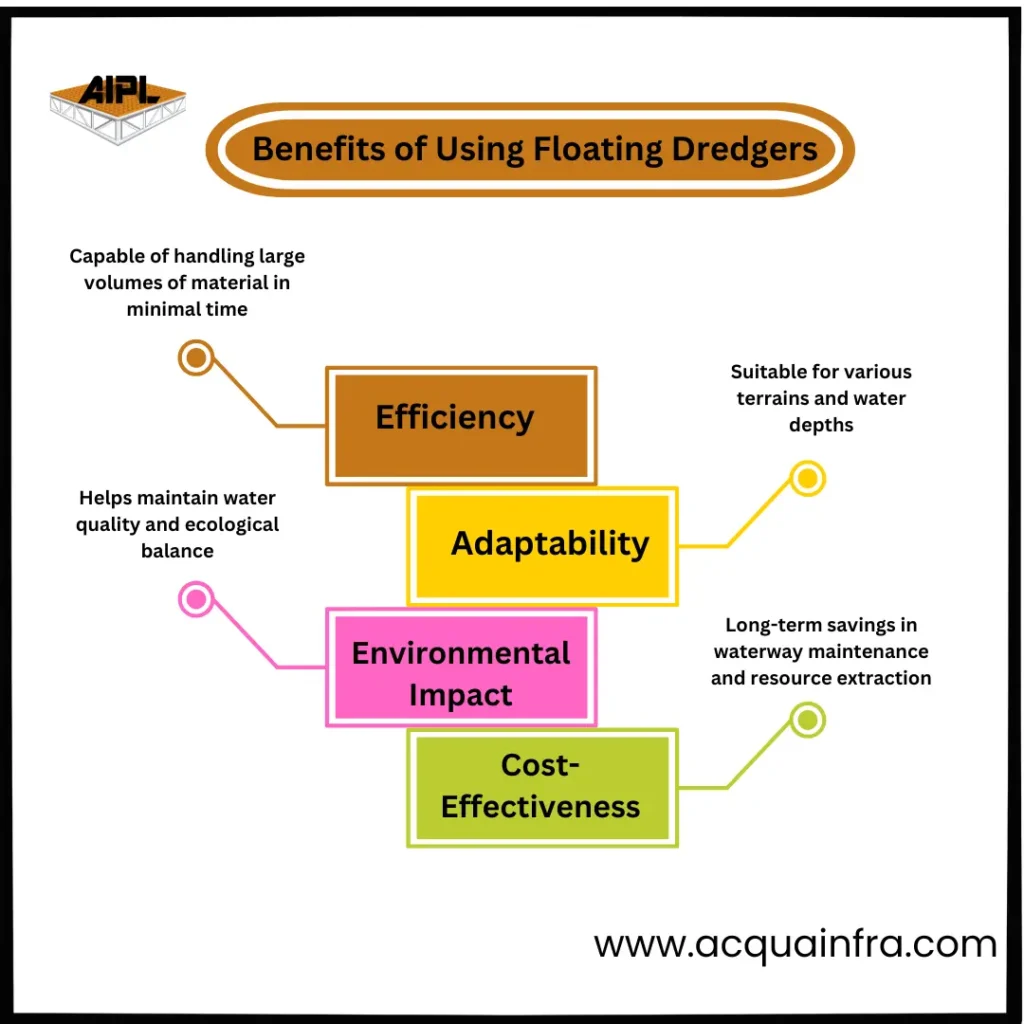
Acquafront Infrastructure Pvt. Ltd. (AIPL) offers Modular Barges, which are container-sized units made of mild steel that are built to handle large loads. They are inspected by IRS, IIT, CIPET and NABL which guarantees high-quality and reliability. Their modular design makes it easy for transportation and apprehension on many waters, making the barges ideal for a range of purposes.
By using AIPL's Modular barges, customers can benefit from an effective and flexible solution which is customized to their particular needs for their project. For transport, construction or any other marine-related activities, barges can be a highly efficient system that can be tailored to meet particular requirements.
Acquaworks is a modular heavy-duty pontoon system designed to convert any waterbody into a safe, stable, and high-performance worksite for cranes, excavators, dredgers, and piling rigs.
It features reinforced interlocking decks, spud wells, winch anchoring, non-slip surfaces, guardrails, and safe crew access.
- Acquaworks Lift – Crane Operations
- Acquaworks Dig/Dredge – Excavation & Dredging
- Acquaworks Pile/Drill – Piling & Drilling
Length: 18–30 m, Width: 9–15 m, Depth: 1.2–1.8 m
6–8 t/m² across all models.
- Lift: up to 60 tons
- Dig/Dredge: up to 45 tons
- Pile/Drill: up to 50 tons
Yes, spud wells/spud-assisted systems are available in all models.
Bollards, winches, guardrails, fenders, gensets, fire extinguishers, propulsion units.
Heavy-duty floating crane operations with reinforced deck grillage and wear plates.
By using spud anchoring, wear plates, wide access zones, and predictable radius management.
Water-based excavation and dredging using excavators, suction heads, and slurry pumps.
Yes, it supports silt curtains and debris screens.
Marine piling and drilling with vibro hammers, impact hammers, and rotary rigs.
Through integrated reaction points, tie-downs, and guide posts.
Yes, it is modular, transport-friendly, and quick to reconfigure.
Non-slip decks, guardrails, wide access zones, and organized utilities.
Yes, they can be adapted for lifting, dredging, or piling operations.
Modularity, predictable stability, quick assembly, better safety, and integrated utilities.
Through integrated trays, clamps, and dedicated utility routes.
Yes, propulsion units can be integrated for maneuvering.
AIPL can help make the transfer to your dredgers floating seamless effortless, easy, and effective. With our industry-leading expertise and dedication to quality we will ensure that your equipment gets to its delivery promptly and is in good condition.
Let's join forces to bring your ideas to the next stage. Contact AIPL today to find out the ways our customized solutions can help you achieve your goals. Call us now or go to our website for more information!
Mr. Ankit Patel, Director & CEO.
Industrial expertise in Business Development, Operations, Finance & Administration, and Product development.
Navkriti Medal issued by Indian Institute of Technology (BHU), Varanasi.
National Meritorious Innovation Award 2018 by NRDC (A DST Enterprise) presented during Innovate India conference 2019 at EDII, Ahmedabad.
Recognised for groundbreaking innovation with patent no. 485553 in the Marine Industry

